As the fireworks light up the night sky and the scent of barbecues fills the air, Independence Day reminds us of the cherished values that define our great nation. It’s a time to celebrate the freedom we hold dear, and for many, that freedom extends to the pride and joy of owning their own homes. As a Realtor, I am thrilled to share this moment with you and explore how homeownership reflects the spirit of independence and the pursuit of the American dream.

Owning your own home represents a significant milestone on your journey to personal freedom. It’s more than just a financial investment; it’s a place to call your own, where you can create lasting memories and build a foundation for the future. A home is where you can express your unique style, make your own rules, and have the freedom to shape your living space according to your needs and desires. It offers stability and a sense of belonging, providing a safe haven where you can truly be yourself.

This Independence Day, take a moment to reflect on the many benefits of homeownership. It’s a symbol of your hard work, determination, and commitment to building a better life. From the pride of homeownership to the financial advantages of building equity and potential tax benefits, owning a home offers a sense of security and stability that can truly enhance your quality of life.

Whether you’re a first-time buyer or considering a new home, there’s no better time than now to explore the possibilities of homeownership. At Properties on the Potomac, we are here to guide you through the process, helping you navigate the market and find the perfect home that aligns with your dreams and aspirations. Let’s celebrate the freedom of homeownership and embark on a journey towards a brighter, more independent future.

Contact Properties on the Potomac at 703-624-8333 to discuss your homeownership goals and let’s make your dream of owning a home a reality. Together, we can navigate the real estate market and find the perfect property that suits your needs.

In the world of investing, there is a prevalent temptation to try to time the market, to predict its ups and downs with precision. Many people believe that by jumping in and out of the market at the right moments, they can maximize their returns and avoid losses. However, history and the wisdom of seasoned investors and real estate professionals…cough, cough, your favorite Properties on the Potomac agent… have repeatedly shown that timing the market is an exercise in futility. Let’s shed some light on the fallacy of market timing and highlight the benefits of a strategic long-term approach to real estate.

1. The Myth of Perfect Timing:
Timing the real estate market involves predicting when to enter or exit the market with the expectation of making significant gains. Unfortunately, accurately predicting short-term fluctuations in the housing market is a daunting task. Real estate markets are influenced by numerous factors, such as economic conditions, interest rates, supply and demand, and local factors, making it nearly impossible to consistently time the market successfully.

2. Emotional Pitfalls and FOMO (fear of missing out):
Attempting to time the real estate market often leads to emotional decision-making, driven by the fear of missing out on potential profits. Buyers may rush into purchasing a home during a market upswing, fearing that prices will rise further, potentially overpaying for a property. On the other hand, sellers may hold onto their homes during a market downturn, hoping for prices to rebound, potentially missing out on better opportunities. Emotions can cloud judgment and lead to poor real estate decisions.

3. Long-Term Market Trends and Cycles:
Real estate markets are subject to cyclical patterns and long-term trends. While short-term fluctuations may occur, over the long term, real estate has historically shown overall growth. Instead of trying to time the market, buyers and sellers can benefit from understanding these broader trends and making informed decisions based on their individual circumstances and goals. A strategic long-term approach allows individuals to navigate the market cycles with greater stability and confidence.

4. Financial Considerations and Transaction Costs:
Timing the real estate market often involves frequent buying and selling, which comes with financial implications. Costs such as real estate agent commissions, closing costs, and potential capital gains taxes can eat into potential profits. Moreover, attempting to time the market may lead to hasty decisions, resulting in undesirable outcomes or the need for costly corrective actions. A long-term approach to real estate transactions minimizes unnecessary expenses and maximizes financial gains.

5. Location and Individual Circumstances:
The value of real estate is heavily influenced by location and individual circumstances. Factors such as job opportunities, local amenities, infrastructure development, and demographic shifts can significantly impact property values. Rather than focusing on market timing, individuals should prioritize thorough research and analysis of the local market conditions, as well as their own specific needs and financial situation. Making informed decisions based on these factors is more likely to yield favorable outcomes.

Timing the real estate market requires careful consideration and a comprehensive understanding of various factors. Don’t let the allure of market timing lead to unnecessary risks and missed opportunities. Instead, take a proactive approach by reaching out to our team of experienced real estate professionals.

Properties on the Potomac can provide valuable insights, personalized guidance, and assist you in making informed decisions tailored to your unique needs. Contact us at 703-624-8333 today to start your journey towards successful real estate transactions.

As realtors, we often get asked by those looking to sell their home about potential remodels or updates. Friends and family with long-term value in mind want to know if remodeling their kitchen, or installing new flooring, or adding an addition will be worth the investment when it comes time to sell.

But what about bathrooms?

Here’s the truth: updating a bathroom can be one of the most cost-effective ways to increase the value of your home. According to a report from Remodeling Magazine, an average bathroom remodel can recoup up to 60% of its cost at resale, making it a valuable investment for homeowners looking to increase the value of their property.

Here are some reasons why updating your bathroom before selling your home can be a smart investment:

  1. It improves the appearance of your home: a dated and worn-out bathroom can be a major turnoff for potential buyers. Updating the bathroom with new fixtures, flooring, and lighting can significantly improve its appearance and make a better impression on buyers.
  2. It increases functionality: upgrading the bathroom can also improve its functionality and make it more appealing to buyers. Adding a double sink, a larger shower, or a separate tub can make the bathroom more functional and appealing to buyers.
  3. It boosts energy efficiency: updating the bathroom can also include the installation of energy-efficient fixtures and appliances, such as low-flow toilets, LED lighting, and water-saving showerheads. These updates can help reduce energy and water consumption, lower utility bills, and appeal to eco-conscious buyers.
  4. It adds value to your home: a bathroom remodel can add value to your home, making it more attractive to potential buyers. By investing in the bathroom, you can increase the overall value of your property and potentially earn a higher selling price.
  5. It increases your home’s competitiveness: with many homes on the market, updating your bathroom can help your home stand out from the competition. A modern and updated bathroom can be a major selling point for potential buyers, especially if it offers features that other homes in the area lack.

When updating your bathroom, consider making updates that are neutral and timeless. Avoid trendy designs or bold colors that may not appeal to all buyers. Opt for classic fixtures and finishes that can appeal to a wide range of buyers and make the bathroom look clean, bright, and spacious.

In short: updating your bathroom can be a smart investment before selling your home. It improves the appearance and functionality of your home, boosts energy efficiency, adds value to your property, and makes your home more competitive in the market. By investing in your bathroom, you can increase your chances of selling your home quickly and for a higher price.

Thinking about updating your home with resale value in mind? Give Properties on the Potomac a call at 703-624-8333 for a free consultation!

While scam artists have always been around, modern technology has made their work easier and more effective. Readily accessible public records are fodder for them.

Recently, I received a text with the look and feel of an authentic inquiry. The writer inquired about commissions and timing. When I called the writer, he answered the phone. Our dialogue was typical of a potential seller. They responded with an Outlook email address to my request for their email address. The property address and description matched as well as the name given during our conversation.

The potential “seller” knew about the property’s features, details, and general acquisition information. My intuition had an initial twinge when I learned that the caller was out of town and wanted to sell as soon as possible. My scam antennae were on mild alert. I was planning identity verification measures before concluding the initial conversation.

The property in question was a vacant lot of substantial value. Fortunately, I am familiar with the area and the associated lots. My former investigator self was devising plans to verify the veracity of the caller.

Upon my return to my office, I dug deeper into the owner. I discovered phone numbers that did not match the one from which the text was sent. A phone call to the newly discovered phone number confirmed my suspicions. The caller/texter was a scam. The actual property owner confirmed that they had not spoken to me or asked to sell their lot. The owner was naturally upset. Was he being targeted, was someone trying to steal the lot, or was the texter trying to “tunnel” into my computer network?

How can someone other than the actual owner sell a property? There are many ways. One of the easiest ways is a gullible agent. Forged documents, identity theft, an absentee owner, an owner’s death, and many other scenarios can separate a rightful owner from their property.

What can a property owner do to protect the titles to their properties? Here are some ways:

  • If closing on a new purchase, buy owner’s title insurance. However, enhanced title insurance is typically not available for vacant land.
  • Another option is to subscribe to an identity protection service with a title monitoring option.
  • If you own investment property or vacant land, visit your properties, introduce yourself to the neighbors and ask them to alert you to any suspicious activities or strange or repeated visitors, visits or unexpected surveys.

At Properties on the Potomac, Inc., we are implementing new and higher levels of security to safeguard our community from this form of theft. We are educating our agents, working with professionals, and designing stringent security measures. The increased security measures might seem invasive to callers to our office and agents. Please know that we intend to protect property owners’ rights and never be duped to the contrary.

Through our affiliation with the National Association of Realtors, Northern Virginia Association of Realtors, and the Greater Capital Area Association of Realtors, we have available sophisticated resources and research tools with which we can help protect our clients and our community. If you have questions or concerns about real estate scams, call Properties on the Potomac at 703-624-8333.

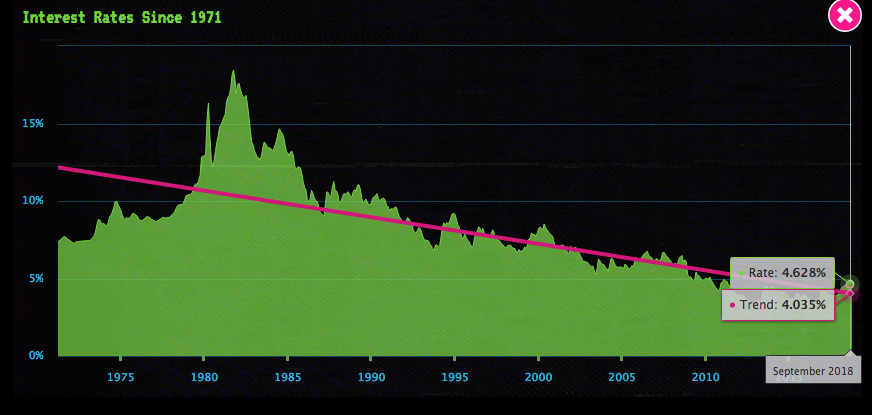
The facts indicate that there is a market shift in progress. Higher interest rates with minimal inventory is spurring some sellers to remain aggressive when pricing their homes for sale. Last year at this time, some listings were selling for as much as 33% over their list prices. However, interest rates were in the low 3% range. In the end, it is about what buyers can afford to pay in a monthly payment.

The active homes (for sale) inventory across our region is at historic lows. The current Washington, D.C. Metro inventory is between a 30-60 day (depending on location) supply based on last week’s contract activities.

My market analysis disclosed that the active to under contract prices show a dramatic price disparity of 15% to 60% (location based) higher than the average prices of the properties that went under contract. Accordingly, the average days on the market for the active properties is also 33-57 days longer (about 66%) than the under contract properties.

In our recently wild market, it was impossible to underprice a property because it would get bid up to above its market value. Therefore, the real estate agent’s role was that of order taker and contract dissector. That condition has now changed. Now, the experienced, knowledgeable agent will analyze the market’s activity, study recent comparable sales, and recommend the best pricing for your property to get is sold as quickly as possible because that is when the optimal price will be received.

Under today’s changing circumstances, we often hear, “If they don’t like our price, they can make us an offer.” The reality is that they will not make an offer and will buy another property that they deem better priced. Buyers do not want to get too creative or too aggressive. They do not want to enter into negotiations that could end badly while losing better opportunities.

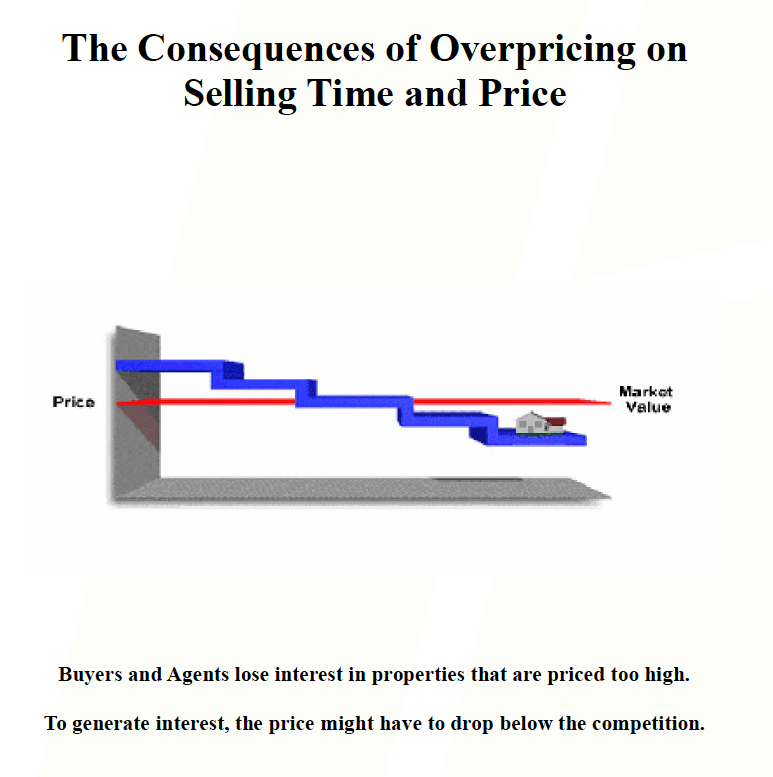
In any market, an overpriced property will languish. In fact, not only will the property languish, but it will ultimately sell for below market value. The chart below shows how the initial price affects the sales price. You can see the importance of pricing the property correctly from the outset.

If a property is overpriced by five percent, it is not unusual to have a final sales price of 3%-5% below actual market value. Why give up value on the gamble that a buyer will overpay in today’s market?

In our industry, the saying goes, “The first offer is usually the best offer.” The first offer typically comes in quickly with a good price and strong terms. Missing out on that first offer will diminish the seller’s ultimate return.

How is market value determined? The skilled, experienced, and knowledgeable real estate agent knows their market, their buyers’ expectations, and is well connected with the top agents in the area. Their wealth of knowledge and experience will help you make the correct pricing decision.

The bottom line: properties that are priced in line with buyer affordability are selling quickly. Properties pushing prices beyond market values are staying on the market.

Are prices falling? No. Many homes are being priced incorrectly and need reductions to bring them in line with actual market values.

If you are thinking about selling your property this year, do yourself a favor and call one of our exceptional agents for a market analysis at 703-624-8333. You will know that the price you set on your property will be competitive, thus bringing you the best returns.

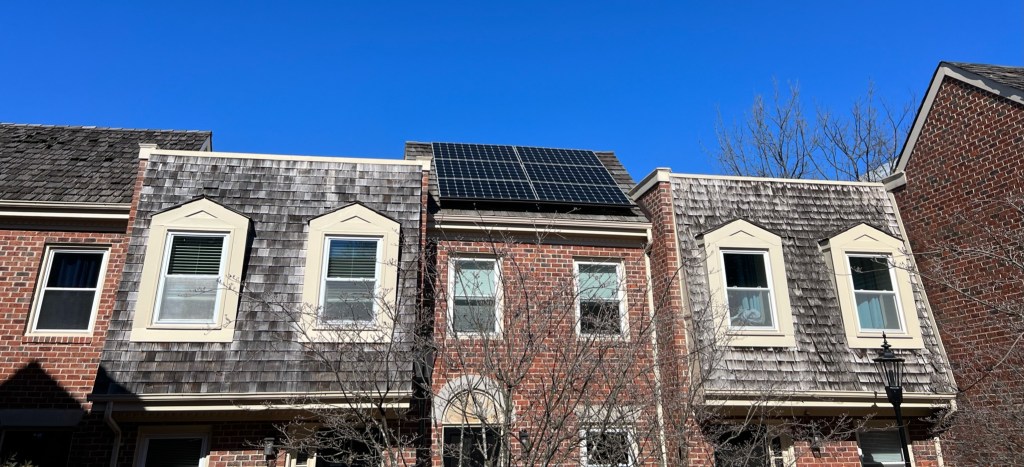
As an extreme analytical, I like to research things to death, ruminate on the findings, ruminate some more, and then maybe–just maybe–make a decision. So when a client mentioned to me that they had decided to install solar panels on their roof, I was intrigued…and then I went down a rabbit hole.

For six solid months, I researched, interviewed solar companies, evaluated cost versus benefit, researched some more, discussed ad nauseum with my husband, and then finally made the decision to install solar panels on my roof.

Obviously, I decided that the pros of installing solar panels outweighed the cons for me. But is it the right decision for you? Let my research and rumination benefit you—below are the pros and cons of installing solar panels:

Pros:

  1. The most obvious: solar reduces your electric bill. Not only can solar offset your electric usage, but you could also be eligible for net metering, an electric billing tool that sends the excess power your panels produce back to the electric grid. If in a day your solar panels produce 20kWs and your home only uses 15kWs, 5kWs get sent back to the grid and offset your electric bill.
  2. Your potential monetary savings will increase over time as electricity continues to increase in price year over year.
  3. You should be eligible for federal tax credits, if you own your system. Currently the Federal Solar Tax credit is 30% of the cost for installation (until 2032). So, if your system costs $30,000, you could be eligible for a $9,000 tax credit, thus lowing the net cost of the system to $21,000. Obviously, consult with your tax professional to make sure it works for you.
  4. You also could potentially sell SRECs, or Solar Renewable Energy Credits. SRECs are created for each megawatt-hour of electricity generated from the solar energy system. Some states have created SREC markets to boost solar installations by requiring electricity suppliers (Pepco, BG&E, etc.) to purchase SRECs produced by in-state solar energy systems as part of their obligation under the state’s Renewable Portfolio Standard (RPS). In our area, the District of Columbia and Maryland offer SREC programs. The value of the SRECs can vary state by state and month by month. DC has one of the more robust SREC markets.
  5. Solar panels are low maintenance. You don’t really need to do anything to the panels other than keep debris off of them.
  6. Solar will decrease your dependence on non-renewable resources. Because saving the planet is always a pro.

And the Cons:

  1. The up-front cost can be cost prohibitive. It can cost between $2,750-$4,000 per kW system, so if you have a 10kW system the range should be $27,500-$40,000. Obviously this is a lot of money up-front and it can take years to recoup the cost.
  2. Some HOAs may not allow them or restrict where they can be placed on your home.
  3. If you live in a wooded area or in the shadow of larger buildings, you won’t be able to reap the maximum benefits.
  4. If you don’t own your roof (common element of a condo/co-op), you likely won’t be able to install solar panels.
  5. The overall aesthetic. Let’s be honest: they aren’t the most aesthetically pleasing part of a house.

I have not regretted my decision to install solar panels for one minute. Since doing so, my husband and I have been able to take advantage of the tax credit, we’ve been able to sell our SREC credits (we live in DC), and our electric bills have reduced significantly (we’ve even had negative balances some months). And the most fun part is logging into the app to see how much energy we’re producing.

If you are thinking of adding solar to your home, give us a call at 703-624-8333. Properties on the Potomac would be happy to talk you through the process and make recommendations.

Here are some additional solar resources.

Here we are – the beginning of 2023 ! You have been waiting to make decisions and commitments until the holidays are over. Now what?

If you are thinking of moving – up, down, around, or away – here are a few tips to help you structure your activities:

  • Decided whether you want to sell or keep your current real estate. Either way, consult a competent real estate broker. The possibilities are endless and your investment and risk are huge. Be selfish and work with the best (that would be us – read our website and see for yourself).
  • If you plan to sell, list long before you want to go on the market. That way pre-marketing excitement can bring the best buyer.
  • Go through all the nooks and crannies of your home (that includes closest that you often use). Start with all off-season belongings first. Decide whether you will keep, toss, or donate.
  • If you have a home of 2000+ Square Feet, know that it will take you several weeks to complete the culling and packing.
  • Be smart and not impulsive. There are many garments and things, that due to the current circumstances ,have remained unworn or unused. Do not throw away anything on a whim. It doesn’t matter if it makes you happy if you will need it later. You will buy it back for more money and of lesser quality. Keep your stuff. Your happiness will compound with lower bills. Be a good steward.
  • Do not make capital investments in your current home unless it will be a coat of paint and some flooring. Keep it simple. Do not replace appliances with stainless steel.
  • Chose a smart real estate agent who knows what sells and what brings in the most return for your investment. – Again, that would be us – not bragging, just the facts.
  • In 2022, our listings sold for 105% of list price and our buyers paid 95.5% of list price. How is that? Ask us.
  • We’ll be happy to show you how you can benefit from our 35 years of experience in all sorts of markets.

Looking to make a move in 2023? Give Properties on the Potomac a call at 703-624-8333!


pexels-photo-1043506.jpeg

What exactly does it mean to you when your mortgage has been “sold?”


The sale of mortgage “paper” and/or servicing is common practice.


Federal law requires that the outgoing mortgage holder must send you in writing, notification of the sale and provide you with the new company’s contact information. The new company must also send you in writing their “welcome” letter and provide you with clear instructions on how and where to pay your mortgage. To learn more, visit http://www.consumerfinance.gov/askcfpb/215/what-happens-if-my-mortgage-servicer-changes-what-do-i-do.html


So what could possibly go wrong? Realize that many of the servicing agents are not located in the United States; data from the loan package is often manually entered into a new database; and escrow accounts can slip into an abyss. Because you, the mortgagor, are ultimately responsible for your mortgage, taxes, and insurance; you must be vigilant.


The subject of escrows held by a lender (or lender’s servicing company) has been tested in court and it has been determined that “when the lender holds escrow funds for property tax payments, a fiduciary duty exists.” This is a very important decision inasmuch as the lender has the obligation to you to pay all taxes and insurance (should they be collecting for that as well) in a timely manner.


A client recently contacted us for help sorting out the sale of their mortgage and getting their taxes paid on time. After two months of phone calls, and several emails, their property taxes were finally paid. However, the County and Town tax records now show  that late payment interest and penalty fees had been levied and received. This indication is not on the servicer’s record, it is on the homeowner’s record.


What’s a homeowner to do?”


  1. Open all lender correspondence promptly.
  2. Act on the correspondence immediately.
  3. Do not be put off by promises or delays.
  4. Keep copious notes of names, times, dates, and agreements. Record the conversations, if possible (they record theirs)
  5. Follow up, follow up, follow up.
  6. Get everything in writing.
  7. Keep all contact numbers handy.
  8. Do not hesitate to contact the investor of your loan to let them know of your problems inasmuch as the investor usually contracts the servicers.


If you have any questions, you can always contact us.

If you look hard enough, you can find almost anything on the internet. When it comes to buying, selling, or renting, there are plenty of websites where you can connect directly with buyers, tenants, landlords, and homes for sale.

Why should you bother finding a real estate agent when you have Google?

pexels-photo-356079.jpeg

Trust

Real estate scams are a thing, particularly for rentals. The FTC provides information on their site for how to recognize a scam, and one way you can spare yourself the trouble is to find an agent you trust who will sift through the market for you. That agent will be sifting through properties listed with agents.

Properties listed with an agent, both to buy or rent, will have a number of things going for them. First, it is in the best interest of the listing agent to make sure that the landlord actually owns the property he or she is listing. Second, the listing agent also wants to get the property rented or sold, so they will do their best to make the property attractive, accessible, and well priced. Third, they will make sure the money and paperwork goes to the right people in a timely fashion.

For sellers and landlords, working with a realtor also provides the safety and comfort that someone prescreened the folk who will be trooping through your home. Your realtor will know which realtors have shown your house, and will have talked personally to any buyers or tenants without agents who want to see the place.

Besides the practical reasons to do good work, realtors have a fiduciary duty to look after the interests of their clients. accountant-accounting-adviser-advisor-159804.jpeg

Wisdom

The internet provides knowledge and very general information. But how do you apply the information, or even determine if it is reliable?

According to Zillow, “Nationwide, Zestimates are currently within 5% of the final sale price 52.9% of the time,” and “Nationally, Zestimates are currently within 20% of the final sale price 85.8% of the time.”

These percentages turn into pretty significant numbers when you’re dealing with houses. It’s easy to set a price too high, or too low, and lose a great deal of money. You could even lose the sale entirely because the price is far higher than the actual appraisal by the lender.

pexels-photo-206673.jpeg

Why does Zestimate have such a huge margin of error?

Zillow can’t walk into a house and get the feel for it’s actual condition and layout. What about how the light moves through the house? Or, how the light moves through the other houses in the neighborhood, or the other houses in the region that have the particular features this particular buyer is looking for?

A good realtor can help you take into account the unquantifiable factors of a home.

pexels-photo-601170.jpeg

Connections

Price is only one part of buying or selling a house.  Home inspectors, contractors, title companies and the like, all provide services essential to a transaction. Services that absolutely must be done well because they have far reaching ramifications. A good realtor will have good people to recommend to you.

When working with a realtor to sell a house, you’re not just relying on their knowledge to set the price and make the best repairs, you’re tapping into their network of human beings who might want to buy or know someone who might want to buy your property. And nobody networks like a realtor.

When working with a realtor to buy a house, you’re tapping into their resources and knowledge of the area, the market, and the professionals. They also have direct access to the most up to date information about the market, and are happy to spend time tracking down the best options for you. You should still do your homework on schools and crime rates, because a realtor can’t make those choices for you–but a good realtor is absolutely invaluable.

At Properties on the Potomac, we pride ourselves in our commitment to our clients. We share our knowledge and our connections with our clients. If you are thinking of buying or selling and want to find out more about how we can help you, contact us here.