As realtors, we often get asked by those looking to sell their home about potential remodels or updates. Friends and family with long-term value in mind want to know if remodeling their kitchen, or installing new flooring, or adding an addition will be worth the investment when it comes time to sell.

But what about bathrooms?

Here’s the truth: updating a bathroom can be one of the most cost-effective ways to increase the value of your home. According to a report from Remodeling Magazine, an average bathroom remodel can recoup up to 60% of its cost at resale, making it a valuable investment for homeowners looking to increase the value of their property.

Here are some reasons why updating your bathroom before selling your home can be a smart investment:

  1. It improves the appearance of your home: a dated and worn-out bathroom can be a major turnoff for potential buyers. Updating the bathroom with new fixtures, flooring, and lighting can significantly improve its appearance and make a better impression on buyers.
  2. It increases functionality: upgrading the bathroom can also improve its functionality and make it more appealing to buyers. Adding a double sink, a larger shower, or a separate tub can make the bathroom more functional and appealing to buyers.
  3. It boosts energy efficiency: updating the bathroom can also include the installation of energy-efficient fixtures and appliances, such as low-flow toilets, LED lighting, and water-saving showerheads. These updates can help reduce energy and water consumption, lower utility bills, and appeal to eco-conscious buyers.
  4. It adds value to your home: a bathroom remodel can add value to your home, making it more attractive to potential buyers. By investing in the bathroom, you can increase the overall value of your property and potentially earn a higher selling price.
  5. It increases your home’s competitiveness: with many homes on the market, updating your bathroom can help your home stand out from the competition. A modern and updated bathroom can be a major selling point for potential buyers, especially if it offers features that other homes in the area lack.

When updating your bathroom, consider making updates that are neutral and timeless. Avoid trendy designs or bold colors that may not appeal to all buyers. Opt for classic fixtures and finishes that can appeal to a wide range of buyers and make the bathroom look clean, bright, and spacious.

In short: updating your bathroom can be a smart investment before selling your home. It improves the appearance and functionality of your home, boosts energy efficiency, adds value to your property, and makes your home more competitive in the market. By investing in your bathroom, you can increase your chances of selling your home quickly and for a higher price.

Thinking about updating your home with resale value in mind? Give Properties on the Potomac a call at 703-624-8333 for a free consultation!

In recent years, smart home technology has become increasingly popular, offering homeowners greater control and convenience over their living spaces. From security systems to smart lighting, there are a variety of devices available to turn any home into a smart home. And, with real estate in mind, today’s buyers appreciate the added value of a smart home already installed for them. If you’re interested in making your home a smart home, read on…

Start with a smart hub
The first step in making your home a smart home is to invest in a smart hub. A smart hub is a device that connects to all your smart devices, allowing you to control them from a single app. There are several popular smart hubs on the market, including Amazon Echo, Google Home, and Apple HomeKit. Once you have a smart hub in place, you can begin adding other smart devices to your home.

Add smart lighting
One of the easiest ways to make your home a smart home is to add smart lighting. Smart light bulbs can be controlled from your smartphone, allowing you to turn them on and off, dim them, and even change their color. You can also set schedules for your lights to turn on and off automatically, making it look like someone is home even when you’re away. Lighting options include Philips Hue, LIFX, and TP-Link Kasa.

Install a smart thermostat
A smart thermostat is a smart home device that can save you money on your energy bills. Smart thermostats can learn your habits and adjust the temperature of your home accordingly. They can also be controlled remotely from your smartphone, allowing you to adjust the temperature even when you’re away from home. Thermostat options include Nest, Ecobee, and Honeywell.

Consider smart security
Smart security devices can give you greater peace of mind by allowing you to monitor your home from anywhere. Smart security cameras can be accessed from your smartphone, allowing you to check in on your home at any time. You can also receive alerts if the camera detects motion or sound. Other smart security devices include smart locks, which allow you to lock and unlock your doors remotely, and smart doorbells, which allow you to see and talk to anyone who comes to your door. Smart security options include Ring, Arlo, and August.

Add smart entertainment
Finally, you can make your home a smart home by adding smart entertainment devices. Smart TVs can be controlled from your smartphone, allowing you to change channels, adjust the volume, and even launch apps. You can also add a smart speaker, such as the Amazon Echo, Sonos, or Google Home, to stream music, podcasts, and audiobooks throughout your home.

Making your home a smart home can be a fun and rewarding experience. By adding smart devices, you can make your home more convenient, secure, and energy-efficient. Whether you’re looking to add smart lighting, a smart thermostat, or smart security devices, there are plenty of options available to suit your needs and budget.

Want more tips and tricks for upgrading your home and/or making it more valuable for homebuyers? Give Properties on the Potomac a call at 703-624-8333.

Why does one house sell in a day and another on the same street stays on the market? The answer is often an intangible “feeling” that one house provides over the other.

That feeling is happiness. Happy houses sell faster even if they are not perfectly staged and pristine. The occupants have decorated their house with joy and incorporated elements that they love. The house feels authentic and welcoming. Unlike formulaic staging, happiness cannot be “staged.” It has to be accumulated over time in layers and often begins on the day the occupants moved in.

Often, homeowners decorate and improve their houses for “resale” value; not necessarily that the improvement pleases them. That is when the authenticity issues rise. Those who design and furnish their homes to their taste, incorporating personal and family treasures and art, remain authentic to themselves and their homes show it.

Whenever my husband and I bought a new house, I decorated for our taste. I boldly painted two walls in a two-story foyer in a gloss “shutter green.” At the time, beige was the color of choice. Every time we entered our foyer, we were thrilled with the color. Neighbors and family expressed concerns that nobody would buy the house with the colors. The reality was that when we decided to sell it, we received two full price offers almost immediately.

Clients often ask me to give them “permission” to improve their homes for resale value even though they may have just moved in. My response is categorically, “Will this improvement make you happy?”

We spend a lot of time in our houses. Our environment must please us and not a prospective buyer. Tastes and trends change quickly so best to design and enjoy the home for yourself and your family.

When the time to sell approaches, that is when condition and design must be evaluated. Below is a list of improvements to make to improve resale value:

  • Replace carpets
  • Declutter
  • Clear closets
  • Clean landscaping and mulch
  • Seal driveway
  • Have windows washed
  • Replace/remove any worn or broken elements
  • Paint, if walls show wear or if paint is dated
  • Make sure that everything works properly
  • Have the house professionally cleaned

Below are some things not to do in preparation for sale:

  • Do not replace appliances
  • Do not change kitchen or bath counter tops
  • Do not remodel bathrooms or kitchen
  • If the basement is not finished, do not finish it for resale

When we meet with potential sellers, we discuss what it will take to get the house sold. We suggest improvements and staging, if any. Our goal is to make your house sell well and quickly.

If you are considering a move, please contact Properties on the Potomac at 703-624-8333 to review your house and design a plan for making it irresistible.

While scam artists have always been around, modern technology has made their work easier and more effective. Readily accessible public records are fodder for them.

Recently, I received a text with the look and feel of an authentic inquiry. The writer inquired about commissions and timing. When I called the writer, he answered the phone. Our dialogue was typical of a potential seller. They responded with an Outlook email address to my request for their email address. The property address and description matched as well as the name given during our conversation.

The potential “seller” knew about the property’s features, details, and general acquisition information. My intuition had an initial twinge when I learned that the caller was out of town and wanted to sell as soon as possible. My scam antennae were on mild alert. I was planning identity verification measures before concluding the initial conversation.

The property in question was a vacant lot of substantial value. Fortunately, I am familiar with the area and the associated lots. My former investigator self was devising plans to verify the veracity of the caller.

Upon my return to my office, I dug deeper into the owner. I discovered phone numbers that did not match the one from which the text was sent. A phone call to the newly discovered phone number confirmed my suspicions. The caller/texter was a scam. The actual property owner confirmed that they had not spoken to me or asked to sell their lot. The owner was naturally upset. Was he being targeted, was someone trying to steal the lot, or was the texter trying to “tunnel” into my computer network?

How can someone other than the actual owner sell a property? There are many ways. One of the easiest ways is a gullible agent. Forged documents, identity theft, an absentee owner, an owner’s death, and many other scenarios can separate a rightful owner from their property.

What can a property owner do to protect the titles to their properties? Here are some ways:

  • If closing on a new purchase, buy owner’s title insurance. However, enhanced title insurance is typically not available for vacant land.
  • Another option is to subscribe to an identity protection service with a title monitoring option.
  • If you own investment property or vacant land, visit your properties, introduce yourself to the neighbors and ask them to alert you to any suspicious activities or strange or repeated visitors, visits or unexpected surveys.

At Properties on the Potomac, Inc., we are implementing new and higher levels of security to safeguard our community from this form of theft. We are educating our agents, working with professionals, and designing stringent security measures. The increased security measures might seem invasive to callers to our office and agents. Please know that we intend to protect property owners’ rights and never be duped to the contrary.

Through our affiliation with the National Association of Realtors, Northern Virginia Association of Realtors, and the Greater Capital Area Association of Realtors, we have available sophisticated resources and research tools with which we can help protect our clients and our community. If you have questions or concerns about real estate scams, call Properties on the Potomac at 703-624-8333.

I recently showed a home that was set slightly below the road. I was immediately apprehensive.

Obviously not all homes can be built at the top of a hill—if they were, neighborhoods would look more like tiny Tuscan villages. But whenever a house is set below the road or otherwise at the bottom of a hill, you have to worry about water. Maybe the Tuscans had the right idea—they were protected from invaders and water.

Real estate pictures tend to only show the positive attributes of a home, and many times these photos don’t show the house in relation to the surrounding topography. If only technology came with a scratch and sniff feature, we could easily tell if incoming water was an issue without having to be in the home.

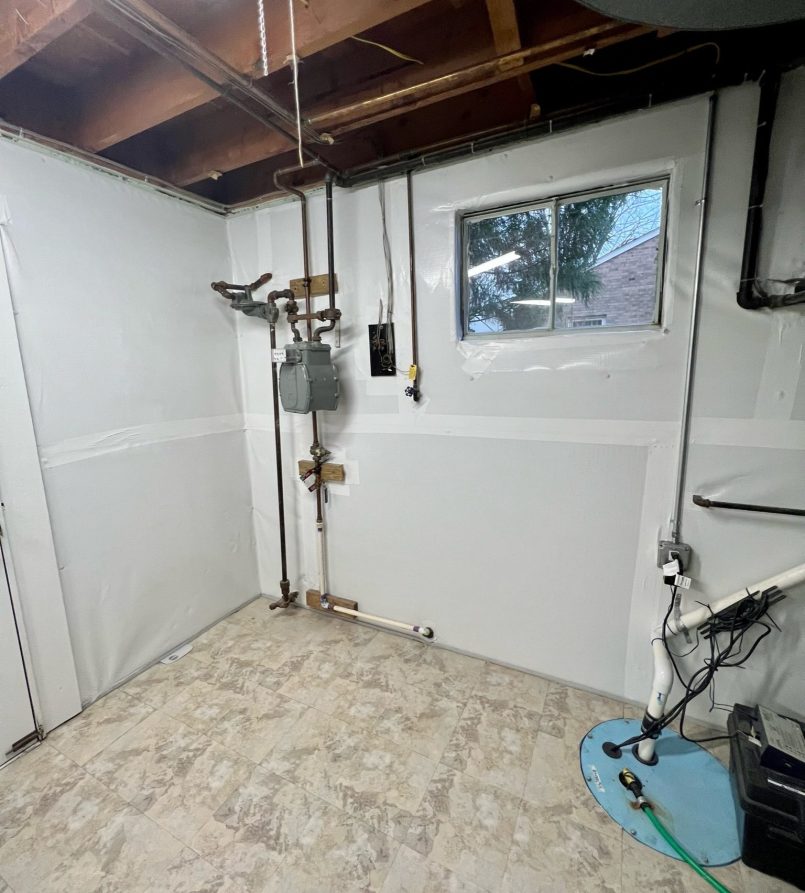
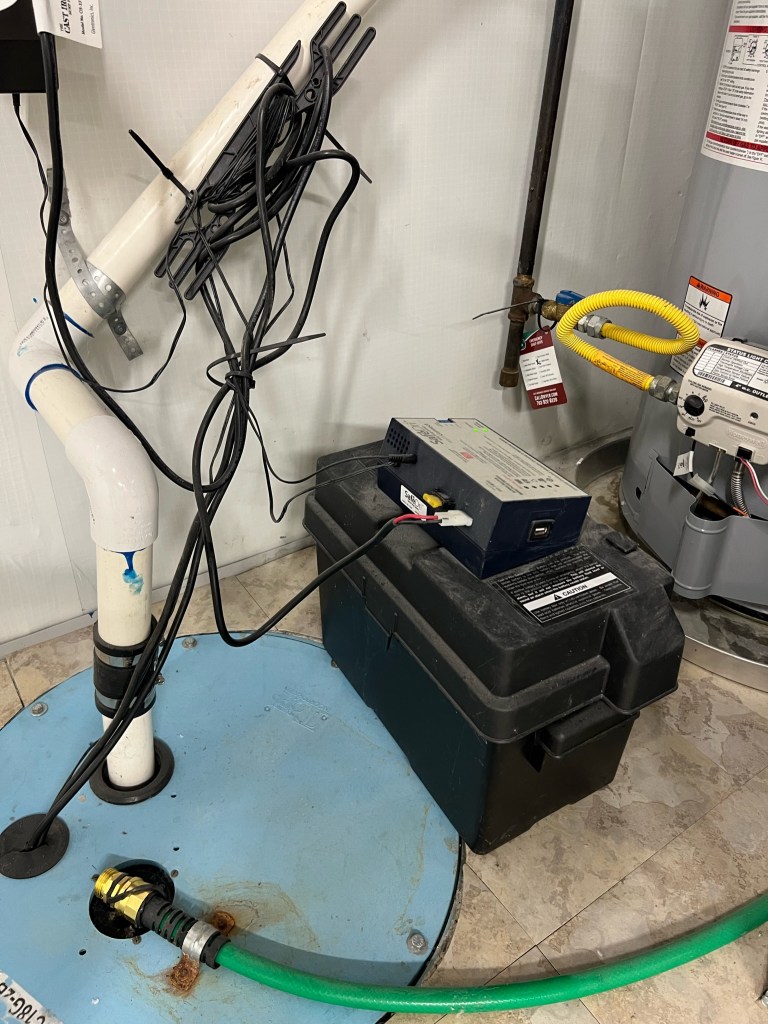
The basement of this home proved my suspicions correct—it had previously had a problem with water intrusion. How did I know for sure? It had been professionally waterproofed. In the unfinished portion of the basement, along two of the perimeter walls, there was concrete repair and a little piece of plastic that sticks out around the edge. These are telltale signs a waterproofing company had trenched around the interior perimeter of the basement and installed a drainage system that empties into a sump pump. The sump pump then pumps the water out and away from the house.


Now the home seems dry, but it will be something that a future homeowner will need to monitor in the future, and it’s definitely something you should know when considering purchasing a house.

If you ever do have issues with water coming into your home, here are some remedies:

1.If there is a sump pump installed, make sure it is working properly. You might also want to consider installing a backup battery on the sump pump in case of power outages.

2. If there are exterior stairs to the basement with a drain at the bottom, that drain must always be kept clear. At the very least, install an elevated drain cover to keep leaves and debris from covering it completely. If possible, consider building a roof over top of the stairs, to direct water away.

3. Extend downspouts away from the home. This can be done hrough a gutter extension kit (either above ground or dig a trench and extend it underground). A rain barrel is another good option, just make sure that the overflow extends away from the home.


4. Landscaping should be slightly elevated and sloped away from the foundation. Aside from the aesthetic, foundation flower beds serve an important purpose. They not only direct water away from the home, but the plants also help absorb any remaining water.

5. Put a cover over any window wells. You can purchase an inexpensive plastic cover from your local hardware store. They come in multiple sizes and shapes depending on what you need. If the window well is in a more prominent part of your home you, you can have a custom one made that is more aesthetically pleasing.

6. Apply a sealant to the interior foundation walls. Interior sealants are not a permanent solution but can help keep humidity levels down in the lower level.

7. Have the home professionally waterproofed. This is an effective, long-term solution to move water away from the foundation of the home.

It is extremely important to keep your home dry. Damp basements can lead to mold and mold can travel through the ductwork of your home, creating a toxic health hazard.

If you have any questions about keeping water out of your basement, reach out to us at 703-624-8333. Properties on the Potomac can help guide you to the right contractor.

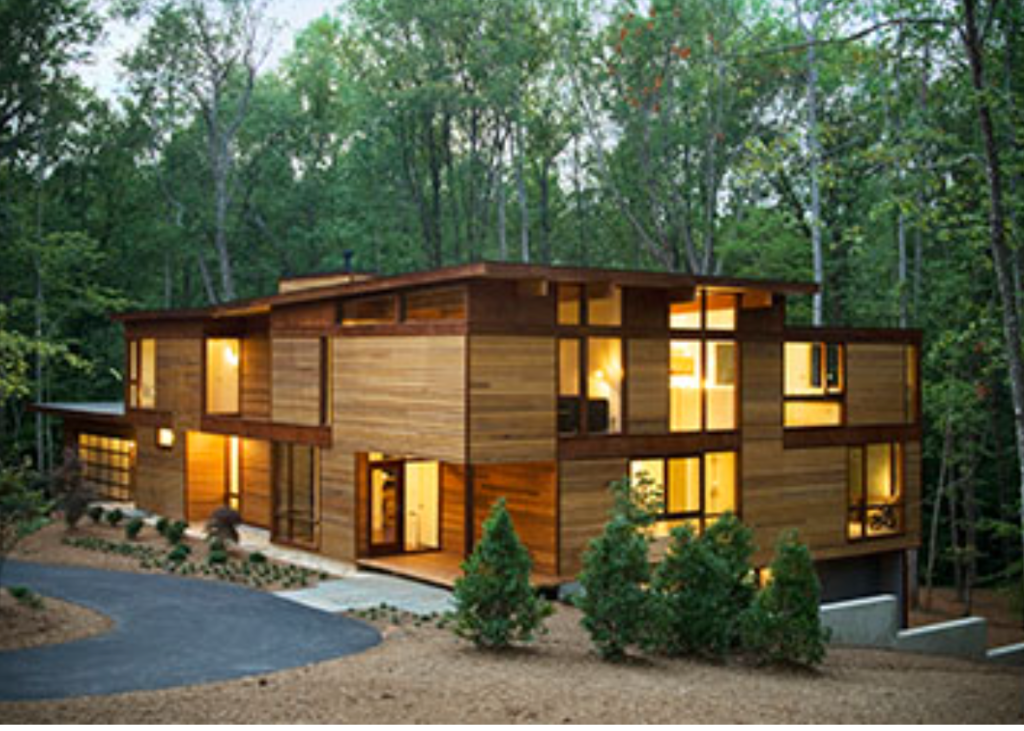
Pre-fabricated homes come in a variety of prebuilt conditions. You may have heard the terms “modular home” or “panelized home” but what do these really mean? Regardless of the name, the ultimate outcome is that the house arrives in some form of units to be assembled on a lot. The idea often conjures up visions of mobile homes or plain houses without character, but the reality of these homes is very different.

Properties on the Potomac has sold homes that were panelized for millions of dollars. In McLean, Virginia, an entire subdivision was developed with modular homes that now resell for over $1.5 million. From a real estate perspective, modular houses can perform similar to those that were stick built on the lot.

Modular homes come in “modules.” Typically, a module would be 12 feet wide. Therefore, many of the rooms in such houses max out at 12 feet. Modules come complete with hung doors, installed windows, and even with drywall.

Panelized homes come in panels ready to assemble. The panels are typically the lumber part of the construction and streamline construction time. Many contemporary designs rely on panels to create the clean lines and tall walls. Panels do not warp and often come pre-insulated.

Another form of panels are precast cement panels used for basement walls. They are taller and energy efficient.

In the modular systems, the houses provide minimum change opportunities from the plans as presented. The key is to find the right plan. These homes save hundreds of thousands of dollars over custom-built or stick-built.

Some of the benefits of using modular include the following:

  • The structure is built indoors and is not exposed to the elements.
  • Because it is not in the elements, the structures remain clean and free of mold.
  • According to the manufacturers, the joints at connections are stronger and more rigid, thus less susceptible to storm damage and soil shifts;
  • The timing of a project is predictable.
  • Modular homes are less susceptible to supply chain fluctuations.
  • Pricing is very predictable and often fixed at time of order.

Modular house square footage can range from under 1,000 to over 5,000. The cost for the package as listed is typically the cost of the building materials. The price does not reflect the cost of land, land engineering, basements and foundations, and water and sewer taps or well and septic development.

The builders that we recommend can build from scratch or build with modules or panels. They can also add to modules, including garages and porches.

If you have considered a custom home only to be discouraged by the high cost of building, let’s explore modular or panelized systems to determine if that would be a good option. Call Properties on the Potomac at
703-624-8333.

The facts indicate that there is a market shift in progress. Higher interest rates with minimal inventory is spurring some sellers to remain aggressive when pricing their homes for sale. Last year at this time, some listings were selling for as much as 33% over their list prices. However, interest rates were in the low 3% range. In the end, it is about what buyers can afford to pay in a monthly payment.

The active homes (for sale) inventory across our region is at historic lows. The current Washington, D.C. Metro inventory is between a 30-60 day (depending on location) supply based on last week’s contract activities.

My market analysis disclosed that the active to under contract prices show a dramatic price disparity of 15% to 60% (location based) higher than the average prices of the properties that went under contract. Accordingly, the average days on the market for the active properties is also 33-57 days longer (about 66%) than the under contract properties.

In our recently wild market, it was impossible to underprice a property because it would get bid up to above its market value. Therefore, the real estate agent’s role was that of order taker and contract dissector. That condition has now changed. Now, the experienced, knowledgeable agent will analyze the market’s activity, study recent comparable sales, and recommend the best pricing for your property to get is sold as quickly as possible because that is when the optimal price will be received.

Under today’s changing circumstances, we often hear, “If they don’t like our price, they can make us an offer.” The reality is that they will not make an offer and will buy another property that they deem better priced. Buyers do not want to get too creative or too aggressive. They do not want to enter into negotiations that could end badly while losing better opportunities.

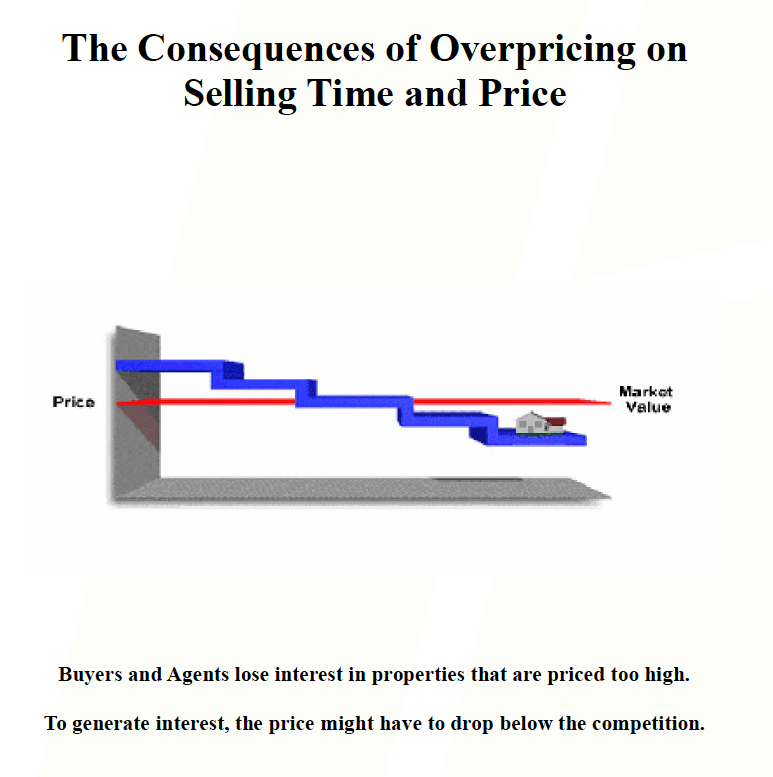
In any market, an overpriced property will languish. In fact, not only will the property languish, but it will ultimately sell for below market value. The chart below shows how the initial price affects the sales price. You can see the importance of pricing the property correctly from the outset.

If a property is overpriced by five percent, it is not unusual to have a final sales price of 3%-5% below actual market value. Why give up value on the gamble that a buyer will overpay in today’s market?

In our industry, the saying goes, “The first offer is usually the best offer.” The first offer typically comes in quickly with a good price and strong terms. Missing out on that first offer will diminish the seller’s ultimate return.

How is market value determined? The skilled, experienced, and knowledgeable real estate agent knows their market, their buyers’ expectations, and is well connected with the top agents in the area. Their wealth of knowledge and experience will help you make the correct pricing decision.

The bottom line: properties that are priced in line with buyer affordability are selling quickly. Properties pushing prices beyond market values are staying on the market.

Are prices falling? No. Many homes are being priced incorrectly and need reductions to bring them in line with actual market values.

If you are thinking about selling your property this year, do yourself a favor and call one of our exceptional agents for a market analysis at 703-624-8333. You will know that the price you set on your property will be competitive, thus bringing you the best returns.

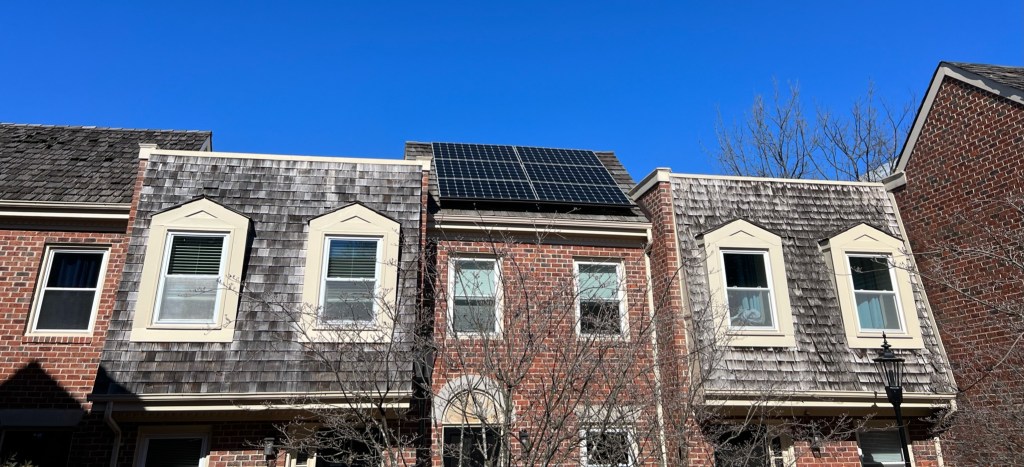
As an extreme analytical, I like to research things to death, ruminate on the findings, ruminate some more, and then maybe–just maybe–make a decision. So when a client mentioned to me that they had decided to install solar panels on their roof, I was intrigued…and then I went down a rabbit hole.

For six solid months, I researched, interviewed solar companies, evaluated cost versus benefit, researched some more, discussed ad nauseum with my husband, and then finally made the decision to install solar panels on my roof.

Obviously, I decided that the pros of installing solar panels outweighed the cons for me. But is it the right decision for you? Let my research and rumination benefit you—below are the pros and cons of installing solar panels:

Pros:

  1. The most obvious: solar reduces your electric bill. Not only can solar offset your electric usage, but you could also be eligible for net metering, an electric billing tool that sends the excess power your panels produce back to the electric grid. If in a day your solar panels produce 20kWs and your home only uses 15kWs, 5kWs get sent back to the grid and offset your electric bill.
  2. Your potential monetary savings will increase over time as electricity continues to increase in price year over year.
  3. You should be eligible for federal tax credits, if you own your system. Currently the Federal Solar Tax credit is 30% of the cost for installation (until 2032). So, if your system costs $30,000, you could be eligible for a $9,000 tax credit, thus lowing the net cost of the system to $21,000. Obviously, consult with your tax professional to make sure it works for you.
  4. You also could potentially sell SRECs, or Solar Renewable Energy Credits. SRECs are created for each megawatt-hour of electricity generated from the solar energy system. Some states have created SREC markets to boost solar installations by requiring electricity suppliers (Pepco, BG&E, etc.) to purchase SRECs produced by in-state solar energy systems as part of their obligation under the state’s Renewable Portfolio Standard (RPS). In our area, the District of Columbia and Maryland offer SREC programs. The value of the SRECs can vary state by state and month by month. DC has one of the more robust SREC markets.
  5. Solar panels are low maintenance. You don’t really need to do anything to the panels other than keep debris off of them.
  6. Solar will decrease your dependence on non-renewable resources. Because saving the planet is always a pro.

And the Cons:

  1. The up-front cost can be cost prohibitive. It can cost between $2,750-$4,000 per kW system, so if you have a 10kW system the range should be $27,500-$40,000. Obviously this is a lot of money up-front and it can take years to recoup the cost.
  2. Some HOAs may not allow them or restrict where they can be placed on your home.
  3. If you live in a wooded area or in the shadow of larger buildings, you won’t be able to reap the maximum benefits.
  4. If you don’t own your roof (common element of a condo/co-op), you likely won’t be able to install solar panels.
  5. The overall aesthetic. Let’s be honest: they aren’t the most aesthetically pleasing part of a house.

I have not regretted my decision to install solar panels for one minute. Since doing so, my husband and I have been able to take advantage of the tax credit, we’ve been able to sell our SREC credits (we live in DC), and our electric bills have reduced significantly (we’ve even had negative balances some months). And the most fun part is logging into the app to see how much energy we’re producing.

If you are thinking of adding solar to your home, give us a call at 703-624-8333. Properties on the Potomac would be happy to talk you through the process and make recommendations.

Here are some additional solar resources.

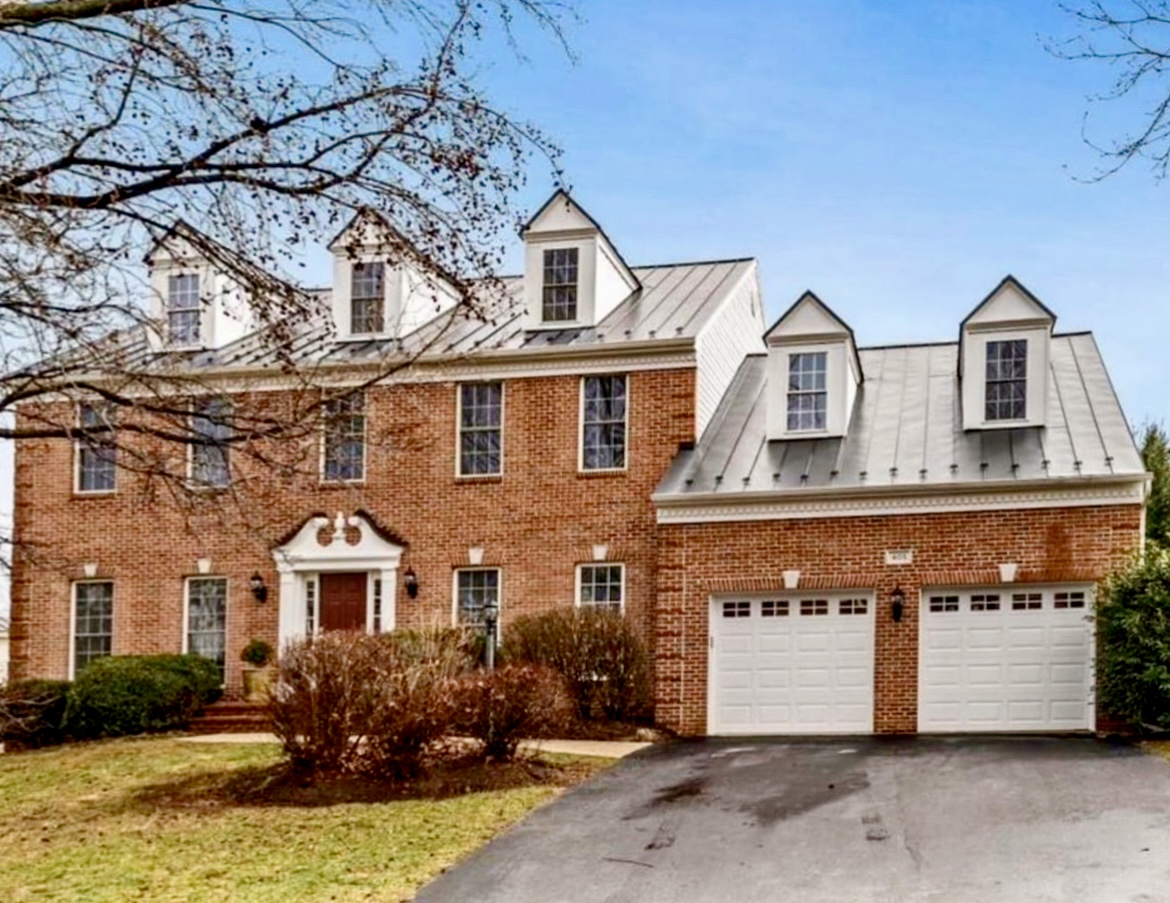
“My house is the red brick one . . .”

Red brick is distinctive. It has commanded attention over the centuries and does not disappoint today. The Victorian red brick house dates back to the 1870s and was typically a sign of wealth among homeowners, as yellow bricks were far less expensive.

The Empire State building, completed in 1931, is faced with 10 million red bricks. At the time of its opening, it was the tallest building in the world. Why the choice of red brick instead of some other color?

All bricks are not alike. Bricks are classified by color, class, size, and purpose of use. The bricks used to face residences are typically “First Class Bricks.” These bricks are thoroughly burnt, and are copper, dark red, or cherry in color. The bricks should be free of cracks, flaws, or stones. Their texture must be uniform and not be able to be scratched or dented by a fingernail. When two bricks are struck together, they should have a metallic ring. They should not absorb water and lime must not be visible in a brick fracture.

Bricks are made of clay and earthen components. The clay or material used affects the color and class of the bricks. Additionally, the length of time of “firing” affects the color. Extra burning makes a browner brick. Red bricks have to be made “just right” to optimize color and important features.

Because of the careful process needed to create the red bricks, the cost increases accordingly. Lighter colored bricks will have sand or even cement in their mix. Sand based bricks are more porous, thus less water resistant. Those bricks require sealing to remediate water absorption. There was a building in Washington, D.C. constructed with a very attractive red brick façade. Its sides and back were covered with yellow brick. If heavy rains hit from a particular direction, the interior walls of that building became damp. The walls behind the red bricks of the façade remained dry.

In short: the color of brick chosen for a home makes a statement. With today’s technology in brick manufacturing, more colors are available that qualify as first class. And while red brick may no longer be considered prestigious, a red brick house typically sells faster (subject to many other criteria) than a lighter colored brick, or homes clad in other materials.

Looking for your perfect red brick home? Call or text us at 703-624-8333.

The houses may look the same. The lots may all be the same size. In some communities, there may not be a lot differentiating one house from the next, at least not externally. But living on a cul-de-sac is different. A cul-de-sac adds value. And when it comes time to sell, houses in a cul-de-sac have the upper hand over their non-cul-de-sac neighbors. Here’s why:

  1. Instant community
    For a new buyer, living on a cul-de-sac means it might be easier to get to know your neighbors. It is often easier to share a refreshment, make introductions, and, maybe, find common ground.
  2. Security
    Quite literally, being at the end of the road makes it difficult for cars to speed past your home. It’s safer to walk and to congregate outside. Children can play, ride their bikes, skate, or play ball, while the windows of 3-4 homes overlook the area.
  3. Social activity
    On warm summer evenings, it is not unusual to see neighbors enjoying a beverage together on the cul-de-sac where children have played most of the day. It is a great place to invite children and adults alike to get away from screens and get some fresh air and human interaction.
  4. Relaxing environment
    Without having cars driving past your front yard, the noise and level of activity is greatly diminished. Relaxation comes with an absence of movement and noise. Yes, children might laugh and shout, but these are the happy sounds of life – not the road noise and speed of business life.
  5. It is a throwback to earlier times of children playing outdoors
    The cul-de-sac is where children of all ages can play together. It is heartwarming to see the older kids teaching the younger ones to shoot a basket in a hoop or to learn to ride a bicycle. It frees up parents to relax without managing children’s every activity. It stimulates sociability and friendship and expands energy for a good night’s sleep. “It is one of the last remaining ways to give children an old-fashioned childhood,” says Patricia Shannon of Southern Living magazine.

While there are exceptions to all of these, my 37 years of serving clients has proven that cul-de-sacs are a great place for building friendships, relaxing, and hours of safe play for children. Historically, homes on cul-de-sacs command higher resale values. Why? Limited supply with greater demand (as listed above) boost value. The cul-de-sac is a special place.

Is a new home on your list for this year? We know where the cul-de-sacs are. Call or text us at 703-624-8333 to help you find the perfect setting.