The facts indicate that there is a market shift in progress. Higher interest rates with minimal inventory is spurring some sellers to remain aggressive when pricing their homes for sale. Last year at this time, some listings were selling for as much as 33% over their list prices. However, interest rates were in the low 3% range. In the end, it is about what buyers can afford to pay in a monthly payment.

The active homes (for sale) inventory across our region is at historic lows. The current Washington, D.C. Metro inventory is between a 30-60 day (depending on location) supply based on last week’s contract activities.

My market analysis disclosed that the active to under contract prices show a dramatic price disparity of 15% to 60% (location based) higher than the average prices of the properties that went under contract. Accordingly, the average days on the market for the active properties is also 33-57 days longer (about 66%) than the under contract properties.

In our recently wild market, it was impossible to underprice a property because it would get bid up to above its market value. Therefore, the real estate agent’s role was that of order taker and contract dissector. That condition has now changed. Now, the experienced, knowledgeable agent will analyze the market’s activity, study recent comparable sales, and recommend the best pricing for your property to get is sold as quickly as possible because that is when the optimal price will be received.

Under today’s changing circumstances, we often hear, “If they don’t like our price, they can make us an offer.” The reality is that they will not make an offer and will buy another property that they deem better priced. Buyers do not want to get too creative or too aggressive. They do not want to enter into negotiations that could end badly while losing better opportunities.

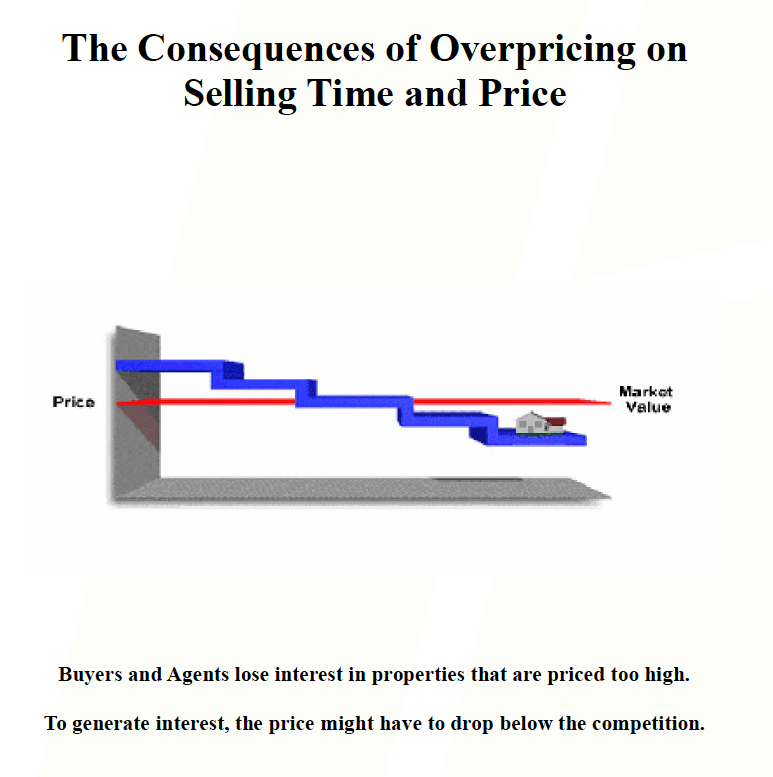
In any market, an overpriced property will languish. In fact, not only will the property languish, but it will ultimately sell for below market value. The chart below shows how the initial price affects the sales price. You can see the importance of pricing the property correctly from the outset.

If a property is overpriced by five percent, it is not unusual to have a final sales price of 3%-5% below actual market value. Why give up value on the gamble that a buyer will overpay in today’s market?

In our industry, the saying goes, “The first offer is usually the best offer.” The first offer typically comes in quickly with a good price and strong terms. Missing out on that first offer will diminish the seller’s ultimate return.

How is market value determined? The skilled, experienced, and knowledgeable real estate agent knows their market, their buyers’ expectations, and is well connected with the top agents in the area. Their wealth of knowledge and experience will help you make the correct pricing decision.

The bottom line: properties that are priced in line with buyer affordability are selling quickly. Properties pushing prices beyond market values are staying on the market.

Are prices falling? No. Many homes are being priced incorrectly and need reductions to bring them in line with actual market values.

If you are thinking about selling your property this year, do yourself a favor and call one of our exceptional agents for a market analysis at 703-624-8333. You will know that the price you set on your property will be competitive, thus bringing you the best returns.

By Andrea Justus, Properties on the Potomac Realtor

It’s that time of year: the time to plan your garden and start seeds. Vegetable gardening is easy and fun and the prep starts eight weeks prior to planting time. In Northern Virginia, planting time is generally the weekend of Mother’s Day. Although beautiful Spring days are tempting, I have “early planted” and lost a garden or two due to late season snow and cold snaps. I now am a firm advocate of Mother’s Day planting.   

Seeds can be planted directly into the ground for items like spinach, radishes, beets and herbs, as long as the ground is 50 degrees. For non-leafy vegetables, it’s important to start your plants early to get a jump on the growing season. I start tomatoes, eggplant, okra, cucumbers, squash and pumpkins in early March so that by early May the plants are large and healthy enough to withstand weather and insects and flourish. (For pumpkins, you can also sow the seeds in the ground in June for pumpkins in Fall.) March is also a good time to start flowers like Astilbe, Dahlias, and Croscomia. By starting in March, the flowers will bloom early and throughout summer.

What is the best method for starting seeds? There are many approaches, from dirt in a cup to seed-starting trays with heating pads and overhead lights. I make my own seed-starting blend with a Miracle Grow soil, worm castings, vermiculite and peat moss mixture. The mix is approximately 5 parts soil, two parts worm castings, one part vermiculite and a handful of peat moss. This gives the seeds an airy and nutritious start. You can use seed-starting trays or mini pots available at most gardening stores. Solo cups in trays also work well. I start mine in the basement next to the door so they get natural light. I use solar blankets on the ground and behind the seed table to capture any warmth and sunlight available.

Once the seed starts come up, I transfer them to larger cups and plant them deeper. Sometimes more than one transplant is needed. Water lightly every other day so that the soil is slightly damp, not wet. A gentle hand is critical to transferring the seed starts. Plan on starting more seeds than you need plants so that it’s not a crisis if you break a tender shoot. About 2 weeks before planting, start hardening off the plants by putting them outside. Start with an hour or two and gradually increase the time outside. You can also cover the plants while they are outside with burlap to keep them from being wind and sun burned. Once the plants are hardened, get ready to plant your garden in early May. I like to plant and fertilize with Abernethy and Spencer’s TLC. It gets healthy plants off to a roaring start!

I enjoy gardening and sharing the fruits of my labor with others! If you know me, you know I’m a plant person. Happy Gardening!

Need help figuring out the best landscaping for resale value? Reach out to Properties on the Potomac at
703-624-8333 now!

As an extreme analytical, I like to research things to death, ruminate on the findings, ruminate some more, and then maybe–just maybe–make a decision. So when a client mentioned to me that they had decided to install solar panels on their roof, I was intrigued…and then I went down a rabbit hole.

For six solid months, I researched, interviewed solar companies, evaluated cost versus benefit, researched some more, discussed ad nauseum with my husband, and then finally made the decision to install solar panels on my roof.

Obviously, I decided that the pros of installing solar panels outweighed the cons for me. But is it the right decision for you? Let my research and rumination benefit you—below are the pros and cons of installing solar panels:

Pros:

  1. The most obvious: solar reduces your electric bill. Not only can solar offset your electric usage, but you could also be eligible for net metering, an electric billing tool that sends the excess power your panels produce back to the electric grid. If in a day your solar panels produce 20kWs and your home only uses 15kWs, 5kWs get sent back to the grid and offset your electric bill.
  2. Your potential monetary savings will increase over time as electricity continues to increase in price year over year.
  3. You should be eligible for federal tax credits, if you own your system. Currently the Federal Solar Tax credit is 30% of the cost for installation (until 2032). So, if your system costs $30,000, you could be eligible for a $9,000 tax credit, thus lowing the net cost of the system to $21,000. Obviously, consult with your tax professional to make sure it works for you.
  4. You also could potentially sell SRECs, or Solar Renewable Energy Credits. SRECs are created for each megawatt-hour of electricity generated from the solar energy system. Some states have created SREC markets to boost solar installations by requiring electricity suppliers (Pepco, BG&E, etc.) to purchase SRECs produced by in-state solar energy systems as part of their obligation under the state’s Renewable Portfolio Standard (RPS). In our area, the District of Columbia and Maryland offer SREC programs. The value of the SRECs can vary state by state and month by month. DC has one of the more robust SREC markets.
  5. Solar panels are low maintenance. You don’t really need to do anything to the panels other than keep debris off of them.
  6. Solar will decrease your dependence on non-renewable resources. Because saving the planet is always a pro.

And the Cons:

  1. The up-front cost can be cost prohibitive. It can cost between $2,750-$4,000 per kW system, so if you have a 10kW system the range should be $27,500-$40,000. Obviously this is a lot of money up-front and it can take years to recoup the cost.
  2. Some HOAs may not allow them or restrict where they can be placed on your home.
  3. If you live in a wooded area or in the shadow of larger buildings, you won’t be able to reap the maximum benefits.
  4. If you don’t own your roof (common element of a condo/co-op), you likely won’t be able to install solar panels.
  5. The overall aesthetic. Let’s be honest: they aren’t the most aesthetically pleasing part of a house.

I have not regretted my decision to install solar panels for one minute. Since doing so, my husband and I have been able to take advantage of the tax credit, we’ve been able to sell our SREC credits (we live in DC), and our electric bills have reduced significantly (we’ve even had negative balances some months). And the most fun part is logging into the app to see how much energy we’re producing.

If you are thinking of adding solar to your home, give us a call at 703-624-8333. Properties on the Potomac would be happy to talk you through the process and make recommendations.

Here are some additional solar resources.

“My house is the red brick one . . .”

Red brick is distinctive. It has commanded attention over the centuries and does not disappoint today. The Victorian red brick house dates back to the 1870s and was typically a sign of wealth among homeowners, as yellow bricks were far less expensive.

The Empire State building, completed in 1931, is faced with 10 million red bricks. At the time of its opening, it was the tallest building in the world. Why the choice of red brick instead of some other color?

All bricks are not alike. Bricks are classified by color, class, size, and purpose of use. The bricks used to face residences are typically “First Class Bricks.” These bricks are thoroughly burnt, and are copper, dark red, or cherry in color. The bricks should be free of cracks, flaws, or stones. Their texture must be uniform and not be able to be scratched or dented by a fingernail. When two bricks are struck together, they should have a metallic ring. They should not absorb water and lime must not be visible in a brick fracture.

Bricks are made of clay and earthen components. The clay or material used affects the color and class of the bricks. Additionally, the length of time of “firing” affects the color. Extra burning makes a browner brick. Red bricks have to be made “just right” to optimize color and important features.

Because of the careful process needed to create the red bricks, the cost increases accordingly. Lighter colored bricks will have sand or even cement in their mix. Sand based bricks are more porous, thus less water resistant. Those bricks require sealing to remediate water absorption. There was a building in Washington, D.C. constructed with a very attractive red brick façade. Its sides and back were covered with yellow brick. If heavy rains hit from a particular direction, the interior walls of that building became damp. The walls behind the red bricks of the façade remained dry.

In short: the color of brick chosen for a home makes a statement. With today’s technology in brick manufacturing, more colors are available that qualify as first class. And while red brick may no longer be considered prestigious, a red brick house typically sells faster (subject to many other criteria) than a lighter colored brick, or homes clad in other materials.

Looking for your perfect red brick home? Call or text us at 703-624-8333.

It was almost exactly nine years ago that my husband and I purchased our townhome in Washington, DC. It was about eight years and nine months ago (who’s counting?) that I joined our HOA board as Treasurer.

HOAs, or Homeowners Associations, (or COAs/Condo Associations) sometimes get a bad rap. Some people view them as intrusive or overbearing, but HOAs are critical to maintaining many communities and even increasing the value of your home in many instances.

For what it’s worth, I’m still the Treasurer of my HOA (and have recently joined the board of an investment property as well). And the President, secretary, and architectural review board are all still the same people as well. We’ve developed wonderful friendships and have worked to oversee projects big (replacing the entire brick courtyard) and small (planting flowers in the courtyard.) These projects have been integral to maintaining the value of our investment and our community is thriving, well taken care of, and a place I can proudly call home.

Obviously I’m fully on-board and involved with my HOA. Whether you love them or hate them, here’s why you should be involved, too:

  1. Be “in the know” about what is going on in your community. Learn about what projects are planned, how your monthly fees are being spent, when the next community yard sale is, etc…
  2. Be a decision maker. You help decide which projects to prioritize and how the money is spent.
  3. It looks good on your resume. Taking an active leadership role should go on your LinkedIn profile and potentially on your resume. If you are looking to move up in your career, having extracurricular volunteer leadership activities can only help.
  4. Change the status quo. Many associations have had the same rules and regulations in place for years, but they may not be relevant to the times. For example, an HOA might require all front yards to be planted with a specific type of grass. What if that grass no longer grows well in that location? What if you would rather plant clover or flowers for lower maintenance? There are many HOAs that will not allow solar panels or EV chargers. If yours is one of them, consider trying to make that change. I have worked with many clients who view these outdated rules as dealbreakers. For a good laugh, google “weird HOA rules” and you’ll come up with some strange ones like a garage sale dress code or no blue trampolines.
  5. Your property value will thank you. If you have a well-run HOA that makes sure the grass is cut, trees trimmed, snow plowed, trash picked up, etc… and your community looks nice, your home will increase in value tenfold over the community that lets itself fall into disrepair.
  6. Make new friends. We all know that it is much harder for adults to make new friends than it is for children. Why not make it easier on yourself and get to know the people literally in your back yard? What we’ve learned over the past 3 years of a pandemic is that community is an important part of social connection. We spent many evenings out in our courtyard, distantly socializing with our fellow neighbors. It helped keep us all sane.

Help yourself and your neighbors by getting involved in your HOA or COA. You can start small by going to meetings, and then consider pushing yourself to take it one step further and joining the board. Your community and board will thank you. You have nothing to lose.

Are you looking for a home with or without an HOA? Give us a call at 703-624-8333 today!

“We plan to list in spring.”

Most people believe that selling their homes in spring (after March 21) is the best time. However, that is not real estate’s “spring” market.

Real Estate in no longer just regional, but national and even global. What happens in one area affects many others. Our properties in the Washington, D.C. Metro area are affected accordingly. Making decisions that affect one of your largest assets must be made with all of the best possible information. With this in mind, below are the five reasons to consider listing your property for sale now:

  1. We are not in last year’s market. There are no guarantees of unlimited buyers.
  2. The economy and corresponding interest rates are volatile.  
  3. In our decades of professional experience, the BEST time to sell is January, February, and March.
  4. Buyers have been planning their moves before the holidays and purchase after the holidays.
  5. Because most people count on the later market, the serious buyers have already made their decisions and purchased; leaving the inventory of listings to increase while the pool of buyers declines.

An example is from the post-2007 recession market: a client was being relocated to another state. They had to sell their home. We recommended listing it in February. After completing their presale activities, we put the house on the market in February. The first three groups who toured the house made competitive offers. Our clients made their move according to their best plans. Several months later, their neighbors listed their house for sale. Their house remained on the market for considerably longer than our clients’ property; selling with a single offer for slightly below my clients’ price.

In volatile markets such as this, delays can be costly.

If you are planning to sell your property this year, please contact us today so that we can help you make your best plans. Call or text us at 703-624-8333.

Here we are – the beginning of 2023 ! You have been waiting to make decisions and commitments until the holidays are over. Now what?

If you are thinking of moving – up, down, around, or away – here are a few tips to help you structure your activities:

  • Decided whether you want to sell or keep your current real estate. Either way, consult a competent real estate broker. The possibilities are endless and your investment and risk are huge. Be selfish and work with the best (that would be us – read our website and see for yourself).
  • If you plan to sell, list long before you want to go on the market. That way pre-marketing excitement can bring the best buyer.
  • Go through all the nooks and crannies of your home (that includes closest that you often use). Start with all off-season belongings first. Decide whether you will keep, toss, or donate.
  • If you have a home of 2000+ Square Feet, know that it will take you several weeks to complete the culling and packing.
  • Be smart and not impulsive. There are many garments and things, that due to the current circumstances ,have remained unworn or unused. Do not throw away anything on a whim. It doesn’t matter if it makes you happy if you will need it later. You will buy it back for more money and of lesser quality. Keep your stuff. Your happiness will compound with lower bills. Be a good steward.
  • Do not make capital investments in your current home unless it will be a coat of paint and some flooring. Keep it simple. Do not replace appliances with stainless steel.
  • Chose a smart real estate agent who knows what sells and what brings in the most return for your investment. – Again, that would be us – not bragging, just the facts.
  • In 2022, our listings sold for 105% of list price and our buyers paid 95.5% of list price. How is that? Ask us.
  • We’ll be happy to show you how you can benefit from our 35 years of experience in all sorts of markets.

Looking to make a move in 2023? Give Properties on the Potomac a call at 703-624-8333!

Should You Invest in Real Estate? Shakespeare Did!

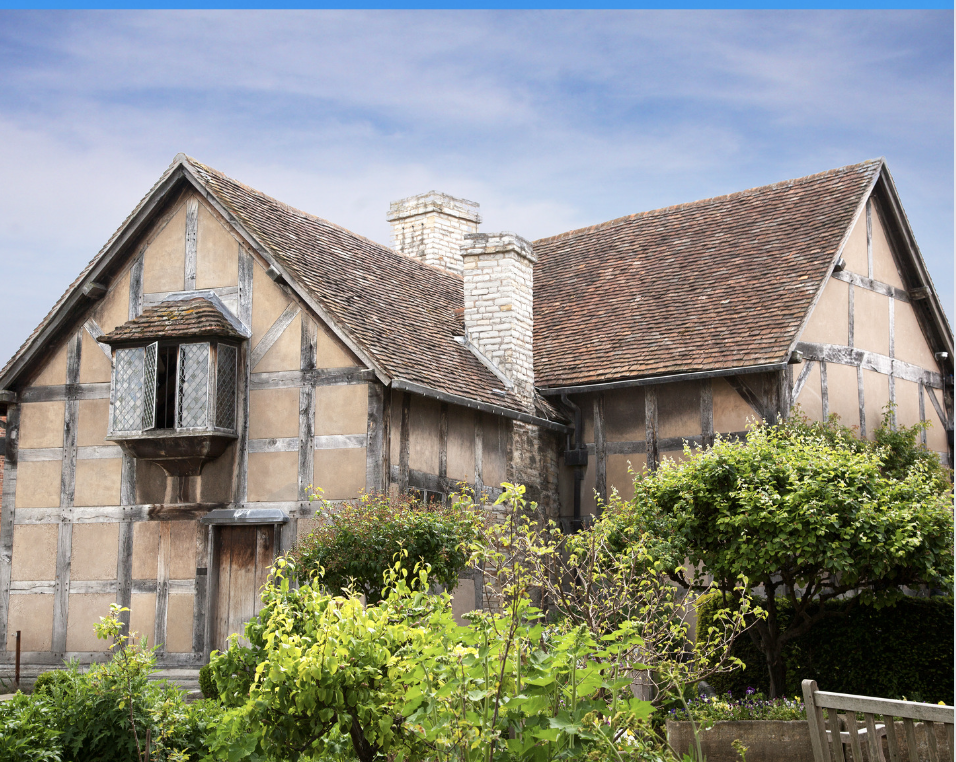
Shakespeare’s Birthplace in Startford upon Avon. When he inherited this property, he developed it
as “mixed use” – residential, commercial, and a pub.

William Shakespeare penned the famous words for his play, Hamlet, sometime between 1599 and 1601. He was already a successful poet and playwright because in May 1597, he purchased the 107-year-old “New Place” to be the home for his wife, Anne, their daughter Susanna, and twins, Hamnet and Judith. He was 33 years old when he purchased the enormous 20+ room house with five gables, two orchards, and two gardens.

Shakespeare purchased New Place, the second largest real estate holding in Stratford upon Avon

In 1601, Shakespeare inherited his parents’ house, his “birthplace.” He enhanced and added on to it and turned part of it into an income producing pub.

In 1602 he purchased 107 acres of land from which he received handsome rental returns. Stanley Wells, professor and editor of the Oxford Shakespeare, is quoted in an April 18, 2014 Financial Times article by Annie Maccoby Berglof, “He bought New Place; a lot of land in 1604; a cottage in Cottage Lane. For much of his life, he was investing in property,”

In Shakespeare’s society, using “other people’s money” was well accepted. He used a mortgage with which to buy the Blackfriars Gate House in 1613.

In addition to being a savvy real estate investor, Shakespeare invested in other profitable ventures as well as in his performance and theater companies.

To recap, for most of his professional life, Shakespeare invested and acquired real estate. He made his initial capital from acting and writing plays. Then he diversified.

“Money buys lands, and wives are sold by fate.” Merry Wives of Windsor, Act V Scene 5


Why does this matter and how does this translate to our lives today?

Mark Twain and/or Will Rogers are credited for saying, “Buy land. They are not making any more of it.”

Did you know that more than 90% of today’s wealthiest people made their fortunes in real estate?

You can enjoy tremendous benefits by investing in real estate –

  1. Appreciation
  2. Favorable tax treatment
  3. Leverage
  4. Borrow more through refinance
  5. Others repay your principle
  6. Income
  7. Land always has value

There is nothing new under the sun in 425 years!  Should you consider diversifying and adding real estate to your portfolio?