In recent years, smart home technology has become increasingly popular, offering homeowners greater control and convenience over their living spaces. From security systems to smart lighting, there are a variety of devices available to turn any home into a smart home. And, with real estate in mind, today’s buyers appreciate the added value of a smart home already installed for them. If you’re interested in making your home a smart home, read on…

Start with a smart hub
The first step in making your home a smart home is to invest in a smart hub. A smart hub is a device that connects to all your smart devices, allowing you to control them from a single app. There are several popular smart hubs on the market, including Amazon Echo, Google Home, and Apple HomeKit. Once you have a smart hub in place, you can begin adding other smart devices to your home.

Add smart lighting
One of the easiest ways to make your home a smart home is to add smart lighting. Smart light bulbs can be controlled from your smartphone, allowing you to turn them on and off, dim them, and even change their color. You can also set schedules for your lights to turn on and off automatically, making it look like someone is home even when you’re away. Lighting options include Philips Hue, LIFX, and TP-Link Kasa.

Install a smart thermostat
A smart thermostat is a smart home device that can save you money on your energy bills. Smart thermostats can learn your habits and adjust the temperature of your home accordingly. They can also be controlled remotely from your smartphone, allowing you to adjust the temperature even when you’re away from home. Thermostat options include Nest, Ecobee, and Honeywell.

Consider smart security
Smart security devices can give you greater peace of mind by allowing you to monitor your home from anywhere. Smart security cameras can be accessed from your smartphone, allowing you to check in on your home at any time. You can also receive alerts if the camera detects motion or sound. Other smart security devices include smart locks, which allow you to lock and unlock your doors remotely, and smart doorbells, which allow you to see and talk to anyone who comes to your door. Smart security options include Ring, Arlo, and August.

Add smart entertainment
Finally, you can make your home a smart home by adding smart entertainment devices. Smart TVs can be controlled from your smartphone, allowing you to change channels, adjust the volume, and even launch apps. You can also add a smart speaker, such as the Amazon Echo, Sonos, or Google Home, to stream music, podcasts, and audiobooks throughout your home.

Making your home a smart home can be a fun and rewarding experience. By adding smart devices, you can make your home more convenient, secure, and energy-efficient. Whether you’re looking to add smart lighting, a smart thermostat, or smart security devices, there are plenty of options available to suit your needs and budget.

Want more tips and tricks for upgrading your home and/or making it more valuable for homebuyers? Give Properties on the Potomac a call at 703-624-8333.


Why does one house sell in a day and another on the same street stays on the market? The answer is often an intangible “feeling” that one house provides over the other.

That feeling is happiness. Happy houses sell faster even if they are not perfectly staged and pristine. The occupants have decorated their house with joy and incorporated elements that they love. The house feels authentic and welcoming. Unlike formulaic staging, happiness cannot be “staged.” It has to be accumulated over time in layers and often begins on the day the occupants moved in.

Often, homeowners decorate and improve their houses for “resale” value; not necessarily that the improvement pleases them. That is when the authenticity issues rise. Those who design and furnish their homes to their taste, incorporating personal and family treasures and art, remain authentic to themselves and their homes show it.

Whenever my husband and I bought a new house, I decorated for our taste. I boldly painted two walls in a two-story foyer in a gloss “shutter green.” At the time, beige was the color of choice. Every time we entered our foyer, we were thrilled with the color. Neighbors and family expressed concerns that nobody would buy the house with the colors. The reality was that when we decided to sell it, we received two full price offers almost immediately.

Clients often ask me to give them “permission” to improve their homes for resale value even though they may have just moved in. My response is categorically, “Will this improvement make you happy?”

We spend a lot of time in our houses. Our environment must please us and not a prospective buyer. Tastes and trends change quickly so best to design and enjoy the home for yourself and your family.

When the time to sell approaches, that is when condition and design must be evaluated. Below is a list of improvements to make to improve resale value:

  • Replace carpets
  • Declutter
  • Clear closets
  • Clean landscaping and mulch
  • Seal driveway
  • Have windows washed
  • Replace/remove any worn or broken elements
  • Paint, if walls show wear or if paint is dated
  • Make sure that everything works properly
  • Have the house professionally cleaned

Below are some things not to do in preparation for sale:

  • Do not replace appliances
  • Do not change kitchen or bath counter tops
  • Do not remodel bathrooms or kitchen
  • If the basement is not finished, do not finish it for resale

When we meet with potential sellers, we discuss what it will take to get the house sold. We suggest improvements and staging, if any. Our goal is to make your house sell well and quickly.

If you are considering a move, please contact Properties on the Potomac at 703-624-8333 to review your house and design a plan for making it irresistible.

I recently showed a home that was set slightly below the road. I was immediately apprehensive.

Obviously not all homes can be built at the top of a hill—if they were, neighborhoods would look more like tiny Tuscan villages. But whenever a house is set below the road or otherwise at the bottom of a hill, you have to worry about water. Maybe the Tuscans had the right idea—they were protected from invaders and water.

Real estate pictures tend to only show the positive attributes of a home, and many times these photos don’t show the house in relation to the surrounding topography. If only technology came with a scratch and sniff feature, we could easily tell if incoming water was an issue without having to be in the home.

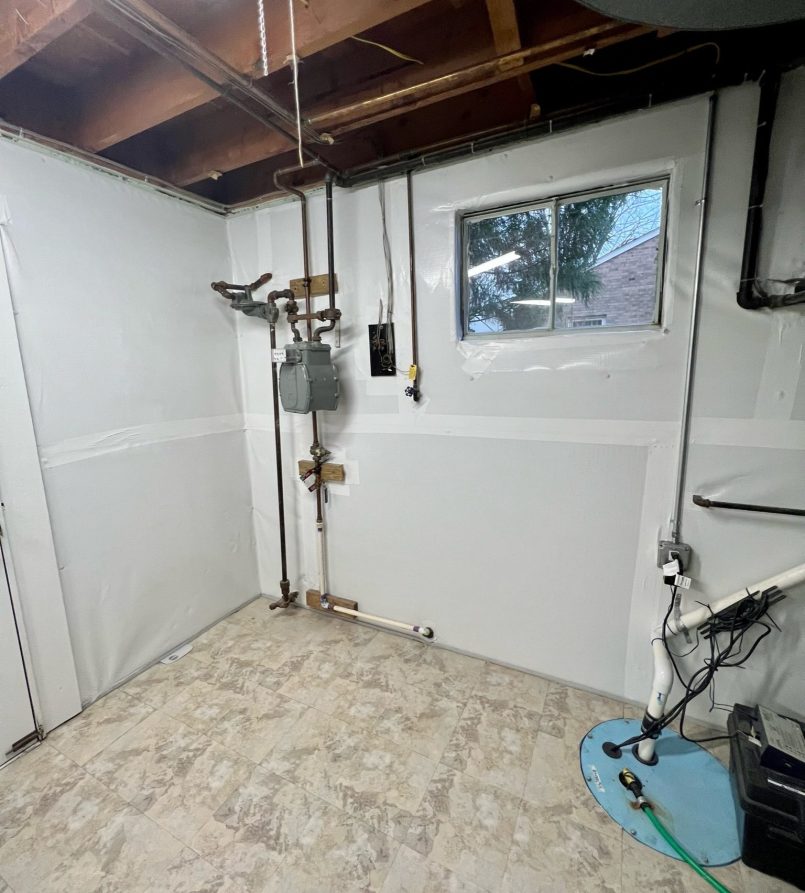
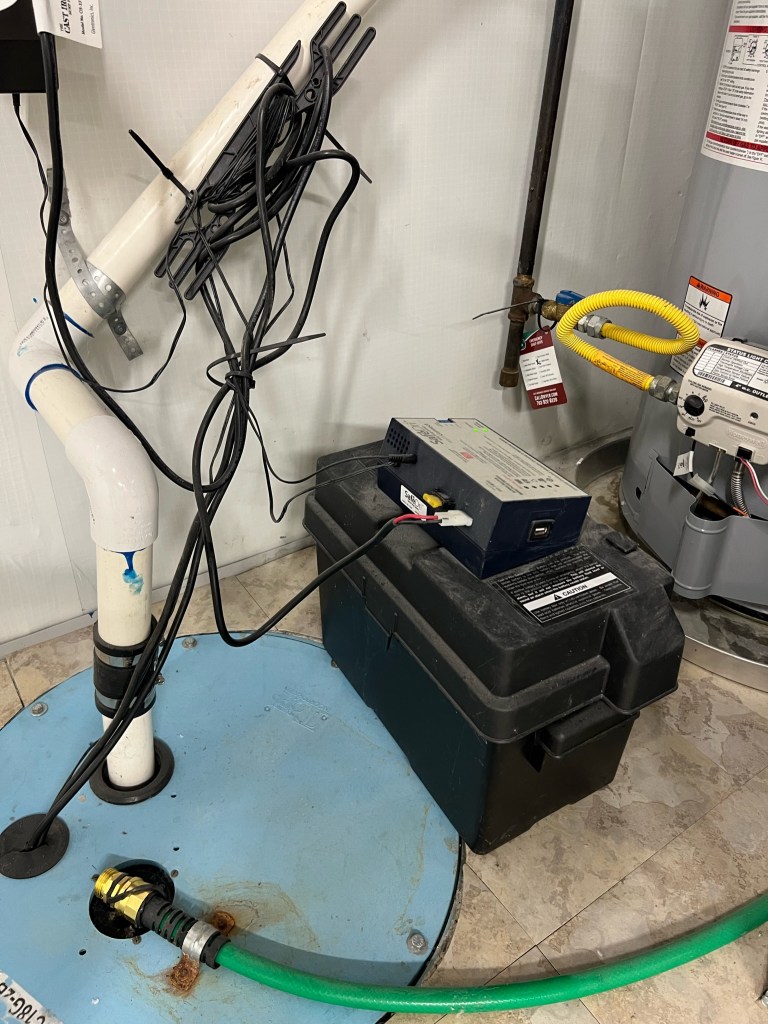
The basement of this home proved my suspicions correct—it had previously had a problem with water intrusion. How did I know for sure? It had been professionally waterproofed. In the unfinished portion of the basement, along two of the perimeter walls, there was concrete repair and a little piece of plastic that sticks out around the edge. These are telltale signs a waterproofing company had trenched around the interior perimeter of the basement and installed a drainage system that empties into a sump pump. The sump pump then pumps the water out and away from the house.


Now the home seems dry, but it will be something that a future homeowner will need to monitor in the future, and it’s definitely something you should know when considering purchasing a house.

If you ever do have issues with water coming into your home, here are some remedies:

1.If there is a sump pump installed, make sure it is working properly. You might also want to consider installing a backup battery on the sump pump in case of power outages.

2. If there are exterior stairs to the basement with a drain at the bottom, that drain must always be kept clear. At the very least, install an elevated drain cover to keep leaves and debris from covering it completely. If possible, consider building a roof over top of the stairs, to direct water away.

3. Extend downspouts away from the home. This can be done hrough a gutter extension kit (either above ground or dig a trench and extend it underground). A rain barrel is another good option, just make sure that the overflow extends away from the home.


4. Landscaping should be slightly elevated and sloped away from the foundation. Aside from the aesthetic, foundation flower beds serve an important purpose. They not only direct water away from the home, but the plants also help absorb any remaining water.

5. Put a cover over any window wells. You can purchase an inexpensive plastic cover from your local hardware store. They come in multiple sizes and shapes depending on what you need. If the window well is in a more prominent part of your home you, you can have a custom one made that is more aesthetically pleasing.

6. Apply a sealant to the interior foundation walls. Interior sealants are not a permanent solution but can help keep humidity levels down in the lower level.

7. Have the home professionally waterproofed. This is an effective, long-term solution to move water away from the foundation of the home.

It is extremely important to keep your home dry. Damp basements can lead to mold and mold can travel through the ductwork of your home, creating a toxic health hazard.

If you have any questions about keeping water out of your basement, reach out to us at 703-624-8333. Properties on the Potomac can help guide you to the right contractor.

By Andrea Justus, Properties on the Potomac Realtor

It’s that time of year: the time to plan your garden and start seeds. Vegetable gardening is easy and fun and the prep starts eight weeks prior to planting time. In Northern Virginia, planting time is generally the weekend of Mother’s Day. Although beautiful Spring days are tempting, I have “early planted” and lost a garden or two due to late season snow and cold snaps. I now am a firm advocate of Mother’s Day planting.   

Seeds can be planted directly into the ground for items like spinach, radishes, beets and herbs, as long as the ground is 50 degrees. For non-leafy vegetables, it’s important to start your plants early to get a jump on the growing season. I start tomatoes, eggplant, okra, cucumbers, squash and pumpkins in early March so that by early May the plants are large and healthy enough to withstand weather and insects and flourish. (For pumpkins, you can also sow the seeds in the ground in June for pumpkins in Fall.) March is also a good time to start flowers like Astilbe, Dahlias, and Croscomia. By starting in March, the flowers will bloom early and throughout summer.

What is the best method for starting seeds? There are many approaches, from dirt in a cup to seed-starting trays with heating pads and overhead lights. I make my own seed-starting blend with a Miracle Grow soil, worm castings, vermiculite and peat moss mixture. The mix is approximately 5 parts soil, two parts worm castings, one part vermiculite and a handful of peat moss. This gives the seeds an airy and nutritious start. You can use seed-starting trays or mini pots available at most gardening stores. Solo cups in trays also work well. I start mine in the basement next to the door so they get natural light. I use solar blankets on the ground and behind the seed table to capture any warmth and sunlight available.

Once the seed starts come up, I transfer them to larger cups and plant them deeper. Sometimes more than one transplant is needed. Water lightly every other day so that the soil is slightly damp, not wet. A gentle hand is critical to transferring the seed starts. Plan on starting more seeds than you need plants so that it’s not a crisis if you break a tender shoot. About 2 weeks before planting, start hardening off the plants by putting them outside. Start with an hour or two and gradually increase the time outside. You can also cover the plants while they are outside with burlap to keep them from being wind and sun burned. Once the plants are hardened, get ready to plant your garden in early May. I like to plant and fertilize with Abernethy and Spencer’s TLC. It gets healthy plants off to a roaring start!

I enjoy gardening and sharing the fruits of my labor with others! If you know me, you know I’m a plant person. Happy Gardening!

Need help figuring out the best landscaping for resale value? Reach out to Properties on the Potomac at
703-624-8333 now!

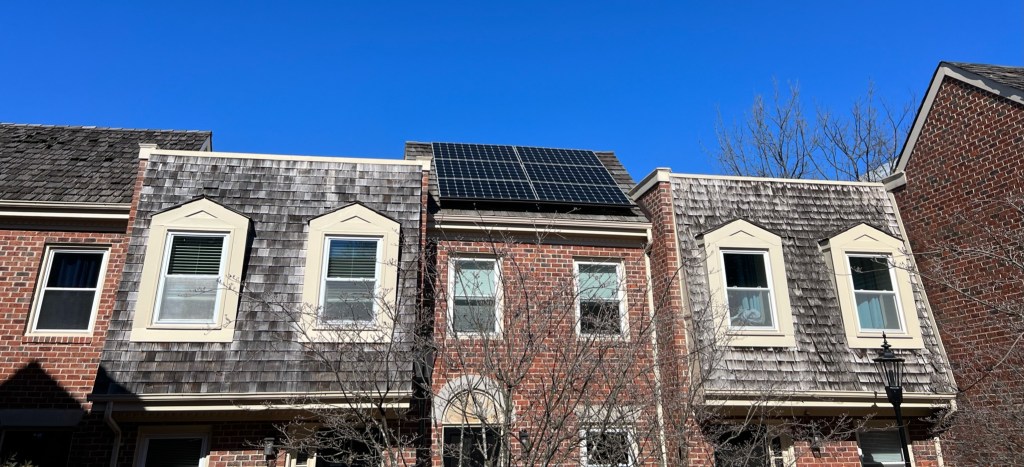
As an extreme analytical, I like to research things to death, ruminate on the findings, ruminate some more, and then maybe–just maybe–make a decision. So when a client mentioned to me that they had decided to install solar panels on their roof, I was intrigued…and then I went down a rabbit hole.

For six solid months, I researched, interviewed solar companies, evaluated cost versus benefit, researched some more, discussed ad nauseum with my husband, and then finally made the decision to install solar panels on my roof.

Obviously, I decided that the pros of installing solar panels outweighed the cons for me. But is it the right decision for you? Let my research and rumination benefit you—below are the pros and cons of installing solar panels:

Pros:

  1. The most obvious: solar reduces your electric bill. Not only can solar offset your electric usage, but you could also be eligible for net metering, an electric billing tool that sends the excess power your panels produce back to the electric grid. If in a day your solar panels produce 20kWs and your home only uses 15kWs, 5kWs get sent back to the grid and offset your electric bill.
  2. Your potential monetary savings will increase over time as electricity continues to increase in price year over year.
  3. You should be eligible for federal tax credits, if you own your system. Currently the Federal Solar Tax credit is 30% of the cost for installation (until 2032). So, if your system costs $30,000, you could be eligible for a $9,000 tax credit, thus lowing the net cost of the system to $21,000. Obviously, consult with your tax professional to make sure it works for you.
  4. You also could potentially sell SRECs, or Solar Renewable Energy Credits. SRECs are created for each megawatt-hour of electricity generated from the solar energy system. Some states have created SREC markets to boost solar installations by requiring electricity suppliers (Pepco, BG&E, etc.) to purchase SRECs produced by in-state solar energy systems as part of their obligation under the state’s Renewable Portfolio Standard (RPS). In our area, the District of Columbia and Maryland offer SREC programs. The value of the SRECs can vary state by state and month by month. DC has one of the more robust SREC markets.
  5. Solar panels are low maintenance. You don’t really need to do anything to the panels other than keep debris off of them.
  6. Solar will decrease your dependence on non-renewable resources. Because saving the planet is always a pro.

And the Cons:

  1. The up-front cost can be cost prohibitive. It can cost between $2,750-$4,000 per kW system, so if you have a 10kW system the range should be $27,500-$40,000. Obviously this is a lot of money up-front and it can take years to recoup the cost.
  2. Some HOAs may not allow them or restrict where they can be placed on your home.
  3. If you live in a wooded area or in the shadow of larger buildings, you won’t be able to reap the maximum benefits.
  4. If you don’t own your roof (common element of a condo/co-op), you likely won’t be able to install solar panels.
  5. The overall aesthetic. Let’s be honest: they aren’t the most aesthetically pleasing part of a house.

I have not regretted my decision to install solar panels for one minute. Since doing so, my husband and I have been able to take advantage of the tax credit, we’ve been able to sell our SREC credits (we live in DC), and our electric bills have reduced significantly (we’ve even had negative balances some months). And the most fun part is logging into the app to see how much energy we’re producing.

If you are thinking of adding solar to your home, give us a call at 703-624-8333. Properties on the Potomac would be happy to talk you through the process and make recommendations.

Here are some additional solar resources.

Here we are – the beginning of 2023 ! You have been waiting to make decisions and commitments until the holidays are over. Now what?

If you are thinking of moving – up, down, around, or away – here are a few tips to help you structure your activities:

  • Decided whether you want to sell or keep your current real estate. Either way, consult a competent real estate broker. The possibilities are endless and your investment and risk are huge. Be selfish and work with the best (that would be us – read our website and see for yourself).
  • If you plan to sell, list long before you want to go on the market. That way pre-marketing excitement can bring the best buyer.
  • Go through all the nooks and crannies of your home (that includes closest that you often use). Start with all off-season belongings first. Decide whether you will keep, toss, or donate.
  • If you have a home of 2000+ Square Feet, know that it will take you several weeks to complete the culling and packing.
  • Be smart and not impulsive. There are many garments and things, that due to the current circumstances ,have remained unworn or unused. Do not throw away anything on a whim. It doesn’t matter if it makes you happy if you will need it later. You will buy it back for more money and of lesser quality. Keep your stuff. Your happiness will compound with lower bills. Be a good steward.
  • Do not make capital investments in your current home unless it will be a coat of paint and some flooring. Keep it simple. Do not replace appliances with stainless steel.
  • Chose a smart real estate agent who knows what sells and what brings in the most return for your investment. – Again, that would be us – not bragging, just the facts.
  • In 2022, our listings sold for 105% of list price and our buyers paid 95.5% of list price. How is that? Ask us.
  • We’ll be happy to show you how you can benefit from our 35 years of experience in all sorts of markets.

Looking to make a move in 2023? Give Properties on the Potomac a call at 703-624-8333!

“But how will that affect the future resale value of my home?” is a common refrain from many clients when they are considering decorating and / or improving their home. This is an interesting question and my answer is usually not expected.


Typically, I encourage my clients to pursue their passion and improve their home for their enjoyment. We have all seen formulas for returns on certain improvements. To those formulas, I san “So what?”


You take vacations, attend theater, shop for unnecessary, but desirable things, go to the spa,  and  purchase a host of other “pleasure” related things without concern of  future return. All of a sudden, when it comes to changing a wall color or adding a distinctive fabric, the breaks screech to a halt and the fretting begins. So the question is, how long do you plan to stay in your home? This answer will help you determine the wisdom of painting a wall chartreuse or building the outdoor kitchen.


Over the last 30 years, trends have shifted. Perfectly operating appliances have been discarded and many people have spent thousands of dollars keeping up with their neighbors’ improvements. However, what really makes you happy? Is the color du jour really your taste? Will you cook more at home with stainless steel appliances over the ones you have, and will you bathe/shower  longer or better in  the huge tub and/or shower? Will you be happier if your bank account has an extra zero?


Celebrating my 30th anniversary since my career change to real estate, this year, I have become pragmatic about improving, enhancing, or diminishing home values. Over this period I have learned valuable lessons.  I share 5 of those lessons with you below:


1.      Happy homes sell.

2.      Well-decorated homes with personality (regardless of color scheme) sell.

3.      Clean, well maintained homes, and tidy landscaping sell.

4.      Location sells.

5.      The right price will sell any time.


It is easy to get caught up with TV trends and neighbors’ improvements. I always recommend careful examination of the motivation of a proposed “improvement.” Unless, you will wake up and be deliriously happy  to see and/or use the improvement, bank the cost. If, on the other hand, you will enjoy the improvement, without concern about future return, then treat it as if it were a vacation and get it done. 


Be happy in your home and pay attention to its maintenance – both indoor and out. The worst that can happen is you’ll eventually have to repaint a few walls or you have paid to enjoy a particular feature that was important to you.


Have some fun and enjoy your home.

No matter how much you want to move, parting with a home can be an emotionally difficult experience. Especially when buyers come in and start criticizing everything.

To a buyer, your living room is not the place where your baby took her first steps, it’s the room they can’t see through the carpet stains.

Every deal has give and take, but as a seller you get to set the starting point: Condition of the House. Think of your house as a car, how would you prepare your car to sell if you couldn’t just take it to a dealer and trade it in? Get your house clean and in at least reasonably good repair (unless, of course, it’s totaled).

If you want your house to sell quickly and for near (or above!) your asking price, then you might want to put a bit of extra work in before the house goes on the market.

DECLUTTER. DECLUTTER. DECLUTTER.

If we can’t see the house through the possessions, it’s going to take longer to sell or sell for a much lower price.

If you can’t bring yourself to actually get rid of things, just put them in storage. The main thing is to get them out of the house.

Stuffing everything in the closets or garage is only an okay solution, not a good one. People love closet space and big garages, those actually aren’t parts of your house that you want to hide behind a wall of boxes or junk.

Also, if you put your possessions in storage, you can feel easier about having people come look at your house. Obviously, we want to assume the best about people, but it’s still wise to be proactive about protecting your home and family.

REPAIR THINGS

If you are hoping that they won’t notice that thing over there, then they probably will. Especially if it’s water damage, mold, or something missing that really shouldn’t be missing. Faucets. Broken towel bars. Door knobs. Burners. Linoleum peeling off the floor. Screens.

UPDATES OPTIONAL

Everyone wants to know if they should upgrade their appliances, their floors, or their cabinets, in order to sell their house. Well, that depends. How old are your appliances? How nasty is the carpet? How chewed up is the hardwood? If these things are in terrible condition, you should probably consider that a repair. If they are in good condition…you might not need to make changes.

My question is: Why don’t you upgrade when you can enjoy the upgrades for a little while first?

This process can be very difficult, but your realtor should be able to help you prioritize and get your home ready for buyer’s critical eyes.