Northern Virginia Updates

By Krasi Henkel, Broker

After attending the Loudoun County Chamber of Commerce ‘PolicyMaker Series: Postelection Aftermath’ I walked away with concerns and considerations. This blog is not intended to make or take a political stand, but to outline possibilities and current actions. Keeping you informed so that you can make the best possible decisions, is always my goal.

Politicians and analysts banter the term, affordable housing.  Let’s unpack this concept and discover how, if at all, affordability can be affected.

The variables of affordability consist of the following obvious pieces:

  • The price of real estate
  • The mortgage interest rate
  • The mortgage term (number of years)
  • Cost to insure
  • Taxes
  • Income tax incentives (if any)
  • Housing supply and local zoning

To improve affordability, one or more of the above variables must be influenced as follows:

  • Private property values are subject to market forces.
  • Mortgage interest rates while variable, can be subsidized by jurisdictions or offset by tax savings
  • The term of the mortgage 15-30-50 affects the monthly payment
  • Insurance is partly environmental risk based, and partly determined by your desired value to insure and what to include.
  • Taxes – real estate taxes are based on jurisdictional assessments. You can appeal assessments. You can elect officials who would reduce tax rates.
  • The Federal government or even the state can make interest, taxes, etc. deductible at higher rates – AKA – subsidizing through deductibility.
  • Supply and demand shifts from scarcity to accessibility can partially be accomplished through thoughtful zoning and maybe expeditious reviews.

Below are possible solutions but will require bold federal and state participation.

Let’s clear one thing up – homeowners do not plan to decrease the asking prices for their houses in a scarcity scenario. Insurers have suffered massive losses and will likely not be reducing their rates, and their reinsurers will most likely not be doing the same.

Property taxes – you can evaluate your jurisdictional budgets and determine potential austerity measures with which to justify tax reductions. We all know that this is a long term project involving studies, hearings, and elections.

While on the topic of property taxes and local jurisdictions, one way to increase supply would be to loosen zoning regulations and shorten permit and inspection periods. All of that requires public hearings. Realistically, when was the last time a voting block voted to increase density?

Income tax deductibility or credits could be useful subject to income limits. This will require political maneuvering, bills, vetoes, and committees, and lots of talk and perhaps a little help.

Mortgage interest is a possible variant. When affordability is addressed, it is often addressed for first time home buyers.  The US government, states, and local governments offer mortgage loans to offset cash down payments, and structure loans based on a variety of criteria. This is where creativity can set in and offers interesting options to consider.

Let’s look at Virginia for example. There are several assistance loan products including down payment and closing cost grants. After that there is Virginia Housing (formerly VHDA), which is funded through bonds and are not and do not affect the tax base.  These loans come with quite a few strings and qualification can be onerous. Looking at today’s mortgage rate, I note that VHDA is offering their loan for 6.5%. Yet FHA, VA, USDA are all below 6%.

Another mortgage alternative is increasing the loan amortization terms from 30 to 50 years. Yes, the total interest paid will be higher, but the monthly payment can become affordable. Consider the example below:

$500,000 loan at 5.75%

30 year principal and interest (PI) payment:       $2918

50 year principal and interest (PI) payment:       $2540

The monthly savings will be:                                     $  378

That difference can make the difference in qualifying.

It will cost more over the life of the loan. The reality is that most people move every seven years. Loans can be refinanced if rates decline. I have met very few people who retained their original loan to its final payment. The 30-year mortgage was originally tied to the 30-year treasury bill. Though, the 10-year Treasury Note is a more direct benchmark. The 30-year treasuries are called “long bonds.”

Zoning:

Zoning adjustment measure has been on Virginia’s local jurisdiction radar for over five years. Since 2020 initiatives to modify local zoning to permit density increases have been proposed.

Last week, a circuit court judge recently ruled in favor of the City of Alexandria in the “Zoning for Housing” lawsuit, dismissing the case and allowing the city’s zoning reforms to stand.

The case had been brought by local property owners, Coalition for a Livable Alexandria, protesting the density changes and their perceived impact on their properties.  This ruling allows the city’s “Zoning for Housing” ordinance to proceed. 

A question: with the decision in place, can a developer now buy a single family house, tear it down and build a multi-family structure? What are the limits? What are the safeguards? Where will those residents park?  How will the existing infrastructure support the additional density as far as education and traffic?

In Tysons, a similar initiative has been enacted. Click here to learn more about these and other Virginia measures.

While political promises abound, reality sets in. The recent election platform was heavy on affordable housing. When I inquired at the recent event, about the “how” of the promises, the moderator ‘ran out of time.’ I asked why VHDA loan rates outstrip all other loan rates. When I approached one of the State senators, he told me that they are “looking into it.”  The urgency? Subject to interpretation. They seem focused on zoning changes as the primary solution.

There is no easy fix. Everyone must get involved and ask the hard questions: When politicians promise ‘affordable housing,’ ask them: Affordable to BUY, or affordable to RENT? Those are two very different things – one builds wealth and independence, the other creates permanent tenants beholden to landlords and government programs. The days of happy ambivalence are gone. You should pay close attention and make your decisions thoughtfully.

If you want to buy your first home, contact Broker Krasi Henkel. Her nearly 40 years of experience and exceptional lender network, produce dream-come-true scenarios. If you want to be one of the lucky few – text Krasi today – 703-624-8333.

The Update That Will Change Many Agents’ Clients’ Privacy

On November 15, Zillow’s new Follow Up Boss policy activates.
It allows Zillow to analyze “mutual customer data” — information about people already stored in an agent’s database and active on Zillow. In practice, that means private notes, personal dates, communication records, and engagement metrics will most likely flow into Zillow’s broader system.

The Fine Print Behind the Automation

Agents and brokers across the country rely on Customer Relationship Management CRMs that promise efficiency. That speed has a price. By clicking “agree,” most have granted sweeping permissions that they have most likely not read. These updates are not breaches. They are contracts of consent written in language few real estate professionals have the time , patience, or legal acumen to interpret.

Why This Matters to You

Real estate is built on trust and confidentiality.
When client data becomes “shared metadata,” trust erodes. The public assumes its conversations with agents are private. Agents assume that their CRMs act as secure tools. Both assumptions are now questionable.

Properties on the Potomac Does It Differently

At Properties on the Potomac, technology serves judgement. We never replace judgement with technology.  Of course, we use advanced digital systems, but we maintain local control of all client data. No automated platform owns our client relationships, and no algorithm decides who receives correspondence.

Our data protocols are guided by three principles:

  1. Control: We decide where our data lives, and who can access it.
  2. Confidentiality: Your personal and financial information remains between you and your agent.
  3. Accountability: We read ‘agreements’ before signing and occasionally forego convenience for privacy. Your trust is not a click-through box.

Krasi’s extensive education in accounting and finance has developed a “radar” to detect potential conflicts of interests. In 2002, when her then brokerage demanded that all client data be entered into their centralized CRM system, Krasi changed companies.

When asked which CRM our company uses, Krasi replies, “spreadsheets.”  Why? Because our clients do not have to be “managed” with prewritten impersonal communication. Real Estate is still a PEOPLE business. The person who is helping you with your most important financial transaction must respect you more than AI-generated communication can offer.

The Bottom Line for You

Technology should enhance professionalism.  
Convenience is valuable, but not at the expense of control.

Technology must never erase human professionalism.

If you are considering a move or investment – reach our to Broker, Krasi Henkel

You check one website for your home’s value, your neighbor uses another, and a potential buyer pulls up their phone during a showing to see what the “computer” says. After 39 years in real estate, I can tell you this: automated valuations are just sophisticated guesswork—and relying on them can cost sellers thousands.

The Algorithm Problem: Automated Valuation Models analyze data points: square footage, recent sales, tax records, etc. But what is more important is what they cannot analyze: the custom kitchen renovation that transformed your home, the problematic drainage in that “comparable” sale, or the fact that the house down the street sold quickly because of a job relocation, not market value.

Technology can do a lot, but it is important to understand that it misses:

  • Unique property features that add or subtract value
  • Neighborhood nuances invisible to databases
  • Market timing and seller motivation
  • Property condition variations
  • Jurisdictional changes affecting value
  • Micro-market trends within broader areas

Technology handles data processing efficiently. Humans interpret what that data means for your specific situation. An experienced agent knows that the “comparable” sale had certain issues, understands how a new development affects traffic patterns, and recognizes when timing creates opportunity or urgency.

Smart real estate professionals use technology as a starting point, not the final answer. Digital tools help us research, market, and communicate more effectively. They cannot replace the judgment that comes from walking through properties, understanding client needs, and reading market conditions that change faster than algorithms can adapt.

Algorithms can also distort appraisals—and that is where a competent, experienced agent can set the record straight. Several years ago, we listed a substantial property purchased by a tech professional who handled everything online, from discovering the listing to applying for a mortgage to the appraisal. The appraisal came in far below the contract price. Why? The appraiser spent barely five minutes at the property and based his assessment almost entirely on lot size and square footage, missing the unique features that truly defined its value.

What the ‘appraiser’ missed was the level of finishes and upgrades, including the brand new kitchen with state-of-the-art appliances and finishes, the renovated bathrooms, the newly installed hickory hardwood floors, the luxurious landscaping and hardscape throughout the back yard, and the new roof. The value of the missed elements exceeded 4 times the appraisal shortfall.

That is when the listing agent shut down technology and insisted on a local lender with local appraisers. The cost to the buyer was less than their internet options. The appraiser who visited spent extensive time learning the features and benefits of the particular property and submitted an appraisal slightly over contract price. They spent over an hour at the property. So—five rushed minutes with a checklist versus a full hour recognizing the details that truly defined the property’s worth. Which do you think produced the more accurate value?


At Properties on the Potomac, Inc. we use technology and automation to complete tasks. We use intellect and experience to value our clients’ properties. In a market where precision matters, you need someone who combines technological efficiency with human insight—especially in our Potomac area where unique properties and varying market conditions require local expertise that no algorithm possesses.

When choosing a listing agent, experience and strong support should be at the top of your list—your home deserves nothing less. To connect with one of our experienced agents, call or text 703-624-8333 today!

The Washington area housing market is changing. Federal job cuts, mortgage rate shifts, and more homes for sale mean different conditions than we have seen in recent years. Here is what the numbers tell us and what it means for your real estate decisions.

Government Jobs and Our Local Economy
About 20,000 federal workers have left their jobs since December. Professional services companies that work with the government have also cut positions. This sounds alarming, but the bigger picture shows our economy adapting. Construction jobs are booming in Northern Virginia, and total employment continues growing despite the federal cuts.

We have been through this before. In the 1990s, the federal workforce dropped by 379,000 people during the Clinton years. The region survived and eventually thrived. By 1999, home sales jumped 12 percent and new construction hit levels not seen since 1986. Our market knows how to adjust.

Mortgage Rates: Do Not Expect Miracles
The Federal Reserve cut rates by a quarter point, but your mortgage payment will not drop dramatically. Mortgage rates usually fall only about 0.10 to 0.20 percent after Fed cuts. On a $500,000 loan, that saves maybe $45 to $55 per month.

Thirty-year fixed rates will likely stay in the mid-6 percent range through the end of the year. These rates feel high compared to the crazy-low rates during COVID, but they represent normal historical levels. If you have an adjustable-rate mortgage or home equity line, those will drop more quickly with Fed cuts.

The Big Picture: A Calmer Market

The Northern Virginia Association of Realtors forecast shows a market returning to earth after years of wild swings:

Home Prices: Rising 2 to 2.5 percent per year, about the same as general inflation. No more double-digit jumps.

Home Sales: Steady to slightly up, especially for single-family houses in good neighborhoods.

Available Homes: Way more inventory: 50 to 80 percent increases from last year. This sounds dramatic, but we are just getting back to normal levels after years of almost nothing for sale.

August numbers show the trend: 4,264 home sales (down 2 percent from last year) with a median price of $625,000 (up 2.1 percent). Homes now take 19 days to sell instead of 10 days last August. Buyers have time to think.

Each Area Tells Its Own Story

Washington DC and Maryland Counties
The District and Maryland suburbs show more pronounced market cooling. Median prices hit $625,000 in August, up 2.1% from last year. Homes are taking an average of 19 days to sell—about 11 days longer.

Contract activity increased by 2.9% from 2024. Montgomery and Prince Georges counties face stronger headwinds than their Virginia counterparts.

Fairfax County
The steadiest performer. Prices up 2.2 to 2.5 percent, sales holding firm. Inventory increasing but nothing crazy. If you want predictable, Fairfax delivers.

Arlington County
There are two different markets here. Single-family houses are hot: sales up 16 percent, prices rising 2.2 percent. But condos are struggling with prices falling 4.9 percent and fewer sales.

Alexandria
Solid but not spectacular. Prices are up 2 to 3 percent. There are decent sales for houses and townhomes, but condos are having trouble. There is more inventory coming, which helps buyers.

Market conditions vary drastically by location.

Prince William County
This is the toughest spot right now. Sales are falling for all home types, from 2 percent down for townhomes to almost 7 percent for condos. Prices are rising, but barely. If you are buying here, you have negotiating power.

Loudoun County
Balanced growth. Prices are up 2.5 percent, single-family sales jumped 13.5 percent. Even condos are holding steady. Inventory is building but demand is keeping pace.

What This Means for You
Buying a Home: Best conditions since before COVID for people not worried about government job cuts. More houses to choose from, less bidding wars, time to inspect and negotiate. Sellers cannot demand perfection anymore.

Selling Your Home: Price it right from day one. The days of throwing any number on the market and getting five offers are over. Good houses in good neighborhoods still sell quickly, but overpriced homes sit.

Investing: Look for value in areas showing relative strength. Single-family houses are outperforming condos across most areas. Prince William offers potential bargains for patient investors.

History Suggests Optimism
The 1990s federal job cuts show how this story can end. After initial adjustment, the DC area came back stronger. The economy is different now—less tech boom, more diverse job base—but the pattern holds. People want to live here, and that underlying demand supports home values.

The Bottom Line
We are moving from an extreme seller’s market to a more balanced market. Buyers have choices again. Sellers must have realistic expectations. The extremes no longer work.

For the first time in years, both buyers and sellers can succeed if they understand current conditions. The key is working with someone who knows these neighborhood differences and can spot the opportunities that others miss.

The Washington area remains one of the strongest housing markets in the country. We just have to adjust our expectations to match reality instead of the pandemic craziness we have been living through.

Do you need specific guidance for your situation? Properties on the Potomac helps buyers and sellers navigate changing markets with our depth of expertise and honest advice. Contact us at 703-624-8333 today!

If you’re not already familiar with Annandale, Virginia, let me introduce you to one of Northern Virginia’s best-kept secrets. Just inside the Beltway, Annandale has this wonderful way of feeling tucked away while still being close to everything. It’s the kind of place where tall trees line quiet streets, neighbors wave hello, and parks, trails, and local eateries are never more than a few minutes away. There’s a rhythm to life here that just feels a little easier.

One of the things I love most about Annandale is how connected to nature it is. On any given day, you might find yourself wandering the shaded trails of Hidden Oaks Nature Center or spending an afternoon admiring the beautifully kept grounds at Green Spring Gardens. Mason District Park is another local favorite—with concerts in the summer, sports courts, and walking paths, it’s a true community hub. It’s not uncommon to see families picnicking, friends catching up under the trees, or someone simply taking a quiet moment to themselves.

And while the parks and greenery are a huge part of the charm, Annandale also offers incredible dining and shopping. Whether you’re in the mood for international cuisine, a cozy brunch spot, or a quick bite on the go, you’ll find it here. Independent shops, specialty grocery stores, and neighborhood markets add to the local flavor, while larger retail centers are just a short drive away.

It’s also hard to beat Annandale’s location. With I-495, Route 50, and Little River Turnpike all within easy reach, you can get to D.C., Tysons, Alexandria, and beyond without much trouble. Public transit is readily available, with plenty of Metrobus and Fairfax Connector routes. For those juggling busy lives, having that kind of accessibility is a game changer.

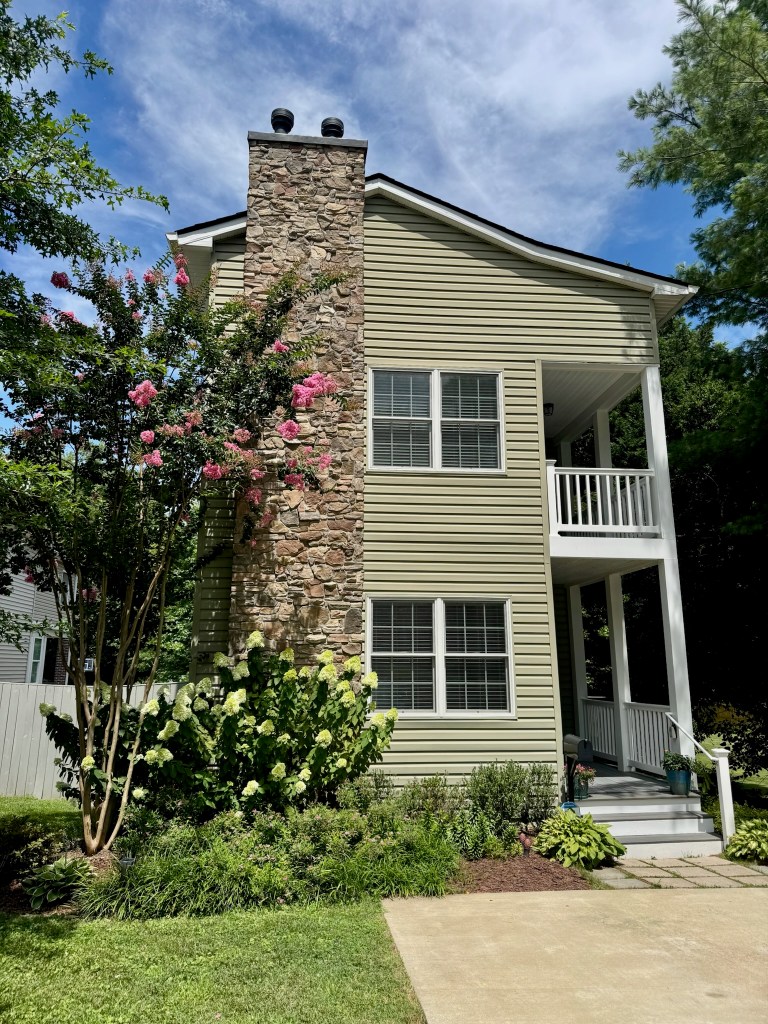
But here’s what makes all of this even better: finding a newer home in this established community is incredibly rare—especially at a price point under $1 million. That’s what makes 6436 Holyoke Drive such a standout. Built in 2016, this home offers the modern floor plan, finishes, and efficiency today’s buyers are looking for—without having to compromise on location. Most homes in this area and price range were built in the 1960s and 70s, which makes this property a true find. It’s nestled on a quiet residential street with mature trees and a beautifully landscaped yard, and the interior is just as impressive—open, bright, and thoughtfully designed for everyday living and entertaining.

6436 Holyoke was built in 2016, a rare Annandale find

If you’ve been dreaming of a newer home with the convenience of living inside the Beltway, this one is absolutely worth a look. It’s the kind of property that doesn’t come around often, and it pairs perfectly with everything Annandale has to offer.

If you’re curious about the home—or just want to learn more about life in Annandale—I’d love to chat. Sometimes, the right move starts with the right conversation.

July means long days, pool parties, backyard BBQs, and summer vacations. Vacations can be a wonderful way to relax and enjoy time with your family…but how can you ensure your home and belongings remain safe while you’re away?

Whether you’re traveling for a week or a weekend, protecting your home while you’re away can give you peace of mind—and helps you enjoy your time off worry-free. Here are 7 simple but effective tips to keep your home safe while out of town:

  1. Pause mail and packages: A pile-up of packages signals you’re not home. Use USPS’s ‘hold mail’ service or have a trusted friend or neighbor bring packages and mail in daily.
  2. Use smart lights: Schedule indoor and outdoor lights to turn on and off automatically while you’re away.
  3. Lock everything: Double-check windows, doors, and garage access before you leave. If you have an alarm, make sure it’s set.
  4. Don’t overshare on social media: It’s hard to resist the allure of posting pictures promoting your sunny beach vacation, but these posts can create more than just envy—they also alert everyone that you are not home for an extended period of time. Save the vacation posts for after you return.
  5. Alert a neighbor: A trusted neighbor who knows you are away can keep an eye on your home, alerting you or the police to any suspicious activity.
  6. Set your thermostat wisely: With no one in the house, it’s a great time to conserve energy and save money on your bill, but keep it cool enough to prevent issues like mold.
  7. Secure valuables: Hope for the best, but plan for the worst. Store jewelry, electronics, and important documents in a safe or secure location, just in case.

A little planning can go a long way towards a worry-free vacation. Enjoy your trip!

Tucked along the red line of the Washington Metro and surrounded by tree-lined streets, historic homes, and a warm community spirit, Cleveland Park offers a rare blend of city convenience and neighborhood charm. For Washingtonians seeking a tranquil lifestyle with easy access to downtown, this northwest DC gem is more than just a place to live—it’s a lifestyle.

The Broadmoor, built in 1928, listed on the National Register of Historic Places. By AgnosticPreachersKid – Own work, CC BY-SA 3.0

A Glimpse into History
Cleveland Park’s roots date back to the late 19th century, when President Grover Cleveland built a summer estate in the area—hence the name. What followed was the development of a “streetcar suburb,” characterized by large lots, front porches, and a mix of architectural styles that still define the neighborhood today. Strolling down Macomb or Newark Streets feels like stepping into a living time capsule, where Craftsman bungalows, Queen Anne homes, and stately Tudors create a postcard-perfect backdrop.

Why Choose Cleveland Park?

1. A Village Within the City
Despite its location just a few Metro stops from downtown DC, Cleveland Park feels worlds away from the hustle. Residents often describe it as a small town within the city, where neighbors know each other, local businesses remember your name, and weekend farmers markets are a community ritual.

2. Architectural Character
This neighborhood is a dream for those who appreciate unique homes with history. The Cleveland Park Historic District protects the architectural integrity of the area, ensuring that new development blends seamlessly with century-old charm.


3. Walkability & Green Space
Cleveland Park is one of DC’s most walkable neighborhoods. Connecticut Avenue serves as the main artery, offering restaurants, shops, bookstores, and the iconic Uptown Theater building. Just steps away, Rock Creek Park provides an escape into nature with hiking trails, picnic spots, and even a horse stable—all without leaving the city.

4. Family-Friendly & Pet-Loving
The neighborhood’s top-rated schools, safe streets, and abundance of parks make it especially appealing for families. Plus, with ample sidewalks and pet-friendly trails, it’s a great fit for four-legged residents too.

5. Culture & Cuisine
Whether it’s savoring authentic Indian at Dkshin, enjoying casual bites at Medium Rare, or exploring local gems like Vace Italian Deli, Cleveland Park’s food scene is quietly excellent. Add in the historic National Cathedral just a short walk away, and the cultural appeal only deepens.

Final Thoughts
Cleveland Park isn’t just a neighborhood—it’s a community with character, history, and heart. For those who want the best of both worlds—urban accessibility and suburban serenity—it’s easy to see why so many choose to call it home.

Looking to make a move to Cleveland Park? Properties on the Potomac is here to help you find the perfect place to write your next chapter.

As cherry blossoms grace our beautiful capital, the DC Metro real estate market is experiencing subtle yet important shifts. At Properties on the Potomac, we’ve carefully analyzed current trends to provide you with a comprehensive outlook for the next six months, helping you navigate this evolving landscape with confidence.

Understanding the Market Adjustment


The Washington DC Metro area has always demonstrated remarkable resilience during economic fluctuations, largely due to our unique relationship with the federal government. Recent developments in the stock market, trade policies, and federal workforce adjustments are now creating noticeable ripples across our real estate landscape.

Rest assured—this is not a repeat of 2008. What we’re experiencing is a market recalibration rather than a crash. Most property segments will see modest corrections rather than steep declines, with transaction volume likely decreasing by 10-15% compared to previous years.

Federal Employment Impact


Recent federal workforce adjustments have introduced some uncertainty into our market. However, historically, DC’s government employment tends to stabilize more quickly than private sector jobs during economic shifts.

What’s particularly notable is the neighborhood-specific impact we’re observing. Areas closely tied to certain agencies may experience localized effects, while contractors and supporting businesses might face more significant adjustments than direct federal employees.

Interest Rate Outlook


For prospective buyers hoping for interest rate relief, we recommend maintaining realistic expectations. The Federal Reserve appears committed to its current positions given ongoing inflation concerns, suggesting mortgage rates will likely remain at current levels throughout 2025.

This interest rate environment continues to limit refinancing opportunities while presenting challenges for first-time buyers. Rather than waiting for potential rate drops, we encourage clients to focus on finding value in today’s market conditions.

Inventory Considerations


Despite economic headwinds, housing inventory levels remain historically low throughout the region. New construction continues to face supply chain and labor challenges, though we anticipate a modest inventory increase as some federal workforce shifts occur.

This slight inventory expansion won’t be sufficient to create a strong buyer’s market, but it does present negotiation opportunities that were simply unavailable during the competitive pandemic market.

Market Segment Analysis


Luxury Properties ($1M+)
This segment faces the strongest headwinds, with 5-8% price adjustments expected. Properties remaining on the market for 60+ days are becoming more common. However, this creates a genuine opportunity window for financially secure buyers who have been waiting for more leverage.

Mid-Market Properties ($600K-$1M)
This segment demonstrates remarkable resilience. Expect price stability with only minor adjustments (1-3%). Properties in premium locations maintain their value better than those in peripheral areas, reinforcing the timeless principle that location remains paramount during uncertain periods.

Entry-Level Homes (Under $600K)
Strong demand persists in this segment, though affordability challenges are increasingly evident. While competitive bidding has cooled, well-priced properties continue to move quickly. We’re also noting renewed investor interest as rental demand remains robust throughout the region.

Geographic Insights


District of Columbia
Historic neighborhoods like Georgetown and Capitol Hill continue showing remarkable stability, while emerging areas demonstrate greater price sensitivity. The condominium market is adjusting more quickly than single-family homes, potentially creating opportunities for long-term investors.

Maryland Suburbs
Montgomery County maintains its reputation for stability, while Prince George’s County attracts increased interest driven by relative affordability. Areas with convenient public transit consistently outperform car-dependent neighborhoods.

Northern Virginia
The ongoing Amazon HQ2 effect provides a welcome balance to federal contractions. Arlington and Alexandria maintain strong market positions, while technology corridor growth continues attracting professionals despite broader economic uncertainty.

Strategic Recommendations


For Sellers
– Price realistically based on current conditions, not past market peaks
– Invest in proper preparation and staging—presentation is increasingly important
– Prepare for potentially longer marketing periods
– Consider timing relative to federal policy announcements

For Buyers
– Recognize the emerging window for negotiation leverage
– Focus on long-term neighborhood fundamentals rather than short-term discounts
– Secure financing pre-approvals early in your search process
– Consider properties with “good bones” that may need updates

For Investors
– The rental market remains strong as home purchasing power adjusts
– Focus on properties near stable employment centers
– Be selective with renovation projects given ongoing supply chain considerations
– Plan for longer-term investments (5+ years) for optimal returns

Our Perspective
The Washington DC Metro real estate market is experiencing an adjustment period rather than a crisis. Our region’s fundamental economic strengths remain intact despite short-term challenges. The coming months will reward strategic buyers and sellers who understand neighborhood-specific dynamics and maintain a long-term perspective.

Have questions about how these trends might affect your specific property or search? Contact Properties on the Potomac at 703-624-8333 for a personalized consultation tailored to your unique situation.

The rise of iBuyer or “instant cash offer” programs has introduced a new way for homeowners to sell their properties quickly. These companies, backed by deep-pocketed investors, purchase homes directly from sellers, often closing transactions in just days. Unlike traditional homebuyers looking for a place to live or rent out, iBuyers aim to buy at the lowest possible price, make necessary repairs, and quickly resell the home for a profit. While this model provides convenience, sellers should fully understand the pros and cons before deciding if this is the best option for them.  

Advantages for Sellers  

  • No need to make repairs before selling  
  • Flexible options to cater to urgent selling timelines  
  • Guidance from local real estate experts  
  • A streamlined, turnkey process covering:
    • Contracts
    • Disclosures
    • State laws
    • Negotiations 

Disadvantages for Sellers  

  • Instant home purchase offers prioritize the iBuyer’s profit, not the seller’s best interest  
  • Sellers typically receive low offers and still pay high fees, sometimes exceeding traditional agent commissions  


The True Costs of iBuying  
iBuyer platforms operate with the goal of making a profit. That means the offers they make are often significantly lower than market value. On top of that, sellers face additional fees. While iBuyers market themselves as a way to avoid agent commissions, the reality is that their convenience fees range from 6% to 9.5%. Some even charge sellers additional fees that buyers would typically cover, adding another 1% or more to the cost.  

In total, the direct costs of selling to an iBuyer—excluding repair credits—can range from 7% to 10%, compared to the 5% to 9% in total costs when selling through a traditional agent. That “convenience” often results in sellers giving up a significant portion of their hard-earned equity.  

Repairs and closing costs are another key issue. In a traditional sale, these expenses are negotiable. With an iBuyer, there is no room for negotiation—sellers are simply charged for any necessary repairs. Once the iBuyer acquires the property, they will list it on the market, often for a higher price, within weeks. 

Why Using an Agent May Be the Better Choice  
The primary goal of iBuyers is to make money—not to give sellers the best deal. However, homeowners looking for a fast and hassle-free sale can still achieve that with an experienced real estate agent. Rather than eliminating agents from the process, the key to a smooth and profitable sale is proper preparation and an aggressive pricing strategy.  

Before accepting an iBuyer’s offer, consult a knowledgeable real estate professional. Invite an agent to review your net offer from the iBuyer before signing anything. A thorough analysis can reveal just how much equity you might be giving up. If an iBuyer sees your home as a profitable investment, you should take a closer look at your options before handing over your property at a discount.  

We break down the numbers in the video below:

Check out this real-world example of a home sale completed with a realtor versus an iBuyer.

As shown in the video, that’s over 10% less than what you could earn from a traditional sale. Is the convenience really worth that much? Your home is likely your largest asset—don’t let an iBuyer take a big cut of your investment.  

For more details, check out this article from Realtor.com.

Final Thoughts  
If you’re considering selling to an iBuyer, take the time to explore all your options. Before signing anything, consult with a real estate professional who can give you a clear picture of your home’s true value and the potential costs involved. You worked hard for your home—make sure you’re making the best financial decision for your future.

If you’re in the DC Metro area, give Properties on the Potomac a call at 703-624-8333 today!

Finding the right real estate professional to advise and guide you through the acquisition or sale of one of your largest assets can make all the difference in your real estate journey. Whether buying your dream home or selling a property, an excellent Realtor® doesn’t just facilitate transactions—they provide expertise, guidance, and peace of mind during one of life’s most  significant financial decisions.

Why the Right Realtor® Matters
The real estate market can be complex and competitive. An excellent Realtor® brings market knowledge, negotiation skills, and professional connections that can save you time, money, and stress. They’ll help you navigate state and federal rules, paperwork, deadlines, and potential pitfalls while advocating for your best interests.

The Realtor® Advantage
Working with a Realtor® who is a member of the National Association of Realtors (NAR) provides significant advantages due to their commitment to a strict Code of Ethics. NAR members pledge to protect and promote their clients’ interests while treating all parties honestly.

The Code of Ethics goes beyond legal requirements, holding these real estate professionals to high standards of integrity, professionalism, and fairness in all transactions. This ethical framework ensures that the Realtor® provides accurate information, discloses potential conflicts of interest, and maintains confidentiality.

Their commitment to these principles means clients receive more transparent, ethical representation throughout the complex real estate process. Ultimately this leads to informed decisions and smoother transactions with reduced risk of miscommunication or ethical breaches.

How to Find Your Ideal Realtor®

Ask for Recommendations
Start by tapping into your personal network. Friends, family members, and colleagues who have recently bought or sold property can provide honest feedback about their experiences. Ask specific questions about what made their Realtor® exceptional or disappointing.

Research Online Presence and Reviews
Once you have some names, investigate their online presence:

  • Check their professional website and social media accounts
  • Read client reviews on platforms like Zillow, Realtor.com, and Google
  • Focus on feedback about communication, market knowledge, and negotiation skills

Verify Credentials and Experience
Make sure your potential real estate professional is:

  • Licensed in your state
  • A Realtor®; not merely a salesperson
  • An expert in your type of transaction (first-time buying, luxury homes, investment properties, etc.)
  • Holds relevant certifications or additional training

Interview Multiple Candidates
Schedule interviews with several realtors. During these conversations:

  • Discuss your specific needs and timeline
  • Ask about their recent transactions and success rates
  • Inquire about their communication styles and availability
  • Request examples of how they have handled challenging situations
  • Discuss what services you expect

Look for Local Expertise
A Realtor® with extensive knowledge of your target neighborhood or property type can provide invaluable insights about:

  • Market values
  • School districts
  • Community amenities
  • Future development plans
  • Property tax trends
  • Local regulations and zoning

Assess Communication Skills
Pay attention to how promptly and clearly they respond to your inquiries. Your Realtor® should:

  • Be responsive and professional
  • Listen deeply to your needs and concerns
  • Ask questions to verify their understanding and confirm your goals
  • Explain complex concepts in understandable terms
  • Provide regular and relevant updates throughout the process
  • Be honest, even when the news isn’t what you want to hear

Trust Your Instincts
Beyond credentials and recommendations, consider personal compatibility. You will be working closely with this person. Mutual trust and respect are essential.

Red Flags to Watch For
Be cautious of agents who:

  • Pressure you to make quick decisions
  • Are difficult to reach or slow to respond
  • Dismiss your questions or concerns
  • Can’t provide references from recent clients
  • Have limited knowledge of your target area
  • Promise unrealistic outcomes

Final Thoughts
Taking the time to find an excellent Realtor® is an investment that pays dividends throughout your real estate journey. The right professional will not only help you achieve your property goals but will also make the process smoother and less stressful.

One potential concern for buyers and sellers is that the exceptional Realtor’s guard their time. They do so because they give optimal services to their clients. Most top Realtor’s establish their annual goals as to how many clients they can and want to represent during the year. If you are considering a real estate transaction with a top Realtor® be sure to get on their calendars early.

Remember that you’re hiring someone to provide a service—ask questions, check references, and ensure the right fit for your needs. With the right Realtor® by your side, you will be well-positioned to navigate the real estate market effectively.