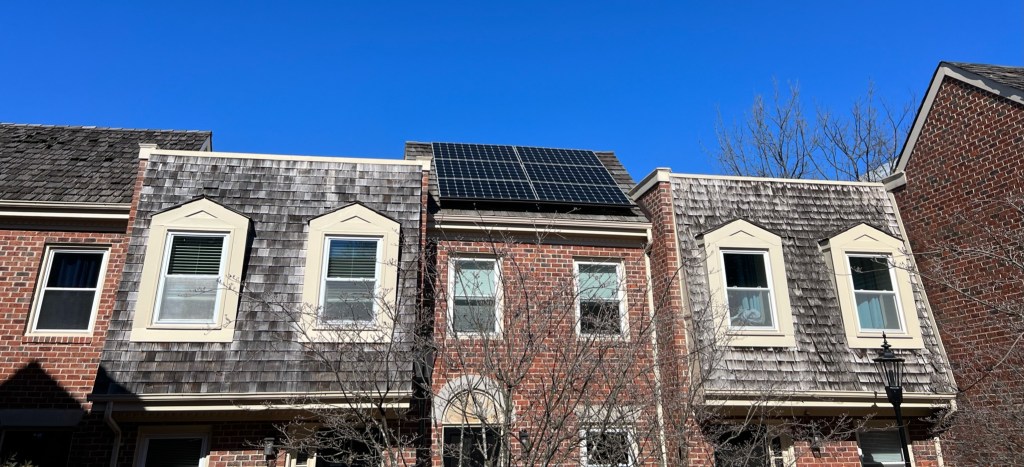
As an extreme analytical, I like to research things to death, ruminate on the findings, ruminate some more, and then maybe–just maybe–make a decision. So when a client mentioned to me that they had decided to install solar panels on their roof, I was intrigued…and then I went down a rabbit hole.

For six solid months, I researched, interviewed solar companies, evaluated cost versus benefit, researched some more, discussed ad nauseum with my husband, and then finally made the decision to install solar panels on my roof.

Obviously, I decided that the pros of installing solar panels outweighed the cons for me. But is it the right decision for you? Let my research and rumination benefit you—below are the pros and cons of installing solar panels:

Pros:

  1. The most obvious: solar reduces your electric bill. Not only can solar offset your electric usage, but you could also be eligible for net metering, an electric billing tool that sends the excess power your panels produce back to the electric grid. If in a day your solar panels produce 20kWs and your home only uses 15kWs, 5kWs get sent back to the grid and offset your electric bill.
  2. Your potential monetary savings will increase over time as electricity continues to increase in price year over year.
  3. You should be eligible for federal tax credits, if you own your system. Currently the Federal Solar Tax credit is 30% of the cost for installation (until 2032). So, if your system costs $30,000, you could be eligible for a $9,000 tax credit, thus lowing the net cost of the system to $21,000. Obviously, consult with your tax professional to make sure it works for you.
  4. You also could potentially sell SRECs, or Solar Renewable Energy Credits. SRECs are created for each megawatt-hour of electricity generated from the solar energy system. Some states have created SREC markets to boost solar installations by requiring electricity suppliers (Pepco, BG&E, etc.) to purchase SRECs produced by in-state solar energy systems as part of their obligation under the state’s Renewable Portfolio Standard (RPS). In our area, the District of Columbia and Maryland offer SREC programs. The value of the SRECs can vary state by state and month by month. DC has one of the more robust SREC markets.
  5. Solar panels are low maintenance. You don’t really need to do anything to the panels other than keep debris off of them.
  6. Solar will decrease your dependence on non-renewable resources. Because saving the planet is always a pro.

And the Cons:

  1. The up-front cost can be cost prohibitive. It can cost between $2,750-$4,000 per kW system, so if you have a 10kW system the range should be $27,500-$40,000. Obviously this is a lot of money up-front and it can take years to recoup the cost.
  2. Some HOAs may not allow them or restrict where they can be placed on your home.
  3. If you live in a wooded area or in the shadow of larger buildings, you won’t be able to reap the maximum benefits.
  4. If you don’t own your roof (common element of a condo/co-op), you likely won’t be able to install solar panels.
  5. The overall aesthetic. Let’s be honest: they aren’t the most aesthetically pleasing part of a house.

I have not regretted my decision to install solar panels for one minute. Since doing so, my husband and I have been able to take advantage of the tax credit, we’ve been able to sell our SREC credits (we live in DC), and our electric bills have reduced significantly (we’ve even had negative balances some months). And the most fun part is logging into the app to see how much energy we’re producing.

If you are thinking of adding solar to your home, give us a call at 703-624-8333. Properties on the Potomac would be happy to talk you through the process and make recommendations.

Here are some additional solar resources.

“But how will that affect the future resale value of my home?” is a common refrain from many clients when they are considering decorating and / or improving their home. This is an interesting question and my answer is usually not expected.


Typically, I encourage my clients to pursue their passion and improve their home for their enjoyment. We have all seen formulas for returns on certain improvements. To those formulas, I san “So what?”


You take vacations, attend theater, shop for unnecessary, but desirable things, go to the spa,  and  purchase a host of other “pleasure” related things without concern of  future return. All of a sudden, when it comes to changing a wall color or adding a distinctive fabric, the breaks screech to a halt and the fretting begins. So the question is, how long do you plan to stay in your home? This answer will help you determine the wisdom of painting a wall chartreuse or building the outdoor kitchen.


Over the last 30 years, trends have shifted. Perfectly operating appliances have been discarded and many people have spent thousands of dollars keeping up with their neighbors’ improvements. However, what really makes you happy? Is the color du jour really your taste? Will you cook more at home with stainless steel appliances over the ones you have, and will you bathe/shower  longer or better in  the huge tub and/or shower? Will you be happier if your bank account has an extra zero?


Celebrating my 30th anniversary since my career change to real estate, this year, I have become pragmatic about improving, enhancing, or diminishing home values. Over this period I have learned valuable lessons.  I share 5 of those lessons with you below:


1.      Happy homes sell.

2.      Well-decorated homes with personality (regardless of color scheme) sell.

3.      Clean, well maintained homes, and tidy landscaping sell.

4.      Location sells.

5.      The right price will sell any time.


It is easy to get caught up with TV trends and neighbors’ improvements. I always recommend careful examination of the motivation of a proposed “improvement.” Unless, you will wake up and be deliriously happy  to see and/or use the improvement, bank the cost. If, on the other hand, you will enjoy the improvement, without concern about future return, then treat it as if it were a vacation and get it done. 


Be happy in your home and pay attention to its maintenance – both indoor and out. The worst that can happen is you’ll eventually have to repaint a few walls or you have paid to enjoy a particular feature that was important to you.


Have some fun and enjoy your home.

No matter how much you want to move, parting with a home can be an emotionally difficult experience. Especially when buyers come in and start criticizing everything.

To a buyer, your living room is not the place where your baby took her first steps, it’s the room they can’t see through the carpet stains.

Every deal has give and take, but as a seller you get to set the starting point: Condition of the House. Think of your house as a car, how would you prepare your car to sell if you couldn’t just take it to a dealer and trade it in? Get your house clean and in at least reasonably good repair (unless, of course, it’s totaled).

If you want your house to sell quickly and for near (or above!) your asking price, then you might want to put a bit of extra work in before the house goes on the market.

DECLUTTER. DECLUTTER. DECLUTTER.

If we can’t see the house through the possessions, it’s going to take longer to sell or sell for a much lower price.

If you can’t bring yourself to actually get rid of things, just put them in storage. The main thing is to get them out of the house.

Stuffing everything in the closets or garage is only an okay solution, not a good one. People love closet space and big garages, those actually aren’t parts of your house that you want to hide behind a wall of boxes or junk.

Also, if you put your possessions in storage, you can feel easier about having people come look at your house. Obviously, we want to assume the best about people, but it’s still wise to be proactive about protecting your home and family.

REPAIR THINGS

If you are hoping that they won’t notice that thing over there, then they probably will. Especially if it’s water damage, mold, or something missing that really shouldn’t be missing. Faucets. Broken towel bars. Door knobs. Burners. Linoleum peeling off the floor. Screens.

UPDATES OPTIONAL

Everyone wants to know if they should upgrade their appliances, their floors, or their cabinets, in order to sell their house. Well, that depends. How old are your appliances? How nasty is the carpet? How chewed up is the hardwood? If these things are in terrible condition, you should probably consider that a repair. If they are in good condition…you might not need to make changes.

My question is: Why don’t you upgrade when you can enjoy the upgrades for a little while first?

This process can be very difficult, but your realtor should be able to help you prioritize and get your home ready for buyer’s critical eyes.


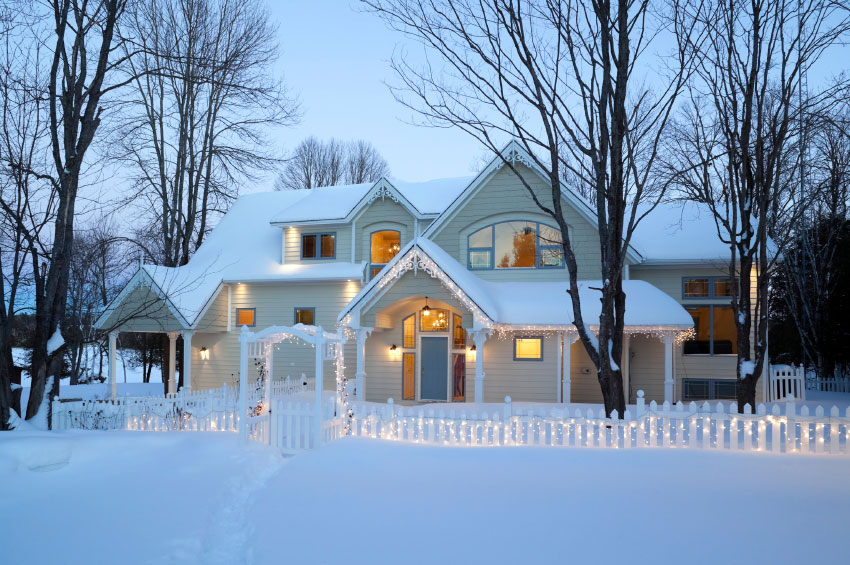
Record low temperatures have Virginians bundling up. But don’t leave your house “out in the cold.” Here are a few tips that will protect your home during the winter months.

house-in-winter

  1. Avoid putting salt on cement to prevent pitting. It may require figuring out a different path out of the house, but preserving the cement will prevent replacement costs later!.
  2. Keep your gutters clean. This is good advice throughout the year, but particularly in winter when trapped water will expand, contract and cause havoc.frozen-garden-hose-117709868-5798e2415f9b589aa99b0d5b
  3. Turn off and winterize hose bibs. Detach and empty any hoses. Turn off your supply line, THEN make sure you turn on your outdoor faucet to drain the existing water. You can also buy frost-proof hose bibbs.
  4. Know where your water shut offs are. If something bursts, you will be able to stop further damage fast.
  5. Beware of space heaters. They can overload the circuits and trip the breaker. If needed, use only thermostat-contolled, UL rated heaters. And don’t plug them into extension cords.
  6. Keep leaves around the base of plants to help them stay insulated.

Properties on the Potomac, Inc. knows that a house is not just an investment. It’s your treasured home, and a little extra care now will preserve your home for years to come. Stay warm!