As the fireworks light up the night sky and the scent of barbecues fills the air, Independence Day reminds us of the cherished values that define our great nation. It’s a time to celebrate the freedom we hold dear, and for many, that freedom extends to the pride and joy of owning their own homes. As a Realtor, I am thrilled to share this moment with you and explore how homeownership reflects the spirit of independence and the pursuit of the American dream.

Owning your own home represents a significant milestone on your journey to personal freedom. It’s more than just a financial investment; it’s a place to call your own, where you can create lasting memories and build a foundation for the future. A home is where you can express your unique style, make your own rules, and have the freedom to shape your living space according to your needs and desires. It offers stability and a sense of belonging, providing a safe haven where you can truly be yourself.

This Independence Day, take a moment to reflect on the many benefits of homeownership. It’s a symbol of your hard work, determination, and commitment to building a better life. From the pride of homeownership to the financial advantages of building equity and potential tax benefits, owning a home offers a sense of security and stability that can truly enhance your quality of life.

Whether you’re a first-time buyer or considering a new home, there’s no better time than now to explore the possibilities of homeownership. At Properties on the Potomac, we are here to guide you through the process, helping you navigate the market and find the perfect home that aligns with your dreams and aspirations. Let’s celebrate the freedom of homeownership and embark on a journey towards a brighter, more independent future.

Contact Properties on the Potomac at 703-624-8333 to discuss your homeownership goals and let’s make your dream of owning a home a reality. Together, we can navigate the real estate market and find the perfect property that suits your needs.

For the past 3+ years the DC Metro area has been in what realtors would call a “seller’s market.” In a seller’s market, where demand outweighs housing supply, homeowners may be tempted to forgo certain maintenance tasks or overlook the condition of their homes because of the perception that their home will sell no matter what. However, regardless of market conditions, maintaining and presenting your home at its best is crucial to getting top dollar. By prioritizing upkeep and addressing any potential issues, you can maximize your chances of attracting buyers, securing favorable offers, and ultimately achieving a successful sale.

Here are some reasons why maintaining your home is a good idea when it comes time to sell:

  1. Stand Out from the Competition: In a seller’s market, there is often increased competition among homeowners trying to sell their properties. By ensuring your home is in excellent condition, you gain a competitive edge. Buyers are more likely to be drawn to a well-maintained home that stands out from others on the market. Attention to detail and a pristine appearance can make a significant difference in capturing the attention and interest of potential buyers.
  2. First Impressions Matter: When it comes to selling a home, first impressions can make or break a deal. Buyers often form initial opinions within moments of entering a property. By maintaining your home’s excellent condition, you create a positive and inviting atmosphere right from the start. This includes well-kept landscaping, a clean and clutter-free interior, and ensuring that all essential systems and fixtures are in good working order. A strong first impression sets the tone for the rest of the viewing and increases the likelihood of buyers envisioning themselves living in your home.
  3. Maximize Appraisal Value: Even in a seller’s market, appraisals remain an essential part of the home buying process. The condition of your home can impact its appraised value. Well-maintained homes with minimal repairs or issues tend to appraise higher, providing a solid foundation for negotiating a favorable sales price. Neglecting maintenance tasks and allowing your home’s condition to deteriorate could result in a lower appraised value, potentially leading to challenges in finalizing the sale.
  4. Smooth Transaction Process: A home in excellent condition tends to encounter fewer obstacles during the transaction process. Buyers and their agents will likely feel more confident about the property, leading to smoother negotiations, inspections, and potential financing approvals. By addressing any maintenance issues beforehand, you reduce the chances of surprises or setbacks that may arise during the sales process. This can save time, minimize stress, and increase the likelihood of a successful and timely closing.
  5. Preserve Buyer Confidence: When buyers see a well-maintained home, it instills confidence in the overall quality and integrity of the property. Conversely, a home with visible issues or neglect may raise concerns and create doubt in the minds of potential buyers. By proactively maintaining your home, you build trust and reassure buyers that they are making a sound investment. This confidence can translate into more competitive offers, fewer contingencies, and a smoother negotiation process.

In a seller’s market, it’s easy to assume that the demand for homes will outweigh any concerns about their condition. However, markets can change quickly and maintaining your home remains crucial. By prioritizing upkeep, making necessary repairs, and presenting your home at its best, you will ensure your home is a valuable asset that can lead to a successful and profitable sale.

Contact Properties on the Potomac at 703-624-8333 to learn more about what it takes to get your home sold.

Windows play a crucial role in our homes, providing natural light, ventilation, and a connection to the outdoors. However, over time, windows can deteriorate, leading to drafts, dirt and grime inside, reduced energy efficiency, and outdated aesthetics.

A few years ago, I had the windows in my home replaced with ones that would help cut down on the road noise since we live in the city. We could feel the difference the minute the last window went in: it was like the feeling you get when your ears finally stop ringing. The dust and pollen stopped coating our windowsills and our energy bills showed a notable dip.

There is undeniable value in updating your windows. Here are six long-term benefits new windows can bring to you and your home:

  1. Increased Energy Efficiency: Older windows can be a significant source of energy loss. By updating to modern, energy-efficient windows, you can significantly reduce heat transfer, keeping your home cooler in the summer and warmer in the winter. This translates into lower energy bills and a reduced carbon footprint. Newer windows often feature double or triple glazing, low-emissivity coatings, and advanced weatherstripping, all designed to enhance insulation and minimize air leakage.
  2. Enhanced Comfort: Outdated windows may allow drafts, noise pollution, dust and debris, and uncomfortable temperature fluctuations. Upgrading to new windows can improve the comfort of your living spaces by reducing drafts, minimizing outside noise, a cleaner home, and maintaining a consistent indoor temperature. You’ll be able to enjoy a more pleasant and tranquil home environment year-round.
  3. Improved Natural Light and Views: Windows not only serve as functional elements but also contribute to the aesthetic appeal of your home. Updating your windows can provide an opportunity to enhance natural light and maximize your views. Consider options such as larger windows, strategically placed skylights, or bay windows to bring in more sunlight and create a brighter, more inviting atmosphere.
  4. Upgraded Safety and Security: Older windows may have outdated or worn-out locking mechanisms, making your home more susceptible to intrusions. Modern windows often come with advanced security features, including multiple locking points, impact-resistant glass, and reinforced frames. These upgrades offer peace of mind, ensuring the safety of your loved ones and your valuable possessions.
  5. Reduced Maintenance and Longevity: If you have older windows, you’re likely familiar with the regular maintenance they require, such as scraping, painting, and repairing rotting frames. Newer windows often feature low-maintenance materials like vinyl, fiberglass, or aluminum, which resist peeling, cracking, and warping. Investing in updated windows can save you time and money on maintenance while increasing their lifespan.
  6. Increased Property Value: When it comes to selling your home, updated windows can significantly enhance its market appeal and value. Prospective buyers recognize the benefits of energy-efficient, well-maintained windows, and are often willing to pay a premium for them. High-quality windows not only improve the aesthetics of your home’s exterior but also contribute to its overall curb appeal and desirability.

Updating your home’s windows brings a multitude of benefits, ranging from improved energy efficiency and increased comfort to enhanced aesthetics and higher property value. Whether you’re motivated by energy savings, a more pleasant living environment, or an upcoming sale, investing in new windows is a wise decision.

If you need help deciding whether new windows are a good idea for you or finding a contractor to replace your windows, contact Properties on the Potomac at 703-624-8333. Your long-term return on your investment is important to us.

Why does one house sell in a day and another on the same street stays on the market? The answer is often an intangible “feeling” that one house provides over the other.

That feeling is happiness. Happy houses sell faster even if they are not perfectly staged and pristine. The occupants have decorated their house with joy and incorporated elements that they love. The house feels authentic and welcoming. Unlike formulaic staging, happiness cannot be “staged.” It has to be accumulated over time in layers and often begins on the day the occupants moved in.

Often, homeowners decorate and improve their houses for “resale” value; not necessarily that the improvement pleases them. That is when the authenticity issues rise. Those who design and furnish their homes to their taste, incorporating personal and family treasures and art, remain authentic to themselves and their homes show it.

Whenever my husband and I bought a new house, I decorated for our taste. I boldly painted two walls in a two-story foyer in a gloss “shutter green.” At the time, beige was the color of choice. Every time we entered our foyer, we were thrilled with the color. Neighbors and family expressed concerns that nobody would buy the house with the colors. The reality was that when we decided to sell it, we received two full price offers almost immediately.

Clients often ask me to give them “permission” to improve their homes for resale value even though they may have just moved in. My response is categorically, “Will this improvement make you happy?”

We spend a lot of time in our houses. Our environment must please us and not a prospective buyer. Tastes and trends change quickly so best to design and enjoy the home for yourself and your family.

When the time to sell approaches, that is when condition and design must be evaluated. Below is a list of improvements to make to improve resale value:

  • Replace carpets
  • Declutter
  • Clear closets
  • Clean landscaping and mulch
  • Seal driveway
  • Have windows washed
  • Replace/remove any worn or broken elements
  • Paint, if walls show wear or if paint is dated
  • Make sure that everything works properly
  • Have the house professionally cleaned

Below are some things not to do in preparation for sale:

  • Do not replace appliances
  • Do not change kitchen or bath counter tops
  • Do not remodel bathrooms or kitchen
  • If the basement is not finished, do not finish it for resale

When we meet with potential sellers, we discuss what it will take to get the house sold. We suggest improvements and staging, if any. Our goal is to make your house sell well and quickly.

If you are considering a move, please contact Properties on the Potomac at 703-624-8333 to review your house and design a plan for making it irresistible.

While scam artists have always been around, modern technology has made their work easier and more effective. Readily accessible public records are fodder for them.

Recently, I received a text with the look and feel of an authentic inquiry. The writer inquired about commissions and timing. When I called the writer, he answered the phone. Our dialogue was typical of a potential seller. They responded with an Outlook email address to my request for their email address. The property address and description matched as well as the name given during our conversation.

The potential “seller” knew about the property’s features, details, and general acquisition information. My intuition had an initial twinge when I learned that the caller was out of town and wanted to sell as soon as possible. My scam antennae were on mild alert. I was planning identity verification measures before concluding the initial conversation.

The property in question was a vacant lot of substantial value. Fortunately, I am familiar with the area and the associated lots. My former investigator self was devising plans to verify the veracity of the caller.

Upon my return to my office, I dug deeper into the owner. I discovered phone numbers that did not match the one from which the text was sent. A phone call to the newly discovered phone number confirmed my suspicions. The caller/texter was a scam. The actual property owner confirmed that they had not spoken to me or asked to sell their lot. The owner was naturally upset. Was he being targeted, was someone trying to steal the lot, or was the texter trying to “tunnel” into my computer network?

How can someone other than the actual owner sell a property? There are many ways. One of the easiest ways is a gullible agent. Forged documents, identity theft, an absentee owner, an owner’s death, and many other scenarios can separate a rightful owner from their property.

What can a property owner do to protect the titles to their properties? Here are some ways:

  • If closing on a new purchase, buy owner’s title insurance. However, enhanced title insurance is typically not available for vacant land.
  • Another option is to subscribe to an identity protection service with a title monitoring option.
  • If you own investment property or vacant land, visit your properties, introduce yourself to the neighbors and ask them to alert you to any suspicious activities or strange or repeated visitors, visits or unexpected surveys.

At Properties on the Potomac, Inc., we are implementing new and higher levels of security to safeguard our community from this form of theft. We are educating our agents, working with professionals, and designing stringent security measures. The increased security measures might seem invasive to callers to our office and agents. Please know that we intend to protect property owners’ rights and never be duped to the contrary.

Through our affiliation with the National Association of Realtors, Northern Virginia Association of Realtors, and the Greater Capital Area Association of Realtors, we have available sophisticated resources and research tools with which we can help protect our clients and our community. If you have questions or concerns about real estate scams, call Properties on the Potomac at 703-624-8333.

I recently showed a home that was set slightly below the road. I was immediately apprehensive.

Obviously not all homes can be built at the top of a hill—if they were, neighborhoods would look more like tiny Tuscan villages. But whenever a house is set below the road or otherwise at the bottom of a hill, you have to worry about water. Maybe the Tuscans had the right idea—they were protected from invaders and water.

Real estate pictures tend to only show the positive attributes of a home, and many times these photos don’t show the house in relation to the surrounding topography. If only technology came with a scratch and sniff feature, we could easily tell if incoming water was an issue without having to be in the home.

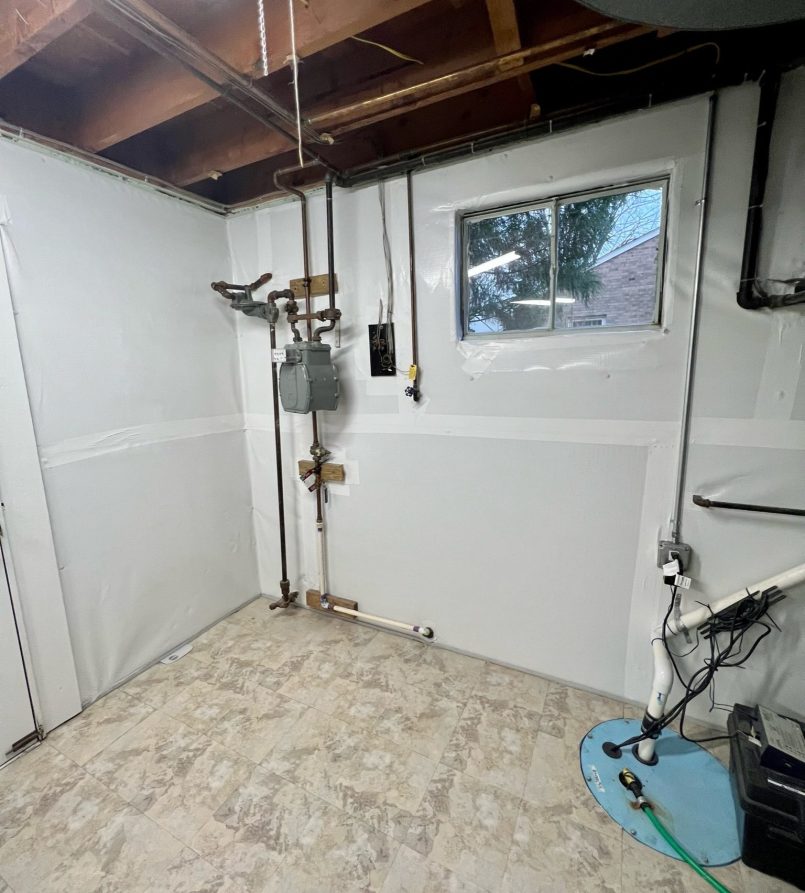
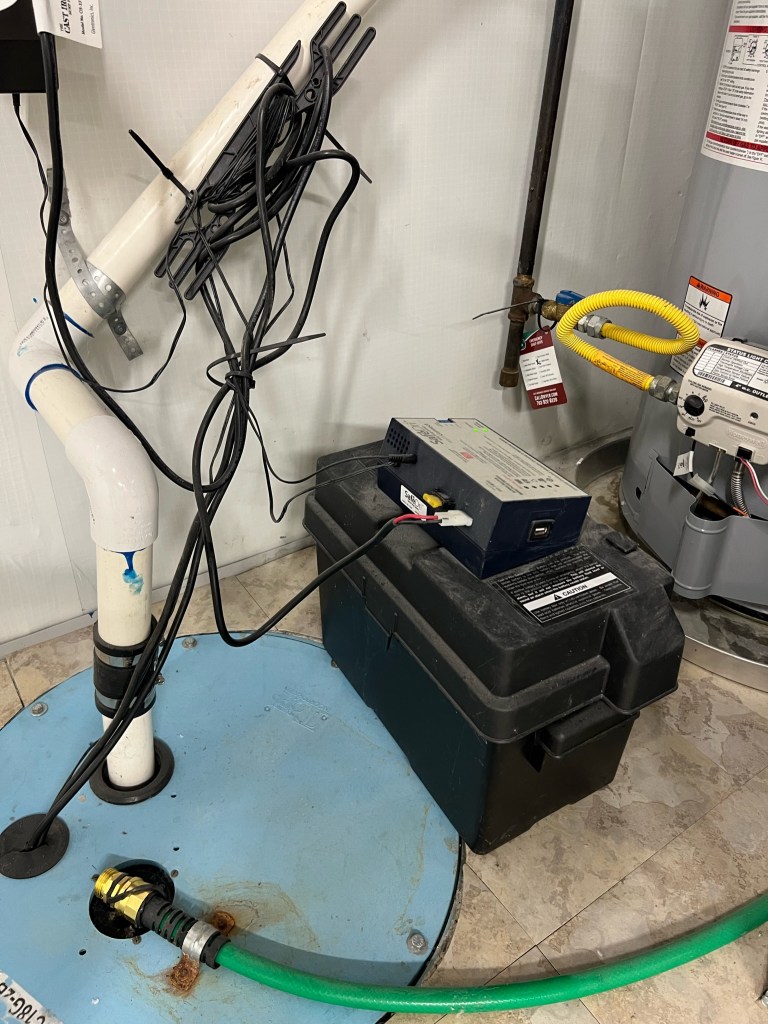
The basement of this home proved my suspicions correct—it had previously had a problem with water intrusion. How did I know for sure? It had been professionally waterproofed. In the unfinished portion of the basement, along two of the perimeter walls, there was concrete repair and a little piece of plastic that sticks out around the edge. These are telltale signs a waterproofing company had trenched around the interior perimeter of the basement and installed a drainage system that empties into a sump pump. The sump pump then pumps the water out and away from the house.


Now the home seems dry, but it will be something that a future homeowner will need to monitor in the future, and it’s definitely something you should know when considering purchasing a house.

If you ever do have issues with water coming into your home, here are some remedies:

1.If there is a sump pump installed, make sure it is working properly. You might also want to consider installing a backup battery on the sump pump in case of power outages.

2. If there are exterior stairs to the basement with a drain at the bottom, that drain must always be kept clear. At the very least, install an elevated drain cover to keep leaves and debris from covering it completely. If possible, consider building a roof over top of the stairs, to direct water away.

3. Extend downspouts away from the home. This can be done hrough a gutter extension kit (either above ground or dig a trench and extend it underground). A rain barrel is another good option, just make sure that the overflow extends away from the home.


4. Landscaping should be slightly elevated and sloped away from the foundation. Aside from the aesthetic, foundation flower beds serve an important purpose. They not only direct water away from the home, but the plants also help absorb any remaining water.

5. Put a cover over any window wells. You can purchase an inexpensive plastic cover from your local hardware store. They come in multiple sizes and shapes depending on what you need. If the window well is in a more prominent part of your home you, you can have a custom one made that is more aesthetically pleasing.

6. Apply a sealant to the interior foundation walls. Interior sealants are not a permanent solution but can help keep humidity levels down in the lower level.

7. Have the home professionally waterproofed. This is an effective, long-term solution to move water away from the foundation of the home.

It is extremely important to keep your home dry. Damp basements can lead to mold and mold can travel through the ductwork of your home, creating a toxic health hazard.

If you have any questions about keeping water out of your basement, reach out to us at 703-624-8333. Properties on the Potomac can help guide you to the right contractor.

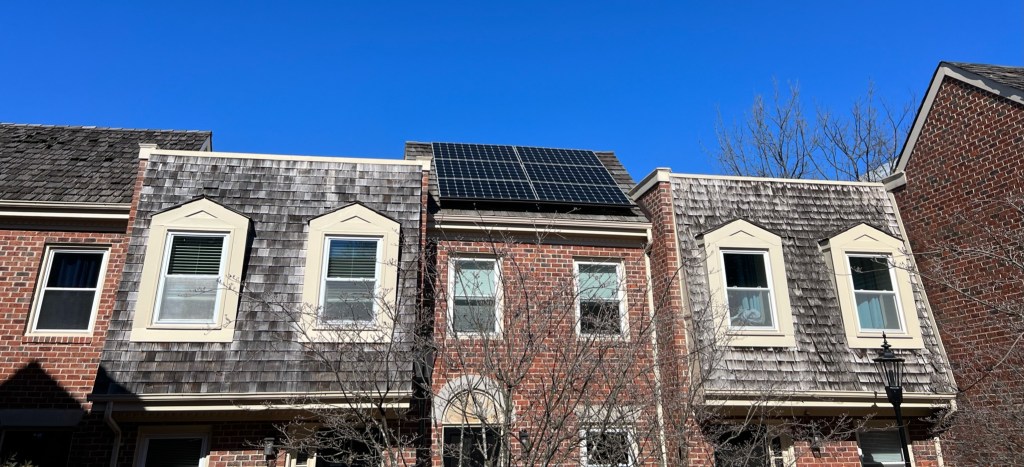
As an extreme analytical, I like to research things to death, ruminate on the findings, ruminate some more, and then maybe–just maybe–make a decision. So when a client mentioned to me that they had decided to install solar panels on their roof, I was intrigued…and then I went down a rabbit hole.

For six solid months, I researched, interviewed solar companies, evaluated cost versus benefit, researched some more, discussed ad nauseum with my husband, and then finally made the decision to install solar panels on my roof.

Obviously, I decided that the pros of installing solar panels outweighed the cons for me. But is it the right decision for you? Let my research and rumination benefit you—below are the pros and cons of installing solar panels:

Pros:

  1. The most obvious: solar reduces your electric bill. Not only can solar offset your electric usage, but you could also be eligible for net metering, an electric billing tool that sends the excess power your panels produce back to the electric grid. If in a day your solar panels produce 20kWs and your home only uses 15kWs, 5kWs get sent back to the grid and offset your electric bill.
  2. Your potential monetary savings will increase over time as electricity continues to increase in price year over year.
  3. You should be eligible for federal tax credits, if you own your system. Currently the Federal Solar Tax credit is 30% of the cost for installation (until 2032). So, if your system costs $30,000, you could be eligible for a $9,000 tax credit, thus lowing the net cost of the system to $21,000. Obviously, consult with your tax professional to make sure it works for you.
  4. You also could potentially sell SRECs, or Solar Renewable Energy Credits. SRECs are created for each megawatt-hour of electricity generated from the solar energy system. Some states have created SREC markets to boost solar installations by requiring electricity suppliers (Pepco, BG&E, etc.) to purchase SRECs produced by in-state solar energy systems as part of their obligation under the state’s Renewable Portfolio Standard (RPS). In our area, the District of Columbia and Maryland offer SREC programs. The value of the SRECs can vary state by state and month by month. DC has one of the more robust SREC markets.
  5. Solar panels are low maintenance. You don’t really need to do anything to the panels other than keep debris off of them.
  6. Solar will decrease your dependence on non-renewable resources. Because saving the planet is always a pro.

And the Cons:

  1. The up-front cost can be cost prohibitive. It can cost between $2,750-$4,000 per kW system, so if you have a 10kW system the range should be $27,500-$40,000. Obviously this is a lot of money up-front and it can take years to recoup the cost.
  2. Some HOAs may not allow them or restrict where they can be placed on your home.
  3. If you live in a wooded area or in the shadow of larger buildings, you won’t be able to reap the maximum benefits.
  4. If you don’t own your roof (common element of a condo/co-op), you likely won’t be able to install solar panels.
  5. The overall aesthetic. Let’s be honest: they aren’t the most aesthetically pleasing part of a house.

I have not regretted my decision to install solar panels for one minute. Since doing so, my husband and I have been able to take advantage of the tax credit, we’ve been able to sell our SREC credits (we live in DC), and our electric bills have reduced significantly (we’ve even had negative balances some months). And the most fun part is logging into the app to see how much energy we’re producing.

If you are thinking of adding solar to your home, give us a call at 703-624-8333. Properties on the Potomac would be happy to talk you through the process and make recommendations.

Here are some additional solar resources.

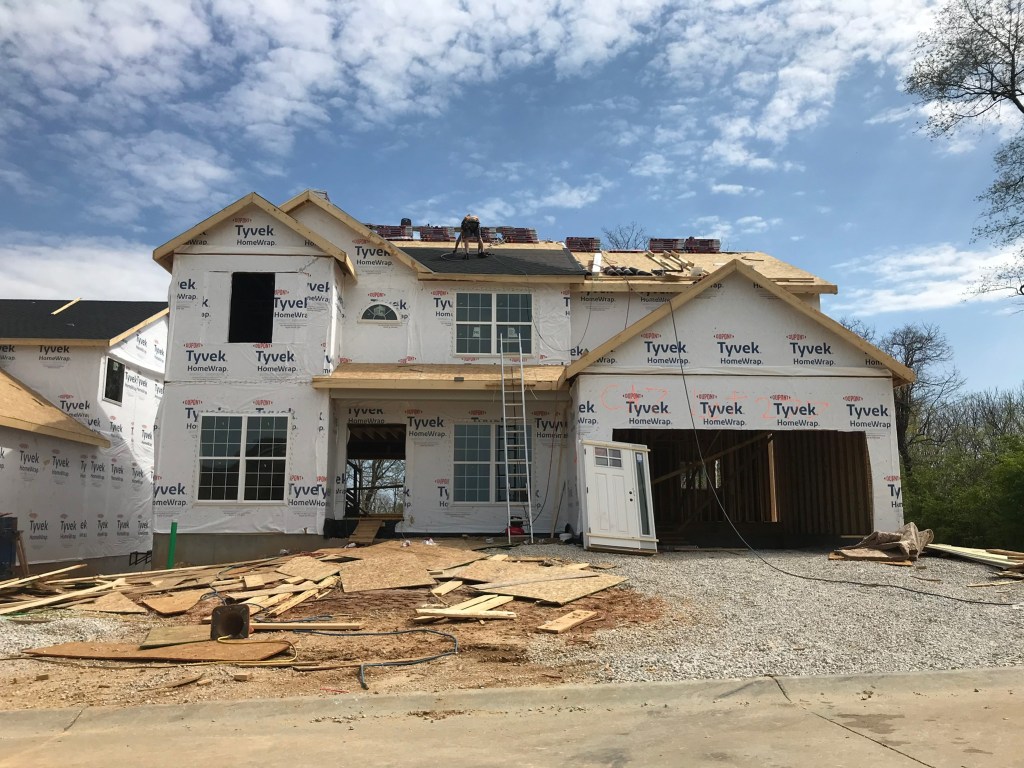
Touring a new home subdivision with beautifully decorated model homes is exciting. Walking a vacant lot and imagining your home built on it is exhilarating. Not having to overbid, or hold your breath if your offer is accepted on a resale house can make the home-buying experience less stressful.

With low housing resale inventory, many buyers are turning to builders of new homes. But between falling in love with that magnificent model home and signing a contract, buyers should know these eight critical things:

  1. Research the builder’s reputation.
    Is this a builder who has a good reputation of delivering homes to many satisfied buyers? How are their reviews? Are there any lawsuits pending against them? 

  2. Does the neighborhood have an HOA?
    Is the house you are considering located in an existing HOA or Condo Association or will it be a brand new HOA? Who controls the HOA? Often the builder controls it until all lots are sold. Be sure to get a copy of the HOA/Condo Documents and review them carefully. Most jurisdictions provide for contract rescission within 3-5 days if for any reason the documents are unacceptable to the buyer.

  3. Understand the purpose of the deposit.
    While an earnest money deposit is made with a resale purchase contract, not all new home contracts take an “earnest money deposit.” Builders take a deposit. Some builders do not consider it an earnest money deposit, but a direct deposit toward the construction of the house, therefore it will be deposited in the builder’s operating account rather than in an escrow account.

  4. Are incentives offered by the builder?
    In certain situations, builders will offer free upgrades and/or closing cost assistance to the buyer. Be sure that you understand exactly what is being offered and that it is in writing with the exact terms represented by the builder’s representative. As in all real estate agreements, to be enforceable, terms, conditions, and promises must be in writing.

  5. What does the buyer have to do to qualify for those incentives?
    “Free recreation room” or “$10,000 in closing costs” or “Free Kitchen Upgrade” and many more iterations can be offered. Upgrades and closing costs are certainly appealing. What will be required of the buyer to qualify for the incentive(s)?

    Will the builder insist that the buyer finance with their lender and/or their title company? What is the actual cost of that requirement? Sometimes, the actual “cost” of the incentives exceed the benefit of the incentive. It is important to understand all costs and fees.

  6. What warranties and post-settlement services are included?
    In Virginia, a builder must warranty their construction for 12 months after settlement. Many builders offer 10 year warranties, 2-10 warranties, and/or pass on equipment warranties. All warranties are not the same. One question to ask is whether drywall imperfections post-closing are covered. Some builders will only correct drywall imperfections identified during the pre-settlement walk-through. Others will warrant drywall for extended periods.

    Will a list of the trades be available for ease of service, or must repairs/service be channeled through a central division of the builder? Is there a response timeframe? Be sure that all warranty questions are answered and verified in writing.

  7. Review the contract…then review it again.
    The builder’s contract has been written by their attorneys to be in their favor. Aside from contingencies specifically written into the contract, once the contract has been signed by all parties, it is an enforceable contract. The buyer should expect that they will settle on the sale. Before signing the contract, be sure that all terms are written as represented, all questions have been answered, and that you are prepared to move forward with the project. Know when (if) additional deposit(s) are due. Be prepared to attend inspections and builder meetings when they are called. While most builders want to be flexible, to be able to deliver a new home, schedules must be respected. Be sure to leave the contract signing meeting with a complete contract including all schedules and selections (to that point – more will be needed later).

  8. The model home decoration, appointments, & upgrades are for display purposes only.
    Your new house will come with plain walls, no window coverings, tiny landscape plants, and grass that you will have to water to establish.

    Depending on the builder, design choices can be included in the contract price. Design options can include flooring, shade/blinds, appliance upgrades, tile, counters and cabinets, faucets, sinks, lighting, and other options as available.

With many choices, state of the art equipment, and everything bright and shiny, it is easy to begin to believe that each option is indispensable. Be careful to keep within your budget and your lender qualification. Once options are selected and ordered, making changes can become very costly.

Contracting for a home to be built can be exciting and rewarding, and can result in the house of your dreams. Done incorrectly, the process can become a nightmare. It is for the above and countless other reasons that having an experienced Realtor representing your interests can save you money and sanity.

At Properties on the Potomac, Inc. we have been helping our clients select and design beautiful new homes for more than 35 years. We know the builders, the lenders, the incentives, the warranties, and most builders’ process. We know where to look and the questions to ask.

Is a newly built house in your future? Take the first step and give us a call: 703-624-8333.

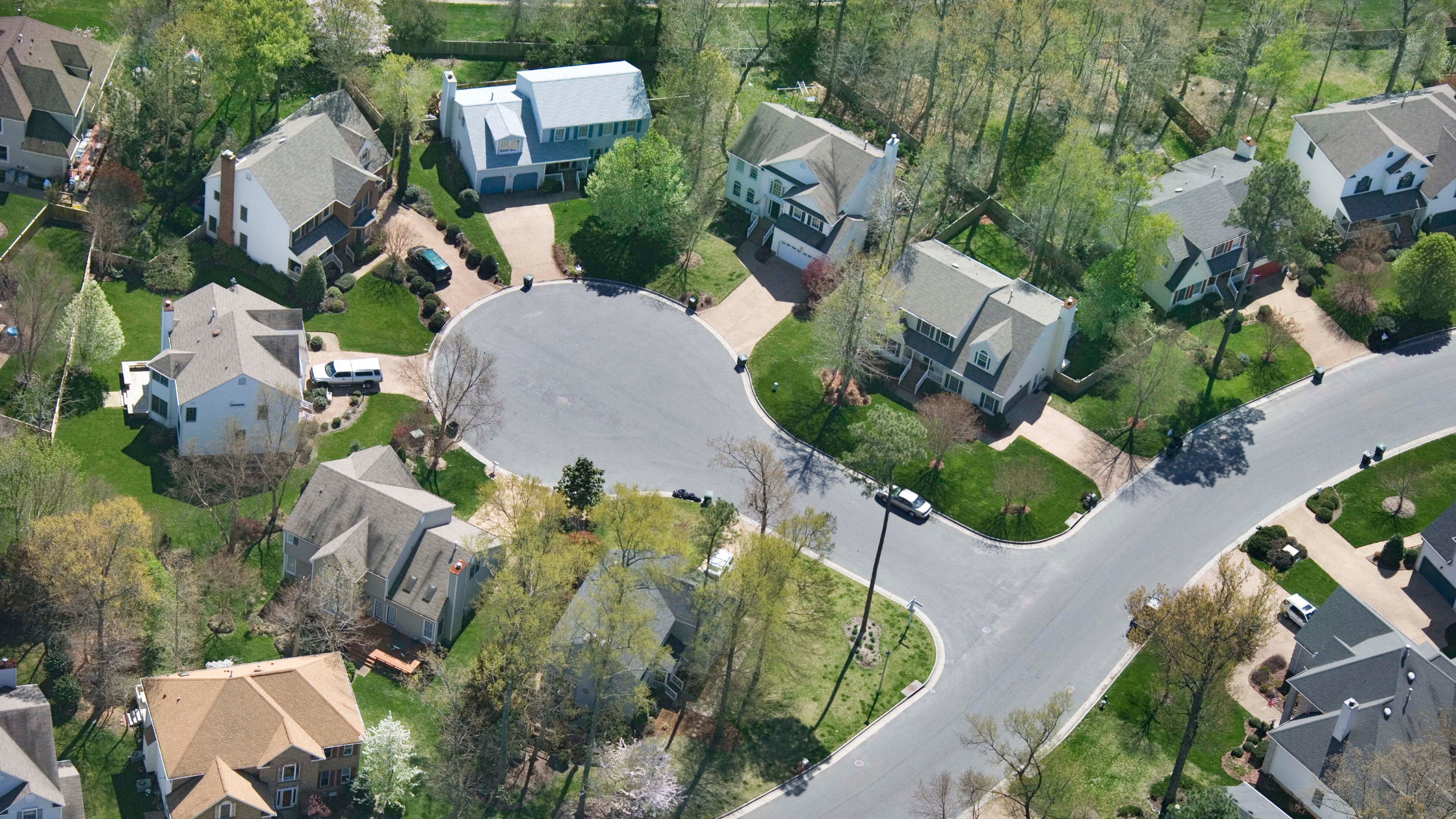
The houses may look the same. The lots may all be the same size. In some communities, there may not be a lot differentiating one house from the next, at least not externally. But living on a cul-de-sac is different. A cul-de-sac adds value. And when it comes time to sell, houses in a cul-de-sac have the upper hand over their non-cul-de-sac neighbors. Here’s why:

  1. Instant community
    For a new buyer, living on a cul-de-sac means it might be easier to get to know your neighbors. It is often easier to share a refreshment, make introductions, and, maybe, find common ground.
  2. Security
    Quite literally, being at the end of the road makes it difficult for cars to speed past your home. It’s safer to walk and to congregate outside. Children can play, ride their bikes, skate, or play ball, while the windows of 3-4 homes overlook the area.
  3. Social activity
    On warm summer evenings, it is not unusual to see neighbors enjoying a beverage together on the cul-de-sac where children have played most of the day. It is a great place to invite children and adults alike to get away from screens and get some fresh air and human interaction.
  4. Relaxing environment
    Without having cars driving past your front yard, the noise and level of activity is greatly diminished. Relaxation comes with an absence of movement and noise. Yes, children might laugh and shout, but these are the happy sounds of life – not the road noise and speed of business life.
  5. It is a throwback to earlier times of children playing outdoors
    The cul-de-sac is where children of all ages can play together. It is heartwarming to see the older kids teaching the younger ones to shoot a basket in a hoop or to learn to ride a bicycle. It frees up parents to relax without managing children’s every activity. It stimulates sociability and friendship and expands energy for a good night’s sleep. “It is one of the last remaining ways to give children an old-fashioned childhood,” says Patricia Shannon of Southern Living magazine.

While there are exceptions to all of these, my 37 years of serving clients has proven that cul-de-sacs are a great place for building friendships, relaxing, and hours of safe play for children. Historically, homes on cul-de-sacs command higher resale values. Why? Limited supply with greater demand (as listed above) boost value. The cul-de-sac is a special place.

Is a new home on your list for this year? We know where the cul-de-sacs are. Call or text us at 703-624-8333 to help you find the perfect setting.

It was almost exactly nine years ago that my husband and I purchased our townhome in Washington, DC. It was about eight years and nine months ago (who’s counting?) that I joined our HOA board as Treasurer.

HOAs, or Homeowners Associations, (or COAs/Condo Associations) sometimes get a bad rap. Some people view them as intrusive or overbearing, but HOAs are critical to maintaining many communities and even increasing the value of your home in many instances.

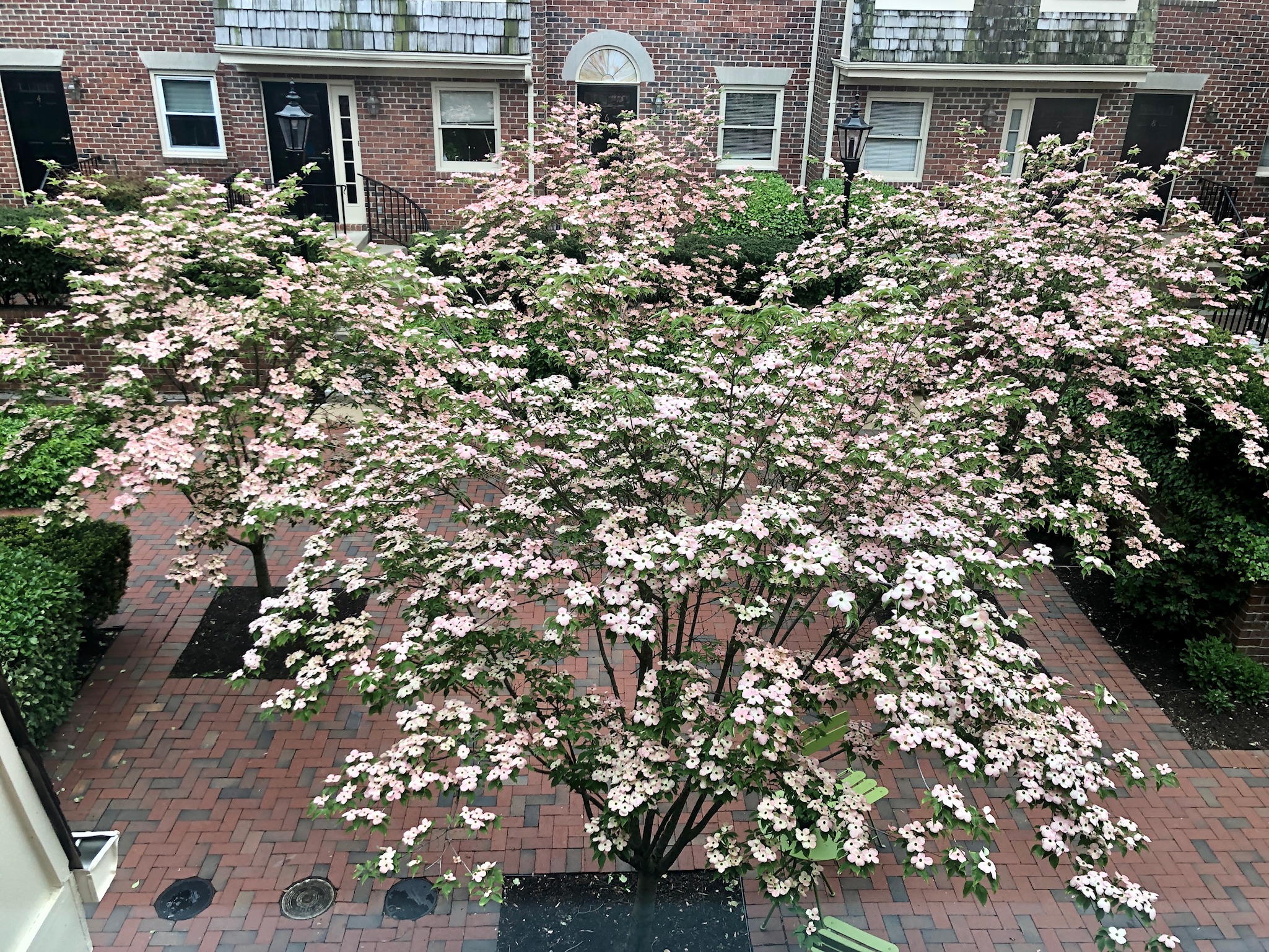
For what it’s worth, I’m still the Treasurer of my HOA (and have recently joined the board of an investment property as well). And the President, secretary, and architectural review board are all still the same people as well. We’ve developed wonderful friendships and have worked to oversee projects big (replacing the entire brick courtyard) and small (planting flowers in the courtyard.) These projects have been integral to maintaining the value of our investment and our community is thriving, well taken care of, and a place I can proudly call home.

Obviously I’m fully on-board and involved with my HOA. Whether you love them or hate them, here’s why you should be involved, too:

  1. Be “in the know” about what is going on in your community. Learn about what projects are planned, how your monthly fees are being spent, when the next community yard sale is, etc…
  2. Be a decision maker. You help decide which projects to prioritize and how the money is spent.
  3. It looks good on your resume. Taking an active leadership role should go on your LinkedIn profile and potentially on your resume. If you are looking to move up in your career, having extracurricular volunteer leadership activities can only help.
  4. Change the status quo. Many associations have had the same rules and regulations in place for years, but they may not be relevant to the times. For example, an HOA might require all front yards to be planted with a specific type of grass. What if that grass no longer grows well in that location? What if you would rather plant clover or flowers for lower maintenance? There are many HOAs that will not allow solar panels or EV chargers. If yours is one of them, consider trying to make that change. I have worked with many clients who view these outdated rules as dealbreakers. For a good laugh, google “weird HOA rules” and you’ll come up with some strange ones like a garage sale dress code or no blue trampolines.
  5. Your property value will thank you. If you have a well-run HOA that makes sure the grass is cut, trees trimmed, snow plowed, trash picked up, etc… and your community looks nice, your home will increase in value tenfold over the community that lets itself fall into disrepair.
  6. Make new friends. We all know that it is much harder for adults to make new friends than it is for children. Why not make it easier on yourself and get to know the people literally in your back yard? What we’ve learned over the past 3 years of a pandemic is that community is an important part of social connection. We spent many evenings out in our courtyard, distantly socializing with our fellow neighbors. It helped keep us all sane.

Help yourself and your neighbors by getting involved in your HOA or COA. You can start small by going to meetings, and then consider pushing yourself to take it one step further and joining the board. Your community and board will thank you. You have nothing to lose.

Are you looking for a home with or without an HOA? Give us a call at 703-624-8333 today!