By Krasi Henkel, Broker

It is the Holiday Season again. Social calendars and children’s activities are at their peak. A common belief is that December is “quiet” in real estate. In reality, things are abuzz preparing for the New Year. Realtors are planning and wrapping up their year. Many homeowners are thinking, while perhaps, not taking immediate action.

When the calendar slows,  distractions abound. Plans percolate. There might be fewer sales. There is also less competition (good for buyers). Are you evaluating how your space functions? Conversations often shift from “Should we?” to “What do we want next?” What do you really want?

The Conversations That Matter Most

Planning conversations revolve around timing, readiness, and sequencing. Much depends on selling or holding the current property. Should you consider a more immediate or deferred approach?

What matters to you most? Do you need more space, a different location, more land? What does your next chapter look like?

Here is why early planning matters. Several years ago, a client shared some plans for the following year. We discussed options and made a plan. I received a distress call shortly before their listing was going on the market. A neighbor was also going on the market at the same time. “What should we do?” I assured them that we are ready to put the house on the market immediately. There were no properties for sale in the entire community. So, “Let’s get you several offers, the best buyer, and the best offer, and those who miss your house can have the next one.” This is exactly what happened. Soon after their sale, three more houses came on the market. There were no multiple offers. Our price remained top for the neighborhood for quite some time.  

Financial Considerations

The financial and strategic conversations are inescapable – the “yes…but.” Yet, where there is a will there is a way. You most likely have equity in your current property which will benefit your future purchase. As a seller, tax advantages could help you act sooner than later. Perhaps now is a good time to have a preliminary conversation with your trusted real estate advisor.

Your three percent loan is marvelous, but you can still up or downsize despite interest rate fluctuations. I have structured many happy outcomes and helped my clients build wealth.

Waiting until January or worse, “spring” limits your options. January brings speed, competition, and many external pressures. Making reactive decisions is rarely optimal. Early conversations allow for better evaluation, preparation, and ultimately, execution.

As in any important financial consideration, thoughtful outcomes begin with thoughtful conversations. If you are considering a potential change, contact me now. I will help you sort the pieces and give you meaningful information with which to make good decisions.  After all, the best real estate decisions are rarely rushed. They are considered.

Take a Close Look Today

by Krasi Henkel

Cold weather changes the rhythm of our homes. We shift from open windows and outdoor evenings to warm fireplaces, hot tea, and the satisfying quiet of a winter night. Yet winter requires more than comfort. It asks that we protect what protects us. A thoughtful checklist now prevents emergencies later.

Protect Pipes from a Cold Night

Few things interrupt a peaceful winter evening like a frozen pipe. When water turns to ice, it expands and can burst pipes behind walls or beneath floors. The damage is both expensive and preventable.
Insulate exposed pipes in garages and crawl spaces. Keep interior temperatures steady, especially overnight. If you plan to be away, leave the heat set above fifty-five degrees. A winter night is no time for the house to fend for itself.

Ice Dams and Rooflines

Snow on the roof is picturesque until warm air beneath melts it, and it refreezes at the eaves. The ice forms a dam, and water has nowhere to go except beneath shingles. It is the hidden kind of problem that appears in March when ceilings become discolored.
Proper attic insulation and ventilation keep temperatures uniform. Clean gutters before the first snowfall, and if heavy snow arrives, use a roof rake from the ground. Let the roof stay cold. That is the goal.

Walkways and Concrete Surfaces

Salt seems like a winter necessity until one remembers that salt breaks down concrete. Over time, it erodes driveways and walkways. The better approach is calcium magnesium acetate or similar products that are kinder to surfaces.
The real secret is prompt snow removal. The less ice forms, the less melting product you need.

Doors, Windows, and Storm Doors

Winter air knows how to slip inside. A loose latch or worn weather stripping can make a room feel twenty degrees cooler.
Take a moment when you close storm doors. Listen for the latch. Check windows and sliding doors for small gaps that invite drafts. Replace worn seals. Secure latches. These are small details that make a noticeable difference on a January morning.

Fireplaces, Embers, and a Cautionary Note

A winter fireplace is one of life’s quiet luxuries: a chair nearby, a warm beverage, and the comfort of real heat. Yet fireplace ash carries a danger many homeowners underestimate. Hot embers can remain active for hours.


Never dispose of them outdoors or in the yard. A breeze can reignite ash and send embers toward siding, mulch, or wood structures. Always place ashes in a metal container with a lid, kept away from the house, until fully cooled. It is a simple precaution that prevents a house fire while everyone is asleep.

Winter Should Be Enjoyed

The purpose of preparation is not worry. It is confidence. Once the essentials are handled, winter can be what we hope it will be: evenings by the fire, comfort in familiar rituals, and the quiet pleasure of knowing the house is ready.

Here’s to enjoying the season prepared and protected.

Mold Can be a Silent Contagion

By Krasi Henkel, Broker

This is the season when we spend more time indoors and our doors and windows remain closed for longer periods.

I am deathly allergic and toxic to mold. A three second exposure can make me ill for weeks and even months. I often laugh with my buyer clients that I am the official “mold meter” when we look at houses. There have been times that I detected mold even before opening the front door. I share my experience with my clients, and we leave as quickly as possible. Sick houses can be cleaned. My clients need not be the ones to do that.  

Not everyone smells or reacts to mold. I believe that educating my clients is paramount. No sale is worth illness and maladies. I would rather walk away than knowingly let my clients buy into malaise, illness, and even life-threatening accidents. A mold reaction caused me to fall from my horse, breaking my ankle. My life changed. I have not been the same ever since.

While everyone has varying levels of reaction, if any, to mold in a property, it is important to understand how mold develops and where it can grow. It is not always the old basement, although it quite possibly can be. With weather changes and moisture changes, below is a list (not comprehensive but suggestive) where mold can grow:

  • Window casings and drywall around them
  • Doors – under sill plates and around the frames on the drywall
  • Under sink base cabinets
  • Under dishwashers
  • Under washing machines
  • Under HVAC condensate lines
  • Inside HVAC air handlers
  • Behind and under refrigerators (even those without water sources)
  • Bathrooms
  • Basements – under floors, wall bases, even ceilings
  • Your car!!

What can you do to prevent mold from taking root in your home or car?

  • Inspect window caulking regularly – recaulk as needed
  • Check door sill plates – especially at decks and patios
  • Look under sinks – look for evidence of moisture – attack and remediate
  • Look under your dishwasher for evidence of water and mold signs
  • Look under and behind washing machines
  • Have your HVAC serviced and inspected semi-annually – ask your tech to look for evidence of leakage and mold
  • Pull your refrigerator out – inspect the floor
  • Run the exhaust fan in your bathrooms while showering to prevent condensation build-up
  • Confirm that bathroom exhaust fans are operating properly
  • Change the air filter in your car
  • Keep all HVAC filters clean

Here are a few unsettling facts that I recently discovered:

  • Drywall in its manufacturing process has imbedded mold spores
  • Mold loves drywall. That is why after a water incursion event, mold grows on drywall very quickly.
  • New home construction can “build-in” mold during the construction process by allowing materials to get wet.
  • Your car’s trunk gasket can be allowing water incursion and harboring mold
  • Your car’s air filter can get damaged by mice – their deposits can sprout mold
  • Your car’s AC can leak into your dash – mold can sprout

These lists are just a few of the mold issues that can develop over time or quickly.

Mold has been associated with chronic fatigue syndrome, headaches, upper respiratory ailments, even ‘colds’ could be reactions to mold.  Do not be lulled into security by a ‘new house.’

Last year, I walked through our basement bedroom for a split second. That was long enough for me to get sick. It lasted through January. Where was the mold? Our basement bath exhaust fan had stopped exhausting but sounded to be running just fine. My husband likes the shower there. The moisture from the shower traveled to the far corner of the room, settled on the cold tile floor under a night table, and sprouted a quarter-sized spot of mold.

As a precaution – I had the exterior walls’ drywall removed – luckily – all was dry including studs and base framing. The tile was dry with no evidence of water. I called a waterproofing company – they tried to sell me a $50,000 remediation system.

I decided to call on the home inspector who inspects my clients’ home purchases. He came armed with a moisture meter. He found none. Then, he suggested laying down and sealing a vapor barrier plastic sheet like that of a crawl space. He told us to leave it down for 7-10 days. If at the end of the period, there was moisture under the barrier – there is a water problem. If none, then it was a condensation problem. Luckily, it was the latter.

Our brilliant contractor figured out that the exhaust fan was not extracting the condensation. In with a new fan and lots of cleaning – all is well.

However, this episode required that I discard the entire contents of the room. I had my brand new furnace thoroughly cleaned and disinfected. Mold spores are airborne and had certainly settled on all fabrics and furnishings. All because an exhaust fan had malfunctioned. On that note – ask questions about the history of any resale furnishings that you are considering buying. Have you ever smelled mustiness in antique drawers . . . ?

Mold is toxic and for those who are sensitive, each episode increases that sensitivity and the reactions.  While I am not a mold expert, here is a link to mold and its remediation on YouTube.  The mold conversation begins around the 3 minute mark. It is a little long but could save you years of misery.

If you have questions or need resources, contact Krasi Henkel – TEXT – 703-624-8333. If you are planning to buy your next home, Text Krasi.

The Update That Will Change Many Agents’ Clients’ Privacy

On November 15, Zillow’s new Follow Up Boss policy activates.
It allows Zillow to analyze “mutual customer data” — information about people already stored in an agent’s database and active on Zillow. In practice, that means private notes, personal dates, communication records, and engagement metrics will most likely flow into Zillow’s broader system.

The Fine Print Behind the Automation

Agents and brokers across the country rely on Customer Relationship Management CRMs that promise efficiency. That speed has a price. By clicking “agree,” most have granted sweeping permissions that they have most likely not read. These updates are not breaches. They are contracts of consent written in language few real estate professionals have the time , patience, or legal acumen to interpret.

Why This Matters to You

Real estate is built on trust and confidentiality.
When client data becomes “shared metadata,” trust erodes. The public assumes its conversations with agents are private. Agents assume that their CRMs act as secure tools. Both assumptions are now questionable.

Properties on the Potomac Does It Differently

At Properties on the Potomac, technology serves judgement. We never replace judgement with technology.  Of course, we use advanced digital systems, but we maintain local control of all client data. No automated platform owns our client relationships, and no algorithm decides who receives correspondence.

Our data protocols are guided by three principles:

  1. Control: We decide where our data lives, and who can access it.
  2. Confidentiality: Your personal and financial information remains between you and your agent.
  3. Accountability: We read ‘agreements’ before signing and occasionally forego convenience for privacy. Your trust is not a click-through box.

Krasi’s extensive education in accounting and finance has developed a “radar” to detect potential conflicts of interests. In 2002, when her then brokerage demanded that all client data be entered into their centralized CRM system, Krasi changed companies.

When asked which CRM our company uses, Krasi replies, “spreadsheets.”  Why? Because our clients do not have to be “managed” with prewritten impersonal communication. Real Estate is still a PEOPLE business. The person who is helping you with your most important financial transaction must respect you more than AI-generated communication can offer.

The Bottom Line for You

Technology should enhance professionalism.  
Convenience is valuable, but not at the expense of control.

Technology must never erase human professionalism.

If you are considering a move or investment – reach our to Broker, Krasi Henkel

Banner image: Leadership and mentorship discussion, Diana Bell-McKoy

As a real estate professional constantly seeking to expand my horizons and connections, I recently had the privilege of attending the French-American Chamber of Commerce Business Summit on May 1st at the Embassy of France. This gathering proved to be far more than a typical networking event. It was a vibrant celebration of cross-cultural collaboration and innovation right here, in the DC Metro area.

A Feast for Mind and Palate
The Embassy of France provided an elegant backdrop for this meeting of minds, and true to French tradition, the culinary offerings were nothing short of spectacular. From the carefully curated breakfast pastries to the sumptuous lunch spread, the attention to detail reflected the French commitment to excellence that permeated the entire summit. And of course, French Champagne.

While the food nourished the body, it was the intellectual exchange that fed the soul. Speakers from diverse sectors shared cutting-edge technological developments, innovative marketing approaches, mentorship programs, and even artistic perspectives that bridge our two cultures. The breadth of knowledge on display was both impressive and humbling.

Tomorrow’s Leaders Today
Among the most inspiring aspects of the summit was meeting several French interns currently working at the Embassy. Their enthusiasm, professionalism, and global perspective were remarkable. These young professionals embodied the future of international relations. They were fluent not just in multiple languages but in the nuanced art of cross-cultural communication.

Their presence reminded me that in real estate, we’re not just selling properties; we’re facilitating lives in new communities. Whether helping expatriates find their American home or assisting locals looking to embrace new cultural experiences, understanding diverse perspectives enriches our ability to serve clients meaningfully.

Tech discussions with Alain Briancon, PhD – Senior Technology Executive, Arch System

Technology and Humanity: Finding the Balance
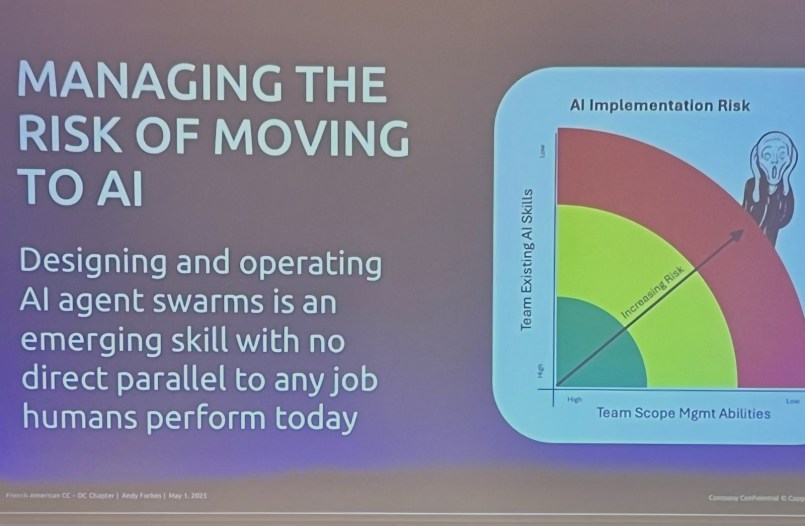
A recurring theme throughout the presentations was the role of technology in modern business. Speakers showcased impressive advances in various fields—from golf lawn mowing robots to marketing strategies and Woman-on-Woman mentorship, there were limitless applications for real estate.

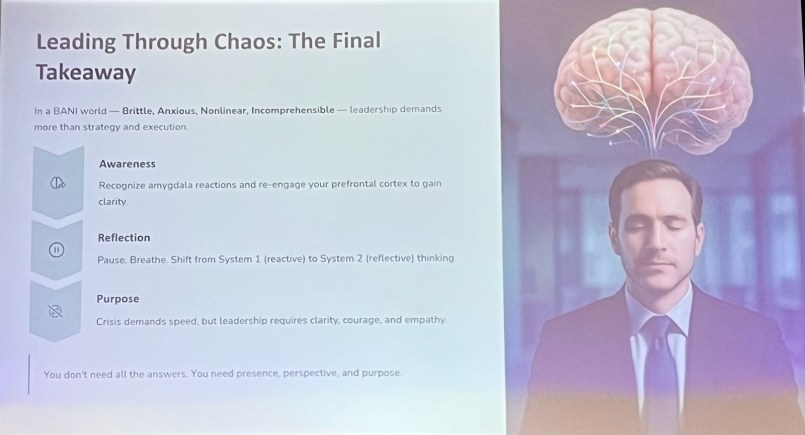
The most profound takeaway came not from discussions of technology but from experiencing its limitations. Despite all our digital connections—emails, texts, social platforms, and virtual meetings that fill our days, nothing replaces the energy of face-to-face conversation. As attendees exchanged ideas over coffee or shared business cards after presentations, it became abundantly clear: human connection remains the foundation of meaningful business relationships.

Bringing It Home to Properties on the Potomac
At Properties on the Potomac, we value the human element of real estate. The insights gained from this summit reinforce our commitment to combining technological efficiency with personal connection. In our communities, where history and innovation flow together like the waters of the Potomac, this balanced approach resonates deeply.

The French-American Chamber of Commerce exemplifies how different perspectives can create something greater than the sum of their parts. Similarly, in real estate, bringing together diverse clients, properties, and communities creates value that transcends transaction.

Leadership discussion: Laurant Tari

As I reflect on the day’s experiences, I’m reminded that bridges, whether between cultures, businesses, or people seeking new homes, are not built with technology alone. They require understanding, patience, and genuine human interest. In our increasingly digital world, these qualities may well be the most valuable currency of all.

The summit may have ended, but its impact continues. As a Certified International Property Specialist, I look forward to incorporating these cross-cultural insights into our work at Properties on the Potomac, Inc., where each client’s story adds another chapter to our community’s rich narrative.

In keeping with the international theme of the day, I had the pleasure of dining with a client who is Bulgarian. After a day of hearing French and partially conversing in it, I switched to Bulgarian and ended the day on a note of optimistic plans for my client. In spite of being up since 5 AM, I was still energized when I walked through my door after 10 PM.

Nestled in Virginia’s northwest corner, Western Loudoun County represents one of the region’s most distinctive real estate markets. Properties here offer a captivating blend of agricultural heritage and contemporary country living, with investment opportunities ranging from historic estates to luxury new construction. Rolling hills dotted with stone fences frame breathtaking Blue Ridge Mountain vistas, creating premium viewsheds that significantly enhance property values.


The region’s thriving agribusiness sector supports strong agricultural property demand, from century-old family farms to boutique agricultural ventures. Over 45 award-winning wineries have established Western Loudoun as Virginia’s wine country epicenter, driving specialized vineyard property values. The robust equestrian market features everything from modest hobby farms to world-class training facilities, with proximity to riding trails and hunt country commanding premium pricing.

Western Loudoun proudly preserves its rich foxhunting tradition through prestigious hunt clubs like Loudoun Hunt and Middleburg Hunt. Properties within established hunt territories often enjoy enhanced market appeal and stronger value retention, particularly among equestrian buyers.


Families invest here for top-rated public schools and prestigious private academies. The real estate market benefits from exceptional recreational amenities, charming historic towns, and proximity to Washington DC, creating a perfect balance of rural tranquility and metropolitan access that continues to attract discerning buyers seeking authentic country living without compromise.

If you are considering quality of life and a upscale rural lifestyle, contact our broker, long-term resident, and equestrienne, Krasi Henkel at 703-624-8333, to discuss your goals and options.

Krasi Henkel Transforms Lives Through Exceptional Real Estate Experiences and Services

In the world of real estate, true excellence goes far beyond transactions—it’s about creating transformative living experiences. “My journey is a testament to the power of perseverance, passion, and profound personal commitment,” says Krasi.

A Legacy of Determination

Krasi describes her early experience, “My real estate story began not in boardrooms or luxury open houses, but in a moment of childhood resilience. At just nine years old, I stood alongside my immigrant parents, challenging the status quo when faced with discriminatory housing practices. When we were told, ‘We don’t sell to people like you,’ I responded by asking what we needed to become to achieve our dreams.”


“The day we moved into our new home was more than a real estate transaction—it was a pivotal moment of hope, opportunity, and the American dream realized. Those early experiences taught me that a home is far more than brick and mortar; it’s a sanctuary where families grow, dreams take root, and futures are shaped,” reflects Krasi.

Leadership and Continuous Growth

As a testament to her industry standing, Krasi currently chairs the NVAR (Northern Virginia Association of Realtors) Small Broker Forum 2025. She is also one of just 25 members selected for the prestigious 2025 NVAR Leadership Institute. Her commitment to professional excellence includes earning a Certificate in Business Excellence from the College of William and Mary and a Master Certificate of Negotiation from Harvard Law School’s Program on Negotiation.

When not transforming the real estate experiences of her clients, Krasi enjoys life on her horse farm with husband Jon Henkel, who serves as Associate Broker at Properties on the Potomac, Inc. Together they share their home with four horses, four cats, and their beloved Bernedoodle, Sophie. Krasi’s passions include dressage riding, nature walks in her favorite parks, the arts, and writing insightful blogs about real estate, arts, and lifestyle.

Expertise Meets Empathy

With over three decades of professional real estate experience, Krasi brings a unique blend of market expertise and deep personal understanding to every client relationship.

“I don’t just help clients buy or sell properties; I help them curate lifestyle environments that reflect their deepest aspirations,” Krasi explains. “Whether seeking an urban retreat, a suburban community experience, an equestrian estate, or a strategic property investment, I guide clients to clearly identify their true desires before designing customized solutions.”

Having served thousands of clients with billions in real estate transactions, Krasi maintains an exceptional market intuition. She provides timely counsel on when to act decisively, when to pivot strategies, and when patience is the wisest approach. Her track record speaks for itself—she accurately predicted each market fluctuation since 1988 and their subsequent recoveries.

Curious about her current market insights? Contact Krasi for your personalized market report.

We understand that buying a home is one of the most significant investments you’ll make in your lifetime. It’s not just about finding a place to live; it’s about finding your sanctuary. But making that dream a reality requires careful planning and diligent saving. Here are some essential tips to help you start saving for your first or next home.

1. Set clear and achievable savings goals. Determine how much you need for a down payment (it may be less than you think, contact us for more info), closing costs, and any additional expenses associated with buying a home. Having a specific target will keep you motivated and focused on your savings journey.

    2. Create a budget and stick to it. Track your expenses and identify areas where you can cut back or eliminate unnecessary spending. Consider making small sacrifices now for the greater reward of homeownership later. For example, cut out automatic subscriptions/memberships, make home-cooked meals instead of eating out, or look for coupons/promo codes for everyday purchases.

    3. Automate your savings. Set up automatic transfers from your checking account to your savings account each month. This way, you’re consistently contributing to your home fund without even thinking about it.

    4. Explore ways to increase your income or generate extra cash flow. Whether it’s taking on a side hustle, freelancing, or selling items you no longer need, every little bit helps when it comes to saving for a home.

    5. Take advantage of homeownership assistance programs and incentives offered by governments or financial institutions. These programs can provide valuable resources and support to help you achieve your homeownership goals more quickly.

    6. Be patient and stay disciplined. Saving for a home takes time and requires sacrifice, but the reward of owning your own home is well worth the effort.

    Ready to take the first step towards homeownership? Contact us at Properties on the Potomac at 703-624-8333 today to learn more about how we can help you find your dream home and guide you through the buying process.

    It takes many talented people to help settle your purchase!

    When it comes to buying or selling a property, choosing the right settlement agent is crucial. The settlement agent plays a vital role in ensuring that the legal transfer of property ownership goes smoothly. Here are five compelling reasons why you should be very selective when choosing your settlement agent:

    1. Expertise and Experience
    Not all settlement agents are created equal. It’s essential to select a settlement agent who has a proven track record of success and extensive experience in the real estate industry. An experienced agent will have a deep understanding of the complex legal processes involved in property transactions and will be able to navigate any potential obstacles that arise.

    2. Attention to Detail
    The transfer of property ownership involves a significant amount of paperwork and legal documentation. A single mistake or oversight can lead to costly delays or even legal disputes down the line. When choosing a settlement agent, look for someone who is meticulous and thorough in their work. They should have a keen eye for detail and be able to catch any potential errors or discrepancies in the documentation.

    3. Communication and Responsiveness
    Buying or selling a property can be a stressful and emotional process. It’s important to choose a settlement agent who is an effective communicator and is responsive to yours and your agent’s needs and concerns. They should keep everyone informed at every stage of the process and be available to answer any questions. A settlement agent who is difficult to reach or fails to keep everyone updated will add unnecessary stress and anxiety to a challenging process.

    4. Reputation and References
    Before selecting a settlement agent, speak with you real estate agent about their recommendations and experience. We vet all services carefully.  Our sources have a solid reputation and positive track record. At Properties on the Potomac, Inc. the settlement agent has a single point of contact for our clients to expedite and streamline the process.

    5. Cost and Value
    While cost should not be the determining factor in choosing a settlement agent, it is still an important consideration. Settlement agents charge a fee for their services, which can vary depending on the complexity of the transaction and the level of service provided. When comparing settlement agents, look for someone who offers a fair and transparent fee structure. Title insurance is an important determinant in selecting the settlement agent. Keep in mind that the cheapest option is usually not  the best choice, as they may cut corners or lack the necessary expertise to handle your transaction effectively.

    Since 2006, many of our clients have closed their property purchases with Highland Title. Through the years, we have formed a tight team of professionals who look out for our clients’ best interest through careful review, prompt attention to issues that could come up, and professional resolutions so that all parties in the transaction are protected. This week, we celebrated their 25th anniversary!

    In selecting a settlement company, as in selecting the agent to represent you, choose to work only with top professionals who will represent your best interests. If you are planning a real estate purchase, contact Properties on the Potomac at 703-624-8333 today! Once we find you the right property, we can help you chose your settlement company.

    by Krasi Henkel

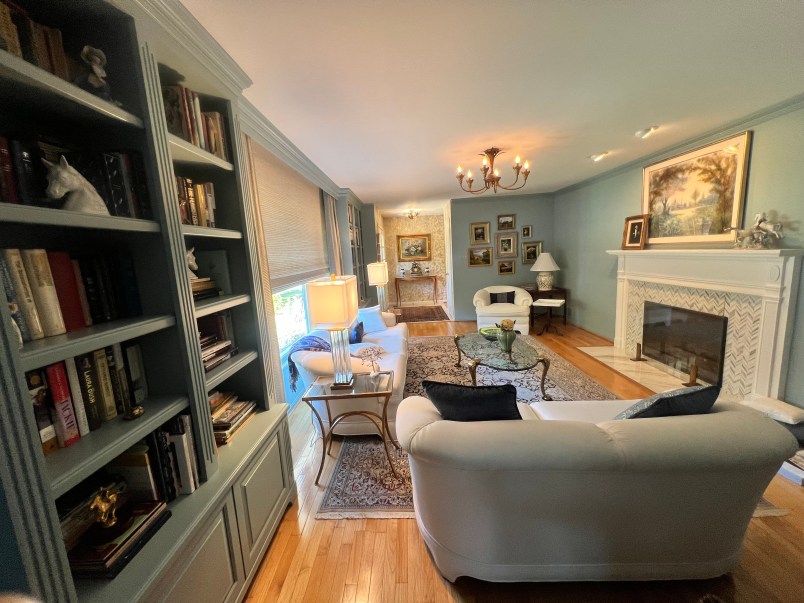
    Hardwood floors are timeless. Case in point: this room with the same flooring, 57 years apart!

    As a small child, I lived in a European city, in an apartment with parquet floors covered by Persian carpets. You can imagine my surprise when I first saw the dirt floors in my great-grandparents’ farmhouse. I thought that it was primitive that a house would have earthen floors, although they were perfectly even and spotless!

    Floors always catch my attention. Over my lengthy real estate career, I have witnessed flooring fads appear and become obsolete. One style seems to persist: hardwood floors. 

    In the 1980s, hardwoods emerged for formal living spaces, with tile in foyers, kitchens, and baths. The late 1990s and 2000s brought a laminate vogue, but laminates sounded hollow and were water-prone. Today, we have luxury vinyl planks (LVP) resembling wood grain minus the hollow feel of the laminates.

    Most of my clients seem to prefer hardwood floors. Why? Hardwood floors provide adaptability. They are a neutral canvas that invites rugs, furnishings, and varied décor. Even if refinished every 10-15 years, quality hardwoods can last 50+ years.

    In contrast, carpets don’t stand the test of time. After 20 years, I replaced wall-to-wall carpeting in my last bedroom. I found the padding had deteriorated to dust. On the surface, the carpet looked perfect. Padding deterioration is one reason that carpets are blamed for allergens and irritants.

    Hardwood floors offer flexibility and diversity. Nicks and scrapes can be repaired and colors can be altered. Planks can be replaced or inserted for remodeling and with proper refinishing, will look untouched. Historic residences display pine or oak floors after centuries. Unlike trends that become outdated, hardwood endures.

    A herringbone parquet pattern is always in style

    Considered the “little black dress” of flooring, classic hardwood floors are the base elevating your unique style. As evening gowns over proper foundations, your walls, furniture, and accents will draw the gaze — not your “basics.” 

    In selecting floors for a new build, remember that typically only two to three feet of floors remain visible after furniture and rugs. You can save thousands by making smart selections in favor of a classic floor and guard against the impulse for exotic woods, patterns, or unique plank widths. What about scuffs, heels, and pets? Those show that people live and enjoy there. Patina.

    One question often arises: whether finished-in-place or pre-finished floors are preferable. That depends. Today’s pre-finished floors offer extensive protective coating making them very durable with pets and children. The smooth elegance of finished-in-place floors is hard to pass up, but again, only small sections are visible. That is a personal choice with minimal cost difference.

    The bottom line: staying with classic hardwood flooring will save money and prevent future refuse (in the form of old, out-of-style carpet.) With a look toward the future, keeping your hardwood floors while modernizing the decor above them will save you thousands.

    In the market for a home with classic hardwood flooring? Give Properties on the Potomac a call at 703-624-8333 to help you find your perfect flooring canvas!