Many people design their homes with a future buyer in mind. They choose neutrals whether or not they like them. Yes, it is safe. It might not offend anyone. They live cautiously, as if tenants in their own homes.
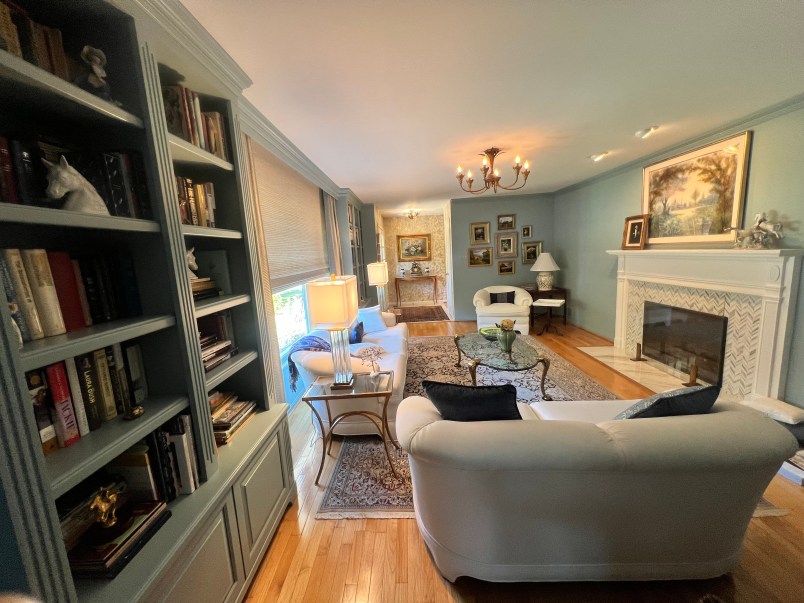
As a first-time homebuyer, I made different decisions. I chose to decorate our home. I did not ‘stage’ it. I did not neutralize it. I decorated it to our taste and expectations. It was not expensive, simply lovely.
I was warned repeatedly. “Nobody will buy this when you want to sell.” ‘They’ were wrong. Not only did my homes sell, they sold quickly and for top values. Even when two of my two-story foyer walls were enameled in hunter green.
Why? Because a home that has been lived in fully carries something no neutral palette can replicate. It has presence. It has coherence. It has conviction. Buyers do not respond to emptiness. They respond to authenticity.
Endless expanses of neutrals might offend no one, but they inspire no one either. They exist in a kind of suspended neutrality, waiting for permission to become something else.
A decorated home, one that has been lived in and cared for, offers evidence of permanence. It shows that the structure was worthy of investment, it was worthy not only financially, but emotionally. It shows that someone trusted the home enough to inhabit it fully. That trust has value.
A home must feel permanent and anchored. It should not feel disposable. It should neither be assembled from materials designed for replacement, nor lived in cautiously for the sake of resale. It should be inhabited fully, honestly, and without apology.
Raising children on ‘nice’ furniture and flooring helps them know that they are trusted and valued. Pets can be trained to respect property. Do not relinquish your life and time to “children and pets” at the expense of quality and permanence. Even if an item sustains damage, that damage carries a history of time and place. It will bring wistful memories when there is peace and order in the house.
I encourage my clients to buy the nice furniture while their children are young. Let them inhabit a home, not just a ‘playhouse.’ Help them understand value, boundaries. Help them learn care and consideration. That is a priceless education.
Choose what you love and it will endure.
Live where you are.
When the time comes, the market will recognize the difference.
Cold weather changes the rhythm of our homes. We shift from open windows and outdoor evenings to warm fireplaces, hot tea, and the satisfying quiet of a winter night. Yet winter requires more than comfort. It asks that we protect what protects us. A thoughtful checklist now prevents emergencies later.
Protect Pipes from a Cold Night
Few things interrupt a peaceful winter evening like a frozen pipe. When water turns to ice, it expands and can burst pipes behind walls or beneath floors. The damage is both expensive and preventable. Insulate exposed pipes in garages and crawl spaces. Keep interior temperatures steady, especially overnight. If you plan to be away, leave the heat set above fifty-five degrees. A winter night is no time for the house to fend for itself.
Ice Dams and Rooflines
Snow on the roof is picturesque until warm air beneath melts it, and it refreezes at the eaves. The ice forms a dam, and water has nowhere to go except beneath shingles. It is the hidden kind of problem that appears in March when ceilings become discolored. Proper attic insulation and ventilation keep temperatures uniform. Clean gutters before the first snowfall, and if heavy snow arrives, use a roof rake from the ground. Let the roof stay cold. That is the goal.
Walkways and Concrete Surfaces
Salt seems like a winter necessity until one remembers that salt breaks down concrete. Over time, it erodes driveways and walkways. The better approach is calcium magnesium acetate or similar products that are kinder to surfaces. The real secret is prompt snow removal. The less ice forms, the less melting product you need.
Doors, Windows, and Storm Doors
Winter air knows how to slip inside. A loose latch or worn weather stripping can make a room feel twenty degrees cooler. Take a moment when you close storm doors. Listen for the latch. Check windows and sliding doors for small gaps that invite drafts. Replace worn seals. Secure latches. These are small details that make a noticeable difference on a January morning.
Fireplaces, Embers, and a Cautionary Note
A winter fireplace is one of life’s quiet luxuries: a chair nearby, a warm beverage, and the comfort of real heat. Yet fireplace ash carries a danger many homeowners underestimate. Hot embers can remain active for hours.
Never dispose of them outdoors or in the yard. A breeze can reignite ash and send embers toward siding, mulch, or wood structures. Always place ashes in a metal container with a lid, kept away from the house, until fully cooled. It is a simple precaution that prevents a house fire while everyone is asleep.
Winter Should Be Enjoyed
The purpose of preparation is not worry. It is confidence. Once the essentials are handled, winter can be what we hope it will be: evenings by the fire, comfort in familiar rituals, and the quiet pleasure of knowing the house is ready.
Here’s to enjoying the season prepared and protected.
This is the season when we spend more time indoors and our doors and windows remain closed for longer periods.
I am deathly allergic and toxic to mold. A three second exposure can make me ill for weeks and even months. I often laugh with my buyer clients that I am the official “mold meter” when we look at houses. There have been times that I detected mold even before opening the front door. I share my experience with my clients, and we leave as quickly as possible. Sick houses can be cleaned. My clients need not be the ones to do that.
Not everyone smells or reacts to mold. I believe that educating my clients is paramount. No sale is worth illness and maladies. I would rather walk away than knowingly let my clients buy into malaise, illness, and even life-threatening accidents. A mold reaction caused me to fall from my horse, breaking my ankle. My life changed. I have not been the same ever since.
While everyone has varying levels of reaction, if any, to mold in a property, it is important to understand how mold develops and where it can grow. It is not always the old basement, although it quite possibly can be. With weather changes and moisture changes, below is a list (not comprehensive but suggestive) where mold can grow:
Window casings and drywall around them
Doors – under sill plates and around the frames on the drywall
Under sink base cabinets
Under dishwashers
Under washing machines
Under HVAC condensate lines
Inside HVAC air handlers
Behind and under refrigerators (even those without water sources)
Bathrooms
Basements – under floors, wall bases, even ceilings
Your car!!
What can you do to prevent mold from taking root in your home or car?
Inspect window caulking regularly – recaulk as needed
Check door sill plates – especially at decks and patios
Look under sinks – look for evidence of moisture – attack and remediate
Look under your dishwasher for evidence of water and mold signs
Look under and behind washing machines
Have your HVAC serviced and inspected semi-annually – ask your tech to look for evidence of leakage and mold
Pull your refrigerator out – inspect the floor
Run the exhaust fan in your bathrooms while showering to prevent condensation build-up
Confirm that bathroom exhaust fans are operating properly
Change the air filter in your car
Keep all HVAC filters clean
Here are a few unsettling facts that I recently discovered:
Drywall in its manufacturing process has imbedded mold spores
Mold loves drywall. That is why after a water incursion event, mold grows on drywall very quickly.
New home construction can “build-in” mold during the construction process by allowing materials to get wet.
Your car’s trunk gasket can be allowing water incursion and harboring mold
Your car’s air filter can get damaged by mice – their deposits can sprout mold
Your car’s AC can leak into your dash – mold can sprout
These lists are just a few of the mold issues that can develop over time or quickly.
Mold has been associated with chronic fatigue syndrome, headaches, upper respiratory ailments, even ‘colds’ could be reactions to mold. Do not be lulled into security by a ‘new house.’
Last year, I walked through our basement bedroom for a split second. That was long enough for me to get sick. It lasted through January. Where was the mold? Our basement bath exhaust fan had stopped exhausting but sounded to be running just fine. My husband likes the shower there. The moisture from the shower traveled to the far corner of the room, settled on the cold tile floor under a night table, and sprouted a quarter-sized spot of mold.
As a precaution – I had the exterior walls’ drywall removed – luckily – all was dry including studs and base framing. The tile was dry with no evidence of water. I called a waterproofing company – they tried to sell me a $50,000 remediation system.
I decided to call on the home inspector who inspects my clients’ home purchases. He came armed with a moisture meter. He found none. Then, he suggested laying down and sealing a vapor barrier plastic sheet like that of a crawl space. He told us to leave it down for 7-10 days. If at the end of the period, there was moisture under the barrier – there is a water problem. If none, then it was a condensation problem. Luckily, it was the latter.
Our brilliant contractor figured out that the exhaust fan was not extracting the condensation. In with a new fan and lots of cleaning – all is well.
However, this episode required that I discard the entire contents of the room. I had my brand new furnace thoroughly cleaned and disinfected. Mold spores are airborne and had certainly settled on all fabrics and furnishings. All because an exhaust fan had malfunctioned. On that note – ask questions about the history of any resale furnishings that you are considering buying. Have you ever smelled mustiness in antique drawers . . . ?
Mold is toxic and for those who are sensitive, each episode increases that sensitivity and the reactions. While I am not a mold expert, here is a link to mold and its remediation on YouTube. The mold conversation begins around the 3 minute mark. It is a little long but could save you years of misery.
If you have questions or need resources, contact Krasi Henkel – TEXT – 703-624-8333. If you are planning to buy your next home, Text Krasi.






 Properties on the Potomac, Inc.