
Northern Virginia Updates

By Krasi Henkel, Broker
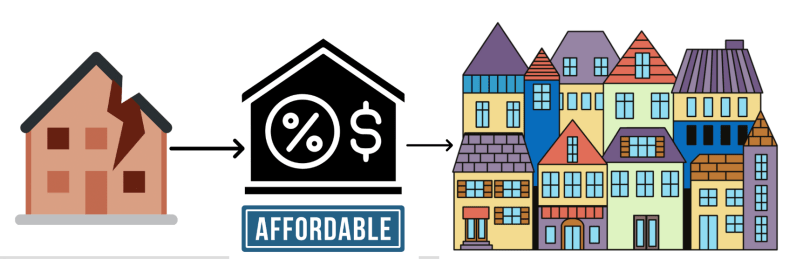
After attending the Loudoun County Chamber of Commerce ‘PolicyMaker Series: Postelection Aftermath’ I walked away with concerns and considerations. This blog is not intended to make or take a political stand, but to outline possibilities and current actions. Keeping you informed so that you can make the best possible decisions, is always my goal.

Politicians and analysts banter the term, affordable housing.  Let’s unpack this concept and discover how, if at all, affordability can be affected.

The variables of affordability consist of the following obvious pieces:

  • The price of real estate
  • The mortgage interest rate
  • The mortgage term (number of years)
  • Cost to insure
  • Taxes
  • Income tax incentives (if any)
  • Housing supply and local zoning

To improve affordability, one or more of the above variables must be influenced as follows:

  • Private property values are subject to market forces.
  • Mortgage interest rates while variable, can be subsidized by jurisdictions or offset by tax savings
  • The term of the mortgage 15-30-50 affects the monthly payment
  • Insurance is partly environmental risk based, and partly determined by your desired value to insure and what to include.
  • Taxes – real estate taxes are based on jurisdictional assessments. You can appeal assessments. You can elect officials who would reduce tax rates.
  • The Federal government or even the state can make interest, taxes, etc. deductible at higher rates – AKA – subsidizing through deductibility.
  • Supply and demand shifts from scarcity to accessibility can partially be accomplished through thoughtful zoning and maybe expeditious reviews.

Below are possible solutions but will require bold federal and state participation.

Let’s clear one thing up – homeowners do not plan to decrease the asking prices for their houses in a scarcity scenario. Insurers have suffered massive losses and will likely not be reducing their rates, and their reinsurers will most likely not be doing the same.

Property taxes – you can evaluate your jurisdictional budgets and determine potential austerity measures with which to justify tax reductions. We all know that this is a long term project involving studies, hearings, and elections.

While on the topic of property taxes and local jurisdictions, one way to increase supply would be to loosen zoning regulations and shorten permit and inspection periods. All of that requires public hearings. Realistically, when was the last time a voting block voted to increase density?

Income tax deductibility or credits could be useful subject to income limits. This will require political maneuvering, bills, vetoes, and committees, and lots of talk and perhaps a little help.

Mortgage interest is a possible variant. When affordability is addressed, it is often addressed for first time home buyers.  The US government, states, and local governments offer mortgage loans to offset cash down payments, and structure loans based on a variety of criteria. This is where creativity can set in and offers interesting options to consider.

Let’s look at Virginia for example. There are several assistance loan products including down payment and closing cost grants. After that there is Virginia Housing (formerly VHDA), which is funded through bonds and are not and do not affect the tax base.  These loans come with quite a few strings and qualification can be onerous. Looking at today’s mortgage rate, I note that VHDA is offering their loan for 6.5%. Yet FHA, VA, USDA are all below 6%.

Another mortgage alternative is increasing the loan amortization terms from 30 to 50 years. Yes, the total interest paid will be higher, but the monthly payment can become affordable. Consider the example below:

$500,000 loan at 5.75%

30 year principal and interest (PI) payment:       $2918

50 year principal and interest (PI) payment:       $2540

The monthly savings will be:                                     $  378

That difference can make the difference in qualifying.

It will cost more over the life of the loan. The reality is that most people move every seven years. Loans can be refinanced if rates decline. I have met very few people who retained their original loan to its final payment. The 30-year mortgage was originally tied to the 30-year treasury bill. Though, the 10-year Treasury Note is a more direct benchmark. The 30-year treasuries are called “long bonds.”

Zoning:

Zoning adjustment measure has been on Virginia’s local jurisdiction radar for over five years. Since 2020 initiatives to modify local zoning to permit density increases have been proposed.

Last week, a circuit court judge recently ruled in favor of the City of Alexandria in the “Zoning for Housing” lawsuit, dismissing the case and allowing the city’s zoning reforms to stand.

The case had been brought by local property owners, Coalition for a Livable Alexandria, protesting the density changes and their perceived impact on their properties.  This ruling allows the city’s “Zoning for Housing” ordinance to proceed. 

A question: with the decision in place, can a developer now buy a single family house, tear it down and build a multi-family structure? What are the limits? What are the safeguards? Where will those residents park?  How will the existing infrastructure support the additional density as far as education and traffic?

In Tysons, a similar initiative has been enacted. Click here to learn more about these and other Virginia measures.

While political promises abound, reality sets in. The recent election platform was heavy on affordable housing. When I inquired at the recent event, about the “how” of the promises, the moderator ‘ran out of time.’ I asked why VHDA loan rates outstrip all other loan rates. When I approached one of the State senators, he told me that they are “looking into it.”  The urgency? Subject to interpretation. They seem focused on zoning changes as the primary solution.

There is no easy fix. Everyone must get involved and ask the hard questions: When politicians promise ‘affordable housing,’ ask them: Affordable to BUY, or affordable to RENT? Those are two very different things – one builds wealth and independence, the other creates permanent tenants beholden to landlords and government programs. The days of happy ambivalence are gone. You should pay close attention and make your decisions thoughtfully.

If you want to buy your first home, contact Broker Krasi Henkel. Her nearly 40 years of experience and exceptional lender network, produce dream-come-true scenarios. If you want to be one of the lucky few – text Krasi today – 703-624-8333.


The Update That Will Change Many Agents’ Clients’ Privacy

On November 15, Zillow’s new Follow Up Boss policy activates.
It allows Zillow to analyze “mutual customer data” — information about people already stored in an agent’s database and active on Zillow. In practice, that means private notes, personal dates, communication records, and engagement metrics will most likely flow into Zillow’s broader system.

The Fine Print Behind the Automation

Agents and brokers across the country rely on Customer Relationship Management CRMs that promise efficiency. That speed has a price. By clicking “agree,” most have granted sweeping permissions that they have most likely not read. These updates are not breaches. They are contracts of consent written in language few real estate professionals have the time , patience, or legal acumen to interpret.

Why This Matters to You

Real estate is built on trust and confidentiality.
When client data becomes “shared metadata,” trust erodes. The public assumes its conversations with agents are private. Agents assume that their CRMs act as secure tools. Both assumptions are now questionable.

Properties on the Potomac Does It Differently

At Properties on the Potomac, technology serves judgement. We never replace judgement with technology.  Of course, we use advanced digital systems, but we maintain local control of all client data. No automated platform owns our client relationships, and no algorithm decides who receives correspondence.

Our data protocols are guided by three principles:

  1. Control: We decide where our data lives, and who can access it.
  2. Confidentiality: Your personal and financial information remains between you and your agent.
  3. Accountability: We read ‘agreements’ before signing and occasionally forego convenience for privacy. Your trust is not a click-through box.

Krasi’s extensive education in accounting and finance has developed a “radar” to detect potential conflicts of interests. In 2002, when her then brokerage demanded that all client data be entered into their centralized CRM system, Krasi changed companies.

When asked which CRM our company uses, Krasi replies, “spreadsheets.”  Why? Because our clients do not have to be “managed” with prewritten impersonal communication. Real Estate is still a PEOPLE business. The person who is helping you with your most important financial transaction must respect you more than AI-generated communication can offer.

The Bottom Line for You

Technology should enhance professionalism.  
Convenience is valuable, but not at the expense of control.

Technology must never erase human professionalism.

If you are considering a move or investment – reach our to Broker, Krasi Henkel

There seems to be a growing trend toward “burning bridges” as a form of self-assertion. It appears often, even celebrated, as though torching a connection is a mark of independence or strength.

Let’s pause and ask, “why?”
To satisfy an ego?
To prove a point?
To protect ourselves from discomfort?

The truth is simpler. We never know when a door might open again. By burning the bridge, we limit opportunity. By leaving it standing, even unused, we preserve possibility.

Years ago, I worked for an exceptionally brilliant executive director. At our staff meetings, he would always end with the same words: “Be nice. You never know who your next boss will be.”

That line has stayed with me for more than five decades. The wisdom is timeless. Being nice costs nothing, and it buys peace of mind, grace, and long memories in one’s favor.

When negotiating with a difficult client or agent, consider the value of restraint. Not every disagreement demands destruction. Some require distance, but distance is different from demolition.

Of course, there are rare situations that justify a clean break. Yet in my many decades of business—as an auditor, portfolio manager, director, Realtor®, and broker, I am grateful that I have resisted the temptation to light the match. The people who might have deserved the flame have long since forgotten, and those who would have cared might have turned away.

Fire is satisfying only for a moment. Bridges, however, can stand for a lifetime.

Be nice. Walk away. For now.

The Washington area housing market is changing. Federal job cuts, mortgage rate shifts, and more homes for sale mean different conditions than we have seen in recent years. Here is what the numbers tell us and what it means for your real estate decisions.

Government Jobs and Our Local Economy
About 20,000 federal workers have left their jobs since December. Professional services companies that work with the government have also cut positions. This sounds alarming, but the bigger picture shows our economy adapting. Construction jobs are booming in Northern Virginia, and total employment continues growing despite the federal cuts.

We have been through this before. In the 1990s, the federal workforce dropped by 379,000 people during the Clinton years. The region survived and eventually thrived. By 1999, home sales jumped 12 percent and new construction hit levels not seen since 1986. Our market knows how to adjust.

Mortgage Rates: Do Not Expect Miracles
The Federal Reserve cut rates by a quarter point, but your mortgage payment will not drop dramatically. Mortgage rates usually fall only about 0.10 to 0.20 percent after Fed cuts. On a $500,000 loan, that saves maybe $45 to $55 per month.

Thirty-year fixed rates will likely stay in the mid-6 percent range through the end of the year. These rates feel high compared to the crazy-low rates during COVID, but they represent normal historical levels. If you have an adjustable-rate mortgage or home equity line, those will drop more quickly with Fed cuts.

The Big Picture: A Calmer Market

The Northern Virginia Association of Realtors forecast shows a market returning to earth after years of wild swings:

Home Prices: Rising 2 to 2.5 percent per year, about the same as general inflation. No more double-digit jumps.

Home Sales: Steady to slightly up, especially for single-family houses in good neighborhoods.

Available Homes: Way more inventory: 50 to 80 percent increases from last year. This sounds dramatic, but we are just getting back to normal levels after years of almost nothing for sale.

August numbers show the trend: 4,264 home sales (down 2 percent from last year) with a median price of $625,000 (up 2.1 percent). Homes now take 19 days to sell instead of 10 days last August. Buyers have time to think.

Each Area Tells Its Own Story

Washington DC and Maryland Counties
The District and Maryland suburbs show more pronounced market cooling. Median prices hit $625,000 in August, up 2.1% from last year. Homes are taking an average of 19 days to sell—about 11 days longer.

Contract activity increased by 2.9% from 2024. Montgomery and Prince Georges counties face stronger headwinds than their Virginia counterparts.

Fairfax County
The steadiest performer. Prices up 2.2 to 2.5 percent, sales holding firm. Inventory increasing but nothing crazy. If you want predictable, Fairfax delivers.

Arlington County
There are two different markets here. Single-family houses are hot: sales up 16 percent, prices rising 2.2 percent. But condos are struggling with prices falling 4.9 percent and fewer sales.

Alexandria
Solid but not spectacular. Prices are up 2 to 3 percent. There are decent sales for houses and townhomes, but condos are having trouble. There is more inventory coming, which helps buyers.

Market conditions vary drastically by location.

Prince William County
This is the toughest spot right now. Sales are falling for all home types, from 2 percent down for townhomes to almost 7 percent for condos. Prices are rising, but barely. If you are buying here, you have negotiating power.

Loudoun County
Balanced growth. Prices are up 2.5 percent, single-family sales jumped 13.5 percent. Even condos are holding steady. Inventory is building but demand is keeping pace.

What This Means for You
Buying a Home: Best conditions since before COVID for people not worried about government job cuts. More houses to choose from, less bidding wars, time to inspect and negotiate. Sellers cannot demand perfection anymore.

Selling Your Home: Price it right from day one. The days of throwing any number on the market and getting five offers are over. Good houses in good neighborhoods still sell quickly, but overpriced homes sit.

Investing: Look for value in areas showing relative strength. Single-family houses are outperforming condos across most areas. Prince William offers potential bargains for patient investors.

History Suggests Optimism
The 1990s federal job cuts show how this story can end. After initial adjustment, the DC area came back stronger. The economy is different now—less tech boom, more diverse job base—but the pattern holds. People want to live here, and that underlying demand supports home values.

The Bottom Line
We are moving from an extreme seller’s market to a more balanced market. Buyers have choices again. Sellers must have realistic expectations. The extremes no longer work.

For the first time in years, both buyers and sellers can succeed if they understand current conditions. The key is working with someone who knows these neighborhood differences and can spot the opportunities that others miss.

The Washington area remains one of the strongest housing markets in the country. We just have to adjust our expectations to match reality instead of the pandemic craziness we have been living through.

Do you need specific guidance for your situation? Properties on the Potomac helps buyers and sellers navigate changing markets with our depth of expertise and honest advice. Contact us at 703-624-8333 today!

Navigating Uncertainty: Real Estate at a Crossroads
Never has the real estate landscape been so contradictory – simultaneously showing signs of strength and vulnerability. Are we facing a boom, a bubble, or an impending bust?

Properties on the Potomac’s Krasi Henkel has accurately predicted the last three real estate cycles from downturns to upswings. Her proven foresight is more valuable than ever in today’s complex market.

While technology floods us with information at unprecedented speeds, we mustn’t forget the human element of real estate – these are decisions about your most significant asset and potentially your largest liability.

Are We Heading for Another 2008?
The question on everyone’s mind: Are we reliving 2007, with 2026 poised to mirror the 2008 collapse? Perhaps – but today’s landscape features critical differences:

  • Severe Housing Shortage: Virginia alone faces a deficit of 300,000-500,000 units
  • Historic Low Affordability: Homeownership remains out of reach for many
  • Improved Interest Rates: Creating new opportunities for strategic buyers
  • Record-High Prices: Pushing market elasticity to its limits
  • Building Market Pressure: Indicators point toward an inevitable correction

Make Decisions with Expertise, Not Algorithms
Should you buy now? Is it time to sell? These questions demand more than automated valuation models and trending hashtags.

With firsthand experience navigating multiple real estate cycles, Krasi has developed a proprietary system to help Properties on the Potomac clients evaluate their options and craft intelligent, personalized strategies.

The bottom line: Don’t trust algorithms alone with your financial future. At Properties on the Potomac, Inc., our agents bring sophisticated understanding of real estate economics, finance, and equity evaluation to every client relationship.

Our singular mission is protecting our clients’ best interests during these uncertain times. For 2025, we have limited availability to welcome new clients. Don’t miss your window to explore your options with true market experts.

Contact us today to secure your consultation!

The rise of iBuyer or “instant cash offer” programs has introduced a new way for homeowners to sell their properties quickly. These companies, backed by deep-pocketed investors, purchase homes directly from sellers, often closing transactions in just days. Unlike traditional homebuyers looking for a place to live or rent out, iBuyers aim to buy at the lowest possible price, make necessary repairs, and quickly resell the home for a profit. While this model provides convenience, sellers should fully understand the pros and cons before deciding if this is the best option for them.  

Advantages for Sellers  

  • No need to make repairs before selling  
  • Flexible options to cater to urgent selling timelines  
  • Guidance from local real estate experts  
  • A streamlined, turnkey process covering:
    • Contracts
    • Disclosures
    • State laws
    • Negotiations 

Disadvantages for Sellers  

  • Instant home purchase offers prioritize the iBuyer’s profit, not the seller’s best interest  
  • Sellers typically receive low offers and still pay high fees, sometimes exceeding traditional agent commissions  


The True Costs of iBuying  
iBuyer platforms operate with the goal of making a profit. That means the offers they make are often significantly lower than market value. On top of that, sellers face additional fees. While iBuyers market themselves as a way to avoid agent commissions, the reality is that their convenience fees range from 6% to 9.5%. Some even charge sellers additional fees that buyers would typically cover, adding another 1% or more to the cost.  

In total, the direct costs of selling to an iBuyer—excluding repair credits—can range from 7% to 10%, compared to the 5% to 9% in total costs when selling through a traditional agent. That “convenience” often results in sellers giving up a significant portion of their hard-earned equity.  

Repairs and closing costs are another key issue. In a traditional sale, these expenses are negotiable. With an iBuyer, there is no room for negotiation—sellers are simply charged for any necessary repairs. Once the iBuyer acquires the property, they will list it on the market, often for a higher price, within weeks. 

Why Using an Agent May Be the Better Choice  
The primary goal of iBuyers is to make money—not to give sellers the best deal. However, homeowners looking for a fast and hassle-free sale can still achieve that with an experienced real estate agent. Rather than eliminating agents from the process, the key to a smooth and profitable sale is proper preparation and an aggressive pricing strategy.  

Before accepting an iBuyer’s offer, consult a knowledgeable real estate professional. Invite an agent to review your net offer from the iBuyer before signing anything. A thorough analysis can reveal just how much equity you might be giving up. If an iBuyer sees your home as a profitable investment, you should take a closer look at your options before handing over your property at a discount.  

We break down the numbers in the video below:

Check out this real-world example of a home sale completed with a realtor versus an iBuyer.

As shown in the video, that’s over 10% less than what you could earn from a traditional sale. Is the convenience really worth that much? Your home is likely your largest asset—don’t let an iBuyer take a big cut of your investment.  

For more details, check out this article from Realtor.com.

Final Thoughts  
If you’re considering selling to an iBuyer, take the time to explore all your options. Before signing anything, consult with a real estate professional who can give you a clear picture of your home’s true value and the potential costs involved. You worked hard for your home—make sure you’re making the best financial decision for your future.

If you’re in the DC Metro area, give Properties on the Potomac a call at 703-624-8333 today!

Finding the right real estate professional to advise and guide you through the acquisition or sale of one of your largest assets can make all the difference in your real estate journey. Whether buying your dream home or selling a property, an excellent Realtor® doesn’t just facilitate transactions—they provide expertise, guidance, and peace of mind during one of life’s most  significant financial decisions.

Why the Right Realtor® Matters
The real estate market can be complex and competitive. An excellent Realtor® brings market knowledge, negotiation skills, and professional connections that can save you time, money, and stress. They’ll help you navigate state and federal rules, paperwork, deadlines, and potential pitfalls while advocating for your best interests.

The Realtor® Advantage
Working with a Realtor® who is a member of the National Association of Realtors (NAR) provides significant advantages due to their commitment to a strict Code of Ethics. NAR members pledge to protect and promote their clients’ interests while treating all parties honestly.

The Code of Ethics goes beyond legal requirements, holding these real estate professionals to high standards of integrity, professionalism, and fairness in all transactions. This ethical framework ensures that the Realtor® provides accurate information, discloses potential conflicts of interest, and maintains confidentiality.

Their commitment to these principles means clients receive more transparent, ethical representation throughout the complex real estate process. Ultimately this leads to informed decisions and smoother transactions with reduced risk of miscommunication or ethical breaches.

How to Find Your Ideal Realtor®

Ask for Recommendations
Start by tapping into your personal network. Friends, family members, and colleagues who have recently bought or sold property can provide honest feedback about their experiences. Ask specific questions about what made their Realtor® exceptional or disappointing.

Research Online Presence and Reviews
Once you have some names, investigate their online presence:

  • Check their professional website and social media accounts
  • Read client reviews on platforms like Zillow, Realtor.com, and Google
  • Focus on feedback about communication, market knowledge, and negotiation skills

Verify Credentials and Experience
Make sure your potential real estate professional is:

  • Licensed in your state
  • A Realtor®; not merely a salesperson
  • An expert in your type of transaction (first-time buying, luxury homes, investment properties, etc.)
  • Holds relevant certifications or additional training

Interview Multiple Candidates
Schedule interviews with several realtors. During these conversations:

  • Discuss your specific needs and timeline
  • Ask about their recent transactions and success rates
  • Inquire about their communication styles and availability
  • Request examples of how they have handled challenging situations
  • Discuss what services you expect

Look for Local Expertise
A Realtor® with extensive knowledge of your target neighborhood or property type can provide invaluable insights about:

  • Market values
  • School districts
  • Community amenities
  • Future development plans
  • Property tax trends
  • Local regulations and zoning

Assess Communication Skills
Pay attention to how promptly and clearly they respond to your inquiries. Your Realtor® should:

  • Be responsive and professional
  • Listen deeply to your needs and concerns
  • Ask questions to verify their understanding and confirm your goals
  • Explain complex concepts in understandable terms
  • Provide regular and relevant updates throughout the process
  • Be honest, even when the news isn’t what you want to hear

Trust Your Instincts
Beyond credentials and recommendations, consider personal compatibility. You will be working closely with this person. Mutual trust and respect are essential.

Red Flags to Watch For
Be cautious of agents who:

  • Pressure you to make quick decisions
  • Are difficult to reach or slow to respond
  • Dismiss your questions or concerns
  • Can’t provide references from recent clients
  • Have limited knowledge of your target area
  • Promise unrealistic outcomes

Final Thoughts
Taking the time to find an excellent Realtor® is an investment that pays dividends throughout your real estate journey. The right professional will not only help you achieve your property goals but will also make the process smoother and less stressful.

One potential concern for buyers and sellers is that the exceptional Realtor’s guard their time. They do so because they give optimal services to their clients. Most top Realtor’s establish their annual goals as to how many clients they can and want to represent during the year. If you are considering a real estate transaction with a top Realtor® be sure to get on their calendars early.

Remember that you’re hiring someone to provide a service—ask questions, check references, and ensure the right fit for your needs. With the right Realtor® by your side, you will be well-positioned to navigate the real estate market effectively.

Dear Friends:

Change is inevitable. With over 100 combined years in the real estate industry, we have seen changes in real estate practices and lending practices. The industry has demonstrated resilience because after all, we all need a home in which to live.

This week, as you have most likely read, The National Association of Realtors has reached a settlement regarding commission practices. The agreement is subject to legal approvals and much additional negotiation. We are closely monitoring these changes and will keep you updated.

Regardless of developments, our commitment to first quality service to you and our future clients will remain unchanged. Your satisfaction and success remain our top priorities. This is a great time to contact us with any questions.

Thank you for your loyalty.

Sincerely,
Krasi & Tiffany Henkel
Properties on the Potomac, Inc.

By Krasi Henkel

As opinions have currency in real estate, the cultured credibility offered by a home library can sway buyers and add significant value to a house. Though e-readers and digital books are common, there remains strong appeal to the tangible permanence and character of print books lining built-in shelves.

More than a storage place for novels and non-fiction, the home library represents intellectualism and refined tastes which many affluent buyers seek in a residence. Beyond superficial decor, an elegant library signals the substance of both current and past owners. It communicates that interesting dinner conversations, music, and art have filled those rooms.

Built-in bookcases hold special weight over stand-alone shelving. They demonstrate forethought in the home’s original design and construction and cannot be easily moved or changed on impulse like furniture. As integral house features, custom built-in bookcases can add 10-15% of their initial cost to listing prices. Their fixed nature also means volumes collected over years remain on display.

The permanence, personalization, and intellectual substance embodied in a home library comprises a unique asset. For buyers seeking both image and lifestyle, rooms of books can add eight to fifteen percent in perceived worth…or perhaps prove literally priceless among competing listings.

In showcasing owners’ sophistication, libraries reveal character that cannot be fabricated. Where furniture and paint colors change on trends, libraries accumulate over lifetimes. They bestow cultured credibility more reliable than passing fashions. For buyers sharing such values, a house with a library makes tangible the intellectual and cultural traditions they wish to perpetuate.


If you’re in search of a home with a library, or perhaps a home with the perfect space to build the library of your dreams, we’re here to help! Call Properties on the Potomac at 703-624-8333 today.

“How is the market?”

This is our most frequently asked question. It is understandable given low inventory, rising interest rates, and homes often selling for over list price. Real estate headlines can seem daunting. Headlines notwithstanding, our market is still active. Home values climbed at about 3.5% in the first half of this year as demand continues to outpace supply.

The key to this market is being an educated buyer or seller. Now more than ever, working with the right agent is critical. Selecting a savvy, experienced agent who will give you expert guidance will make all the difference in this competitive market.

Our proven systems help our clients find the right homes and make the best offers. Our success speaks for itself. We leave no details to chance. Our sellers optimize their properties to attract the most qualified buyers who are ready to move quickly.

Today’s most successful real estate agents are taking advance reservations from qualified clients. By planning ahead and partnering with a top agent, buyers and sellers can still achieve their property goals, even in this fast-paced market.

Bottom line: real estate remains an essential need and purchases are happening every day. With the right preparation and guidance, your real estate goals can absolutely become reality. The key to our clients’ success are our well-honed systems.

Do you have real estate plans for 2024? Connect with Properties on the Potomac at 703-624-8333 to start strategizing for your next move!